
Electronics manufacturing
Assembly, repair, testing, packaging and sensitive component handling areas where uncontrolled static can damage parts.
Direct answer: SolidDrops supports anti-static ESD epoxy flooring in Saudi Arabia for cleanrooms, electronics manufacturing, laboratories, data centers, pharmaceutical support rooms and other facilities where electrostatic discharge must be controlled.
This page is the canonical SolidDrops service and specification route for anti-static epoxy flooring. It explains how to compare conductive epoxy, static dissipative epoxy, ESD vinyl, grounding details, testing requirements and quotation inputs before a system is approved.
Anti-static ESD epoxy flooring is a controlled resin floor system that helps move static charge to ground through a designed floor build-up. The right system is selected by resistance target, grounding path, equipment sensitivity, traffic, cleaning method, substrate condition and the test method required at handover.
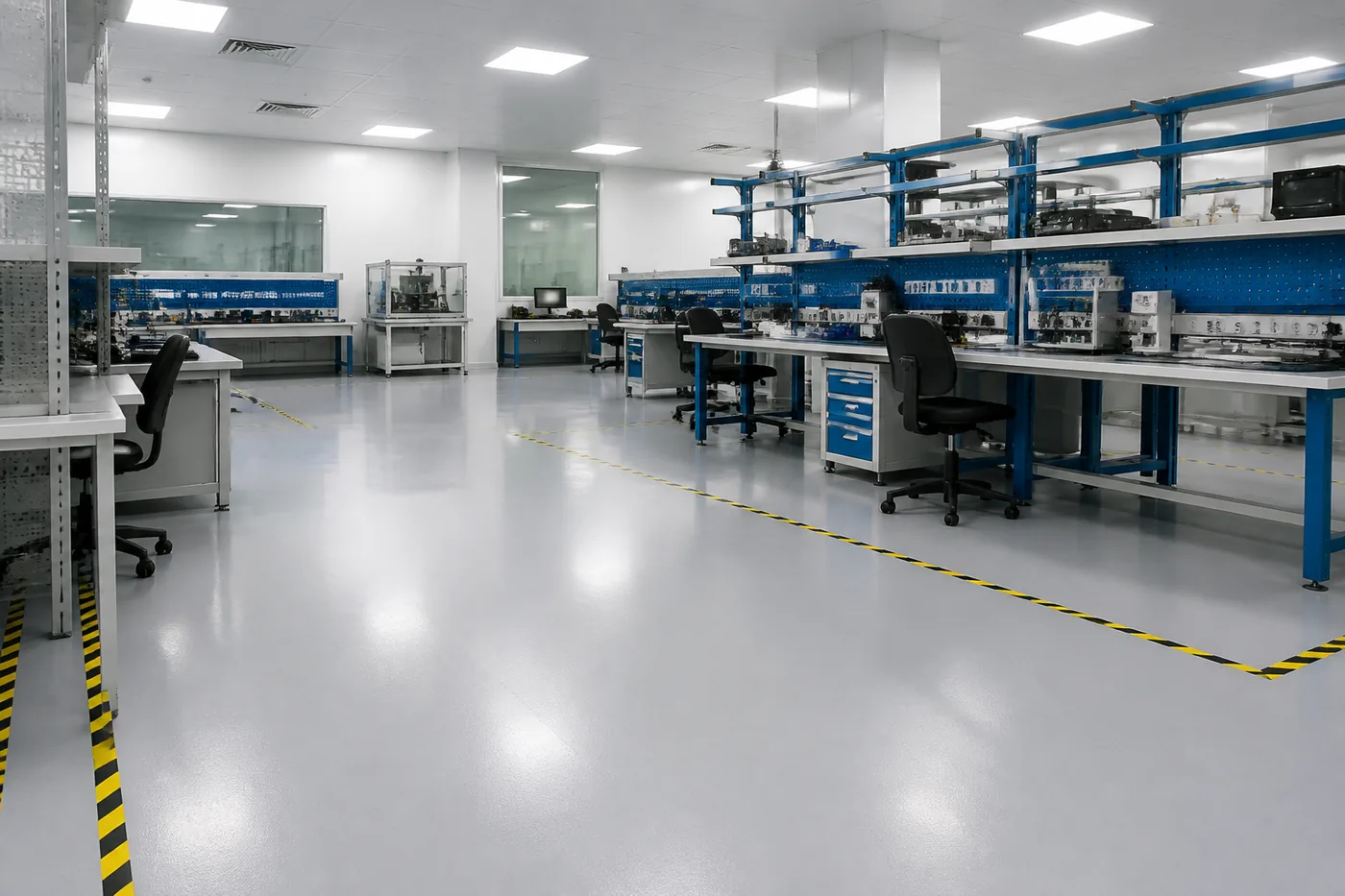
Search competitors often stop at a short list of industries. A real specification needs to explain why the floor is used, what it protects and what must be checked before application.
Assembly, repair, testing, packaging and sensitive component handling areas where uncontrolled static can damage parts.
Technical support spaces, battery rooms, equipment corridors and service areas needing static control and cleanability.
Controlled spaces where dust control, coved details, chemical cleaning and resistance testing may be required.
Clean production support, testing, utility and maintenance rooms where seamless floors and controlled cleaning matter.
Battery, electronic component, instrumentation and assembly zones with static-sensitive materials or equipment.
Rooms where sensitive goods are packed, moved, stored or transferred before shipment or installation.
The correct system is not chosen from the product name alone. It is chosen from the ESD program, project specification, site condition and operational risk.
Confirm whether the room needs conductive or static dissipative performance and what resistance range will be accepted.
Plan copper tape, conductive primer, grounding plates and connection points before the body coat is installed.
Flooring works with footwear, grounding, work surfaces and handling procedures. It is not the only static-control measure.
Check slab moisture, oil contamination, cracks, weak concrete, old coatings, joints and flatness before specifying epoxy.
Review detergents, disinfectants, solvents, wet cleaning, dry cleaning and expected maintenance frequency.
Match system thickness and topcoat to foot traffic, carts, pallet jacks, forklifts, maintenance access and equipment movement.
This comparison is added for buyers, consultants and answer engines because many searches ask which static-control flooring route is correct before a quotation is requested.
| Flooring route | Best fit | Advantages | Critical checks |
|---|---|---|---|
| Conductive epoxy flooring | Specialist production, electronics, controlled technical rooms and higher-risk static-control zones. | Seamless, grounded, durable and easier to clean than many tile systems. | Grounding layout, resistance target, conductive primer, copper tape network and handover testing. |
| Static dissipative epoxy | Clean technical rooms, labs, electronics support, data center support and controlled packaging. | Controlled discharge, smooth finish, practical maintenance and strong concrete protection. | Topcoat compatibility, cleaning routine, footwear, humidity, traffic and resistance verification. |
| ESD vinyl flooring | Healthcare, laboratories, offices, selected clean support rooms and interiors where resilient flooring is preferred. | Factory-made sheet or tile option with quick replacement of smaller areas. | Moisture, adhesive, seams, welding, grounding strips, rolling loads and subfloor flatness. |
| Standard epoxy coating | General warehouses, workshops, car parks and non-sensitive utility rooms. | Good dust control and concrete protection when ESD is not required. | Do not describe it as anti-static unless the full system is designed and tested for static control. |
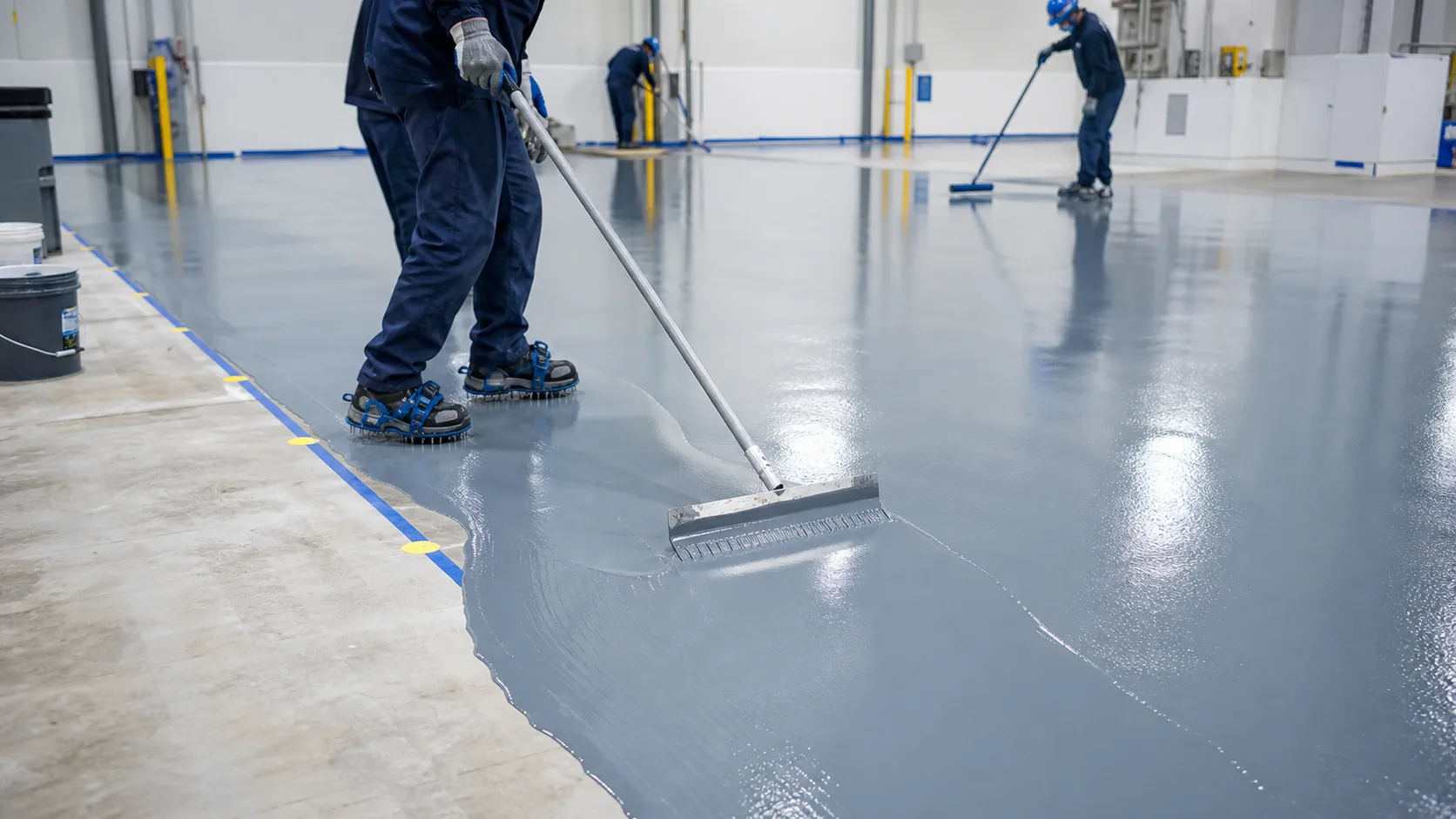
Final method statements must follow the approved product data sheet, site survey and consultant requirement. The sequence below shows the practical decision path SolidDrops expects buyers to plan.
Review room use, city, area, drawings, ESD requirement, traffic, cleaning method and shutdown window.
Grind or shot blast as required, repair cracks and weak areas, remove contamination and check moisture risk.
Install primer, conductive primer and copper tape or grounding details according to the approved system route.
Install the specified static-control epoxy body coat and topcoat with the required finish, thickness and curing conditions.
Complete visual checks, curing, agreed resistance testing, cleaning guidance and maintenance notes before operation.

ESD flooring is part of a wider operating system. Maintenance, cleaning chemicals, footwear, grounding checks and repairs can affect long-term static-control performance.
Agree point-to-point, point-to-ground or footwear/flooring test requirements before installation.
Use cleaning materials compatible with the selected topcoat and ESD requirement. Avoid residues that can change surface behavior.
Check high-traffic lanes, turning areas, thresholds, grounding points and repair zones.
Do not patch an ESD floor with generic epoxy where static performance must remain controlled.
This is a conversion fix as much as an SEO fix. The page now tells buyers exactly what SolidDrops needs before recommending a product route or quotation path.
| Send this information | Why it matters |
|---|---|
| City and project location | Access, logistics and sequencing differ between Jeddah, Riyadh, Dammam, Jubail, Makkah, Madinah, Tabuk and remote KSA sites. |
| Room function and risk | Electronics assembly, lab, data center, cleanroom and storage areas have different ESD and cleaning requirements. |
| Area, drawings, BOQ or photos | Floor area, joints, coves, columns, drains, access and existing damage affect both system selection and cost. |
| Resistance or ESD requirement | The floor should match the consultant specification, ESD program or acceptance testing route. |
| Traffic and cleaning method | Forklifts, carts, wet cleaning, disinfectants and chemical splash affect thickness and topcoat choice. |
| Shutdown window | Curing time, odor sensitivity, room access and phased installation must be planned before the job starts. |
SolidDrops handles project inquiries all over KSA. Mention the city, room type and required static-control performance when contacting the team.
Anti-static epoxy is one specialist flooring route. SolidDrops also supports related flooring, waterproofing, sports flooring, FRP, chemicals, pigments, fire alarm and building material inquiries in Saudi Arabia.

SolidDrops does not invent compliance claims. The project specification should confirm the required resistance range, grounding method, test method and acceptance criteria.
Specifier note: ESD programs commonly refer to standards and test methods such as ANSI/ESD S20.20, ANSI/ESD S6.1, ANSI/ESD STM7.1, ANSI/ESD STM97.1 and ANSI/ESD STM97.2. Use the latest project-approved documents and manufacturer data sheets before final selection.
Reference: EOS/ESD Association standards overview.
These answers are written in self-contained format for buyers, search snippets and answer engines.
Anti-static ESD epoxy flooring is a seamless resin floor system designed to dissipate or conduct static charge through a controlled grounding route. It is used where electrostatic discharge may damage sensitive electronics, affect testing, disturb data equipment or create operational risk.
No. Standard epoxy protects concrete but is usually not a static-control system. ESD epoxy needs a specified build-up, conductive or dissipative layer, grounding detail, compatible topcoat and acceptance testing route.
It is commonly reviewed for electronics assembly, laboratories, cleanrooms, data centers, pharmaceutical support rooms, automotive component areas, controlled packaging zones and other facilities with static-sensitive products or equipment.
Conductive floors discharge more directly through a grounded system, while static dissipative floors control discharge more gradually. The correct route depends on the resistance target, equipment sensitivity, footwear, grounding design and consultant requirement.
Many ESD epoxy systems use conductive primer and copper grounding tape, but the exact network depends on the selected system, room layout, earth points and required testing method. It should be designed before application starts.
Performance is normally checked by agreed resistance or continuity testing after installation and during maintenance. The test method should be written into the project requirement before the floor is selected.
Yes. SolidDrops can help compare ESD epoxy, conductive epoxy, static dissipative epoxy and ESD vinyl routes when the buyer needs a static-control floor for healthcare, laboratory, electronics or technical rooms.
Cost depends on area, slab condition, surface preparation, cracks, moisture, grounding layout, thickness, resistance target, topcoat, shutdown window, city, access and whether the requirement is supply, installation support or both.
Send the city, room function, approximate area, drawings or BOQ, photos, slab condition, traffic type, cleaning method, ESD requirement, grounding points if known and required shutdown window.
SolidDrops supports anti-static ESD epoxy flooring inquiries across Saudi Arabia, including Jeddah, Riyadh, Dammam, Jubail, Makkah, Madinah, Tabuk and nearby project areas.
Call +966502131112 or email [email protected] with your project location, photos, drawings or BOQ and the required ESD flooring scope.
Send SolidDrops the city, room function, area, photos, drawings or BOQ, ESD requirement, traffic type, cleaning method and shutdown window. The team will review the best route before you commit to a floor system.
 Chat Online
Use this feature to chat with our agent.