
Epoxy Flooring Contractor in Saudi Arabia
Choose an epoxy floor around how your facility operates. SolidDrops supports flooring enquiries across Saudi Arabia, from warehouses and workshops to commercial interiors. Share the slab condition, traffic, cleaning regime and available shutdown period so the proposed system can be reviewed against the job.
We help owners, consultants, contractors, facility managers and procurement teams choose the right resin flooring system based on the slab condition, traffic load, chemical exposure, slip requirement, cleaning method, curing window and required finish.
Plan your project
Before you compare epoxy flooring quotations
A quotation is easier to assess when every supplier is pricing the same preparation, system build-up and handover requirements. A low coating rate alone does not describe the finished floor.
| Project situation | What to establish | Useful next step |
|---|---|---|
| Warehouse traffic | Slab condition, wheel types, routes and turning areas | Provide a traffic plan and photographs; ask for preparation and repairs as explicit items. |
| Wet or frequently cleaned areas | Cleaning method, drainage, contamination and slip requirements | Define the finish with the project team and request the proposed system documentation. |
| Production shutdown | Access, sequencing and return-to-use requirements | Separate installation time from the manufacturer’s curing requirements. |
| Comparing bids | Preparation, repair quantities, primer, body coat, finish and exclusions | Ask for one written scope; clarify testing, maintenance and handover documents. |
Send your project city, drawings or BOQ, quantities and site photographs to [email protected], or call +966 50 213 1112. Confirm the proposed scope and supporting documents before ordering.
What is epoxy flooring?
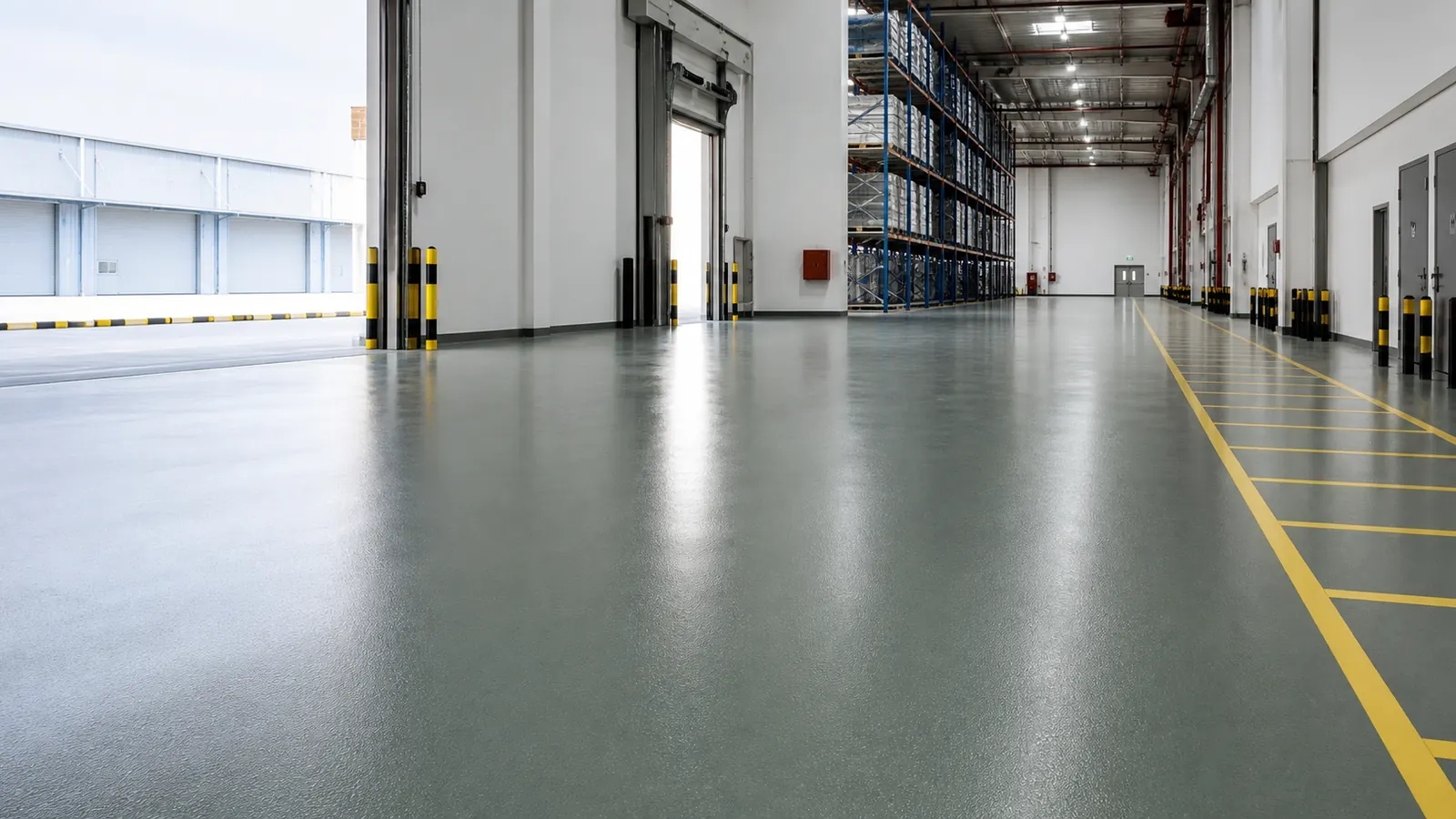
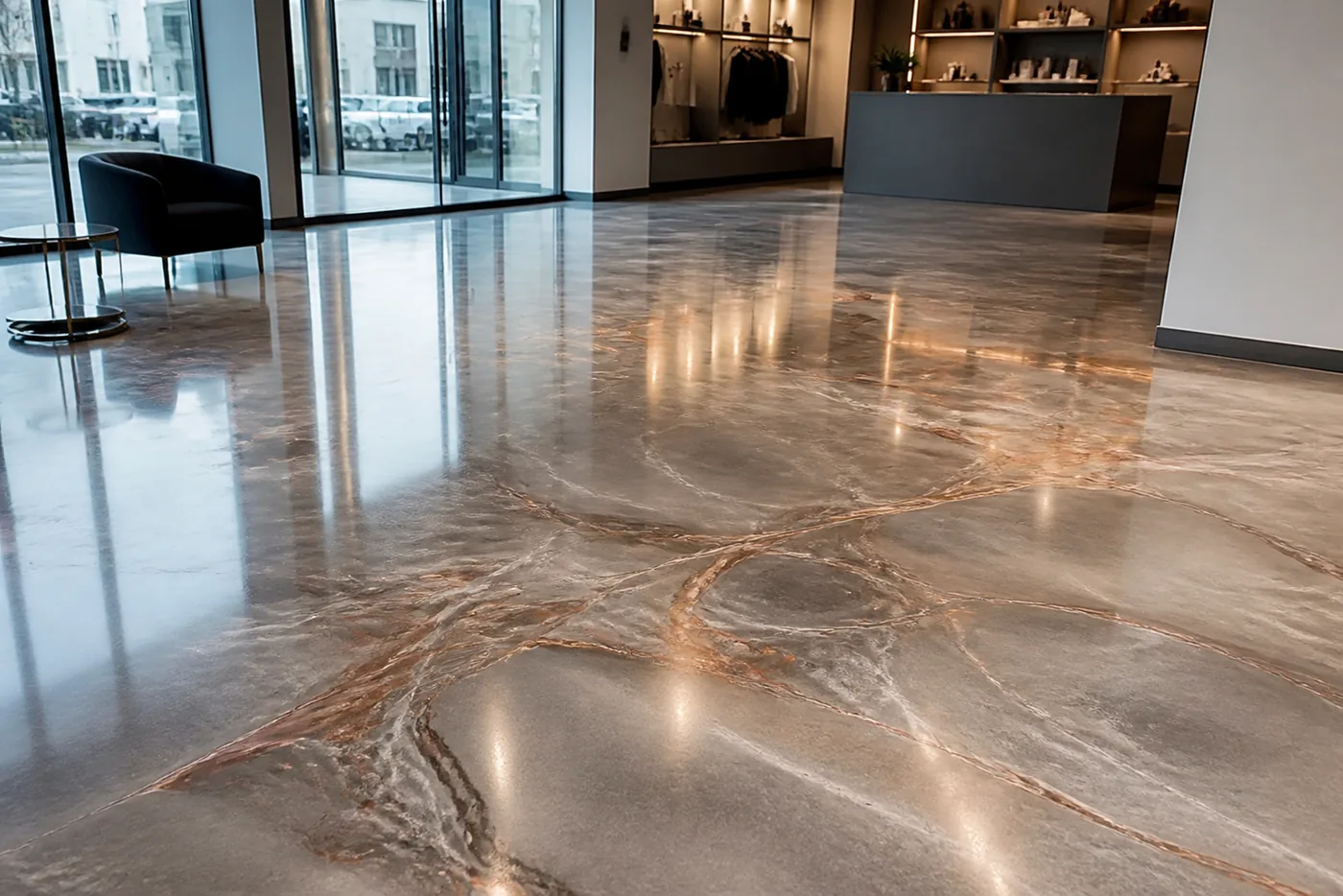
Epoxy flooring is a resin-based floor system formed by mixing epoxy resin and hardener, then applying it over properly prepared concrete. After curing, it creates a hard, seamless, easy-to-clean surface that can resist dusting, abrasion, staining and many common industrial chemicals.
For commercial and industrial sites in Saudi Arabia, epoxy flooring is usually selected when the client needs a durable floor coating, a smooth self-leveling finish, a textured anti-slip surface, clear traffic marking, decorative color, or a hygienic floor that is easier to maintain than exposed concrete.
Consultant note
Epoxy performance depends on surface preparation, moisture condition, concrete strength, primer selection, coating thickness, aggregate profile and final topcoat. A low-cost coating over a weak or damp slab can fail early even if the resin itself is good. SolidDrops starts with the site condition before recommending the system.
Where epoxy flooring is used in KSA projects
SolidDrops supports epoxy floor coating and resin flooring work for new construction, renovation, maintenance shutdowns and floor repair scopes across Saudi Arabia.

Industrial and logistics
- Forklift aisles, pallet zones and loading areas.
- Production rooms, maintenance bays and machinery workshops.
- Battery rooms, utility rooms and technical service areas.
Commercial and residential
- Showrooms, offices, schools, retail areas and back-of-house rooms.
- Garages, villas, basements and decorative residential floors.
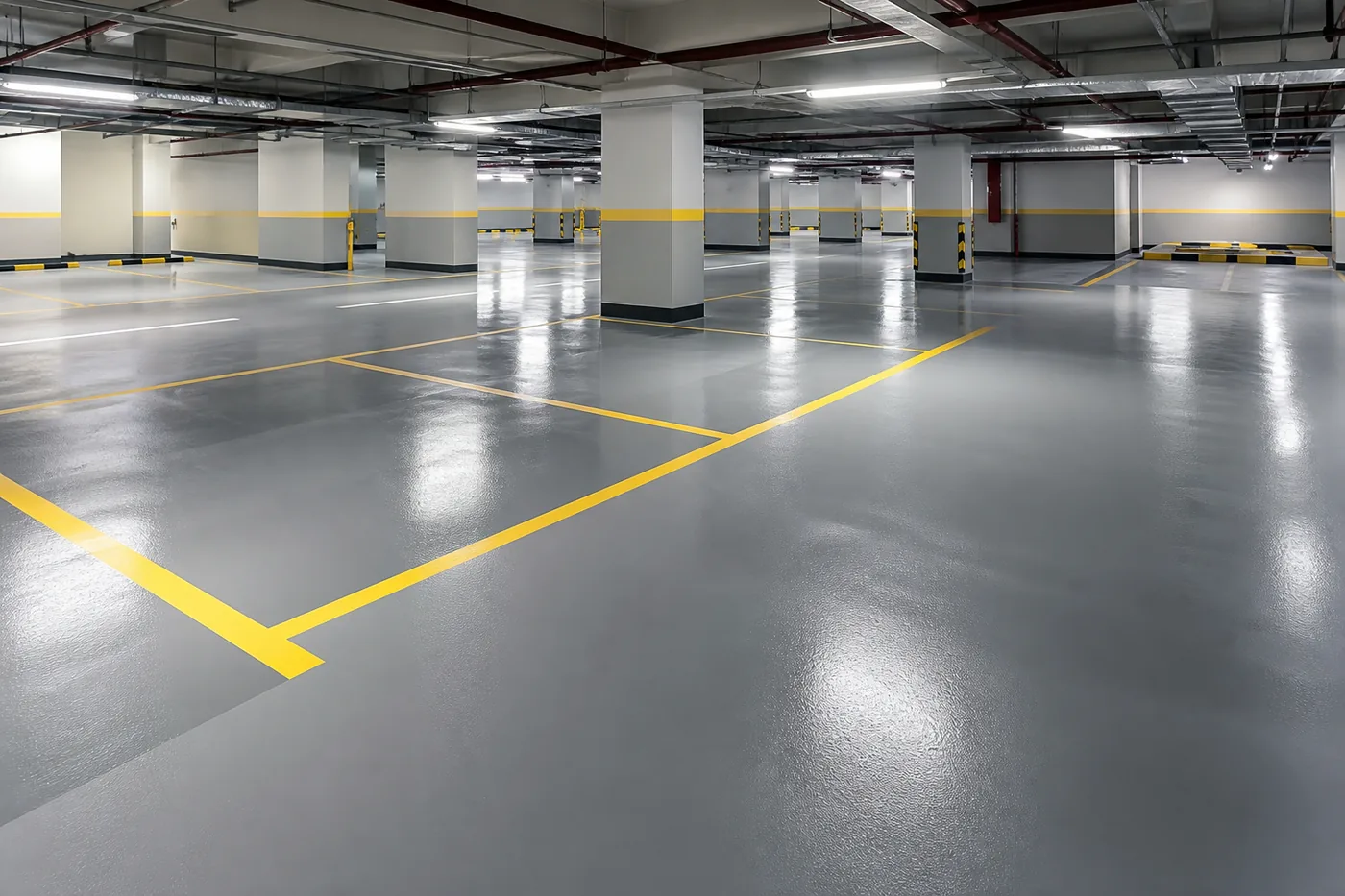
- Parking decks, ramps and vehicle movement zones.
Special environments
- Food and beverage support areas that need cleanability.
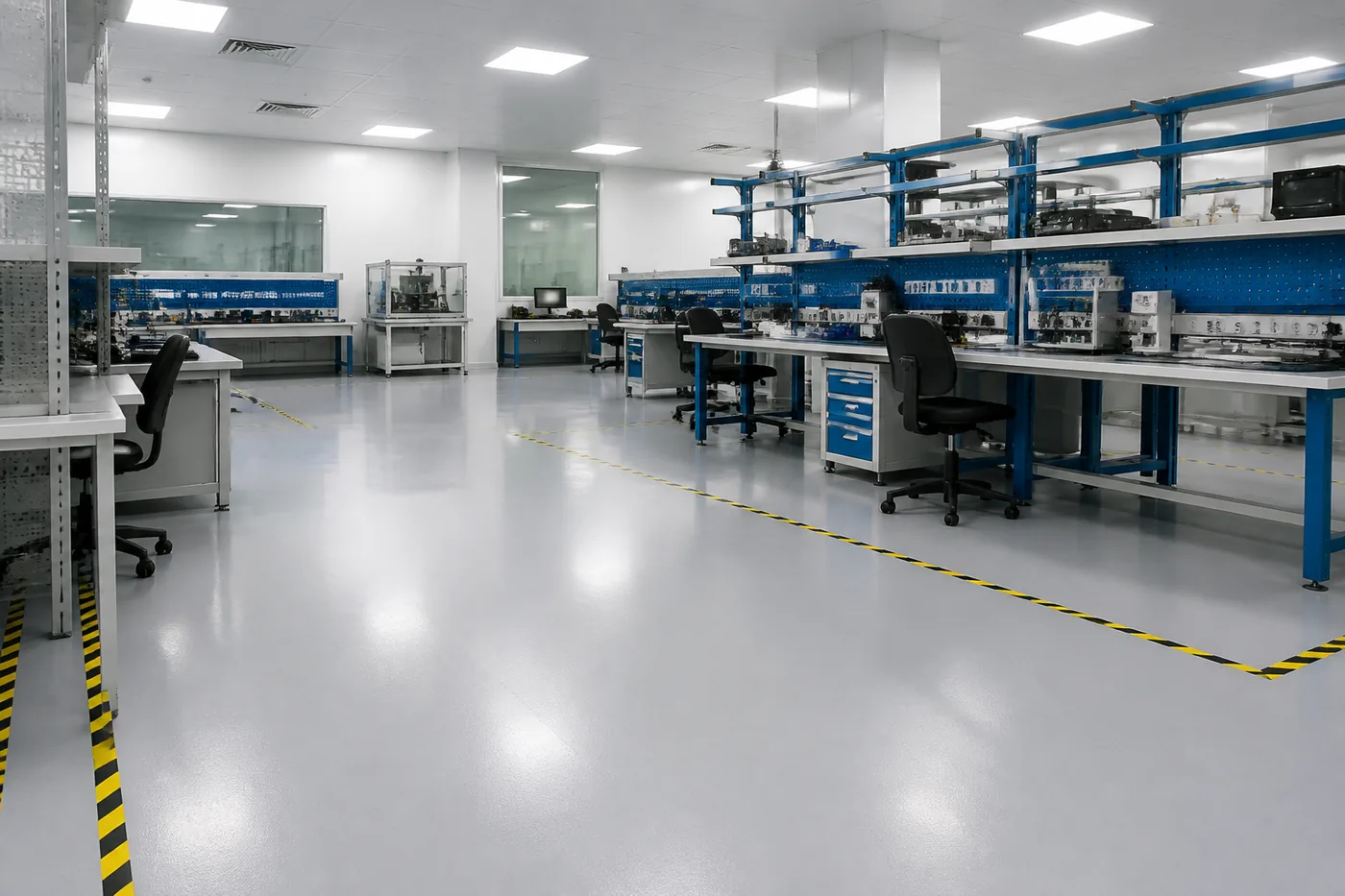
- Healthcare, laboratory and pharmaceutical support spaces.
- ESD, static-controlled and chemical-exposure areas when specified correctly.
Epoxy flooring products and related SolidDrops solutions
The existing SolidDrops epoxy scope includes epoxy repair, coating, sealers, cementitious flooring, polyurethane, waterproofing and static-controlled systems. This updated page keeps that scope and presents it as a clear selection guide for projects in Saudi Arabia.
| Product or system | Best use | Project notes |
|---|---|---|
| Epoxy repair products | Crack repair, floor patching, local damage correction and substrate preparation. | Repair scope should be completed before primer and coating work. |
| Epoxy coatings and epoxy flooring systems | Solid color floors, self-leveling epoxy, high-build coatings, anti-slip systems and line-marked industrial floors. | Choose thickness and texture based on traffic, cleaning and safety needs. |
| Flooring system sealers | Dust control, surface sealing and added protection over compatible flooring systems. | Useful when a cleanable surface is needed without overbuilding the specification. |
| Cementitious flooring system | Screeds, levelling, substrate correction and cement-based floor preparation. | Often used when the concrete needs correction before resin layers. |
| Polyurethane coating and polyurethane flooring system | Flexible or UV-stable topcoats, parking areas, traffic decks and selected industrial floors. | Can be paired with epoxy or specified separately depending on exposure. |
| Bituminous damp and waterproofing | Damp protection and waterproofing support where resin flooring alone is not enough. | Use when below-slab, roof, tank or wet-area waterproofing must be handled as a system. |
| Acrylic waterproofing | Roof, exposed surface and maintenance waterproofing where acrylic systems fit the condition. | Specify based on exposure, movement and maintenance requirements. |
| Vehicle decking systems | Parking floors, ramps, loading zones and vehicle traffic areas. | Requires attention to slip profile, crack bridging, waterproofing and topcoat durability. |
| Static controlled flooring system | Electronics, data centers, cleanrooms, laboratories and sensitive production areas. | ESD performance must be specified and tested, not assumed. |
| Acrylic and anti-carbonation coatings | Concrete protection, facade or structure-related coating scopes. | Useful in broader building material packages with flooring and waterproofing. |
| Injection products | Cracks, leaks, concrete repair and waterproofing support. | Often connected to basement, tank, slab or joint treatment work. |
| PU foam roof coating | Roof insulation and coating support where foam-based systems are appropriate. | Should be coordinated with waterproofing and roof condition checks. |
| Cementitious waterproofing and polyurethane waterproofing | Wet areas, tanks, roofs, basements, podiums and concrete protection work. | Use with epoxy flooring only when the whole moisture risk is designed correctly. |
Why clients specify epoxy floor coating
A well-selected epoxy flooring system improves the way a facility looks, cleans and performs. It is not only a paint layer; it is a specified surface system built around real site conditions.
Practical benefits
- Seamless surface that helps control concrete dust.
- Improved resistance to abrasion, impact, stains and many chemicals.
- Easy cleaning compared with open concrete or broken tile joints.
- Slip resistance can be adjusted with aggregate or texture.
- Color zoning, walkway markings and safety demarcation are possible.
- Decorative finishes can improve showrooms, retail and residential areas.
For owners
Better floor appearance, cleaner operation and reduced concrete dust help protect people, goods and equipment.
For consultants
Clear system selection makes it easier to compare epoxy, PU, PU cement, waterproofing and repair needs.
For contractors
Defined preparation, primer, coating, topcoat and handover steps reduce rework and site confusion.
Professional epoxy flooring installation process
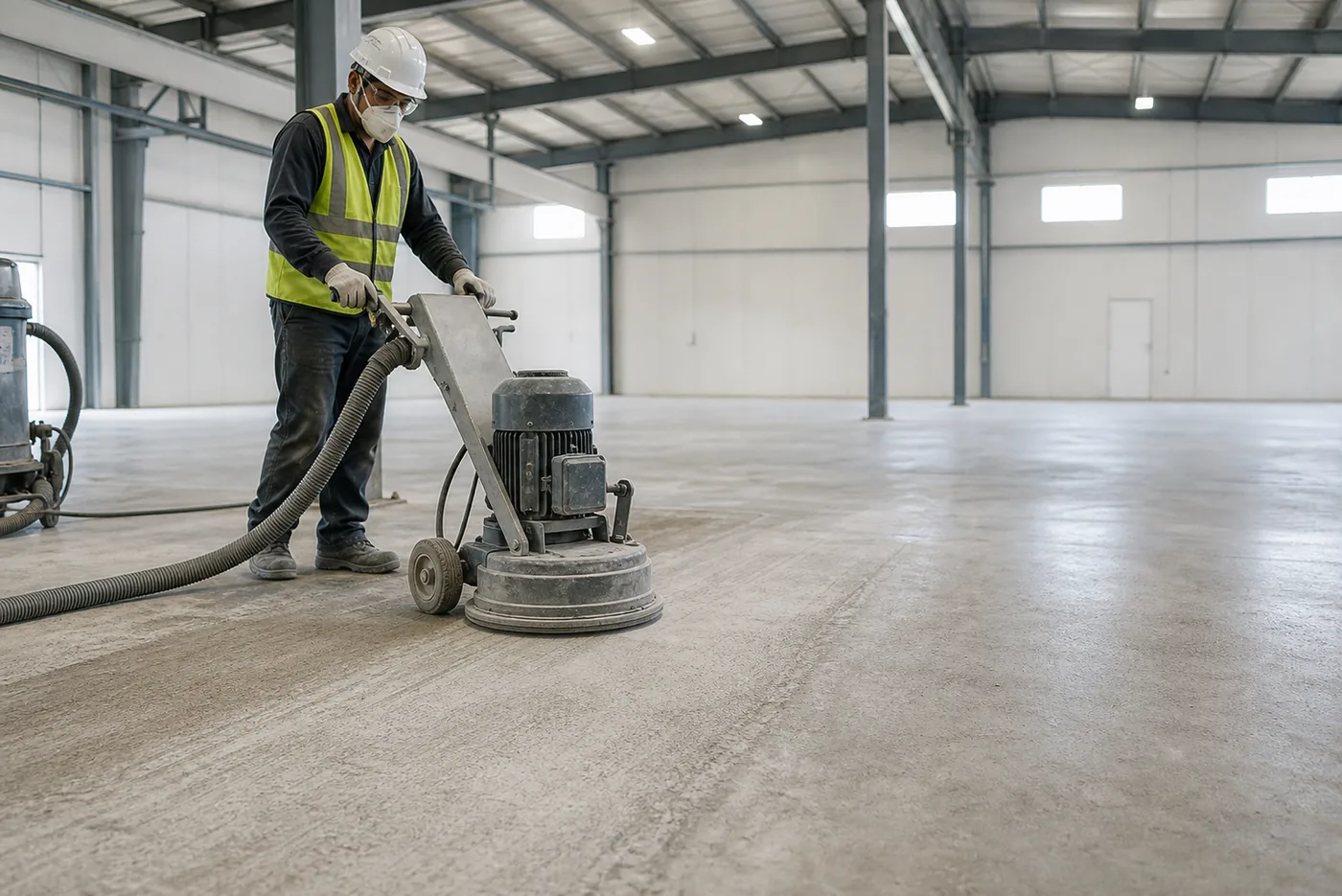
The installation method changes by system, but reliable epoxy flooring generally follows the same discipline: inspect the slab, prepare the surface, repair defects, apply compatible layers and confirm the floor is ready for use.

Site review
Check area size, concrete condition, cracks, contamination, moisture risk, traffic, chemicals and expected cleaning method.
Surface preparation
Grind, shot blast or mechanically prepare the concrete to create the correct surface profile for adhesion.
Repair and detailing
Treat cracks, joints, weak areas, level differences, coves, drains, edges and damaged concrete before coating.
Primer and body coat
Apply primer and selected epoxy body coat, self-leveling layer, mortar layer or broadcast texture based on the design.
Topcoat and markings
Add the compatible topcoat, anti-slip profile, color zoning, safety lines or decorative finish when required.
Curing and handover
Allow curing, restrict early traffic, inspect finish quality and provide maintenance guidance for the facility team.

How SolidDrops recommends the right floor
Epoxy is excellent for many industrial and commercial floors, but it is not the answer to every condition. SolidDrops compares epoxy with PU, PU cement, Ucrete-type systems, waterproofing, sealers and repair products so the project receives the correct specification.
- Use epoxy for durable, seamless, cleanable, decorative or industrial floor coating applications.
- Consider PU or polyurethane topcoats where UV exposure, flexibility or vehicle decking performance is important.
- Consider PU cement or Ucrete-type systems for thermal shock, heavy washdown, hot water, wet processing or demanding food areas.
- Use waterproofing, injection, damp proofing or cementitious systems where water movement or substrate moisture is the main risk.
- Use ESD or static-controlled systems only where conductivity requirements are specified and tested.
Epoxy flooring across Saudi Arabia
SolidDrops supports epoxy flooring, waterproofing and related material inquiries all over Saudi Arabia, including major industrial, commercial and logistics cities.
What to send for a recommendation
- Project city and location.
- Approximate floor area in square meters.
- Current slab photos and any known moisture or crack issues.
- Traffic type: pedestrian, pallet jack, forklift, vehicle or heavy equipment.
- Chemical, oil, water, cleaning and temperature exposure.
- Target finish: smooth, anti-slip, decorative, flake, solid color or line-marked.
Epoxy flooring questions clients ask before ordering
Is epoxy flooring suitable for warehouses and factories in Saudi Arabia?
Yes, epoxy flooring is commonly used in warehouses, factories and workshops when the concrete is prepared correctly and the system thickness, texture and topcoat match the traffic and chemical exposure.
What is the difference between epoxy coating and self-leveling epoxy flooring?
Epoxy coating is often a thinner protective layer, while self-leveling epoxy is a thicker resin floor that creates a smoother, more uniform finish. SolidDrops recommends the system after reviewing slab condition, traffic and finish requirements.
Can epoxy flooring be anti-slip?
Yes. Anti-slip epoxy systems use broadcast aggregate or textured topcoats. The correct texture depends on whether the area is dry, wet, oily, pedestrian, forklift or vehicle traffic.
Can epoxy be used in food, healthcare or laboratory areas?
Epoxy can be used in selected cleanable support areas. For hot water, heavy washdown, thermal shock or aggressive cleaning chemicals, SolidDrops may recommend PU cement, Ucrete-type systems, polyurethane or other resin systems instead.
What affects epoxy flooring cost in Saudi Arabia?
Cost depends on floor area, substrate preparation, concrete repair, moisture treatment, system thickness, epoxy type, anti-slip texture, decorative finish, topcoat, access, phasing and project city. SolidDrops avoids fixed pricing before reviewing the actual scope.
How long does epoxy flooring installation take?
Duration depends on area size, preparation work, number of coating layers, repair scope, ventilation, temperature and curing requirements. A small maintenance area and a large industrial shutdown will have very different schedules.
Does SolidDrops support Jeddah, Riyadh, Dammam, Jubail, Makkah, Medina and Tabuk?
Yes. SolidDrops handles inquiries across Saudi Arabia, including Jeddah, Riyadh, Dammam, Jubail, Makkah, Madinah or Medina, Tabuk and other KSA project locations.
Does SolidDrops provide only epoxy flooring?
No. SolidDrops also supports waterproofing, sports flooring, FRP panels, industrial chemicals, pigments, fire alarm systems and building materials for projects across Saudi Arabia.
How can I request a quotation or technical recommendation?
Call +966 50 213 1112 or email [email protected] with the project city, area, photos, traffic type, exposure conditions and required finish.
Need epoxy flooring advice for a KSA project?
Send the project details to SolidDrops for practical system selection, product support and contractor-friendly guidance before finalizing the BOQ or site scope.
SolidDrops contact: [email protected] | +966502131112 | Coverage: all over Saudi Arabia.
 Chat Online