What does SolidDrops support for epoxy floor maintenance?
SolidDrops supports epoxy floor maintenance inquiries for cleaning, repair, recoating, joint repair, crack treatment, scratches, line marking, anti-slip upgrades and industrial floor upkeep in Saudi Arabia.
When should an epoxy floor be recoated instead of cleaned only?
Recoating is usually considered when cleaning no longer restores the finish, traffic lanes are worn, the topcoat is scratched, slip resistance has changed, or the floor needs a renewed protective layer after repair.
Can damaged concrete be repaired before epoxy recoating?
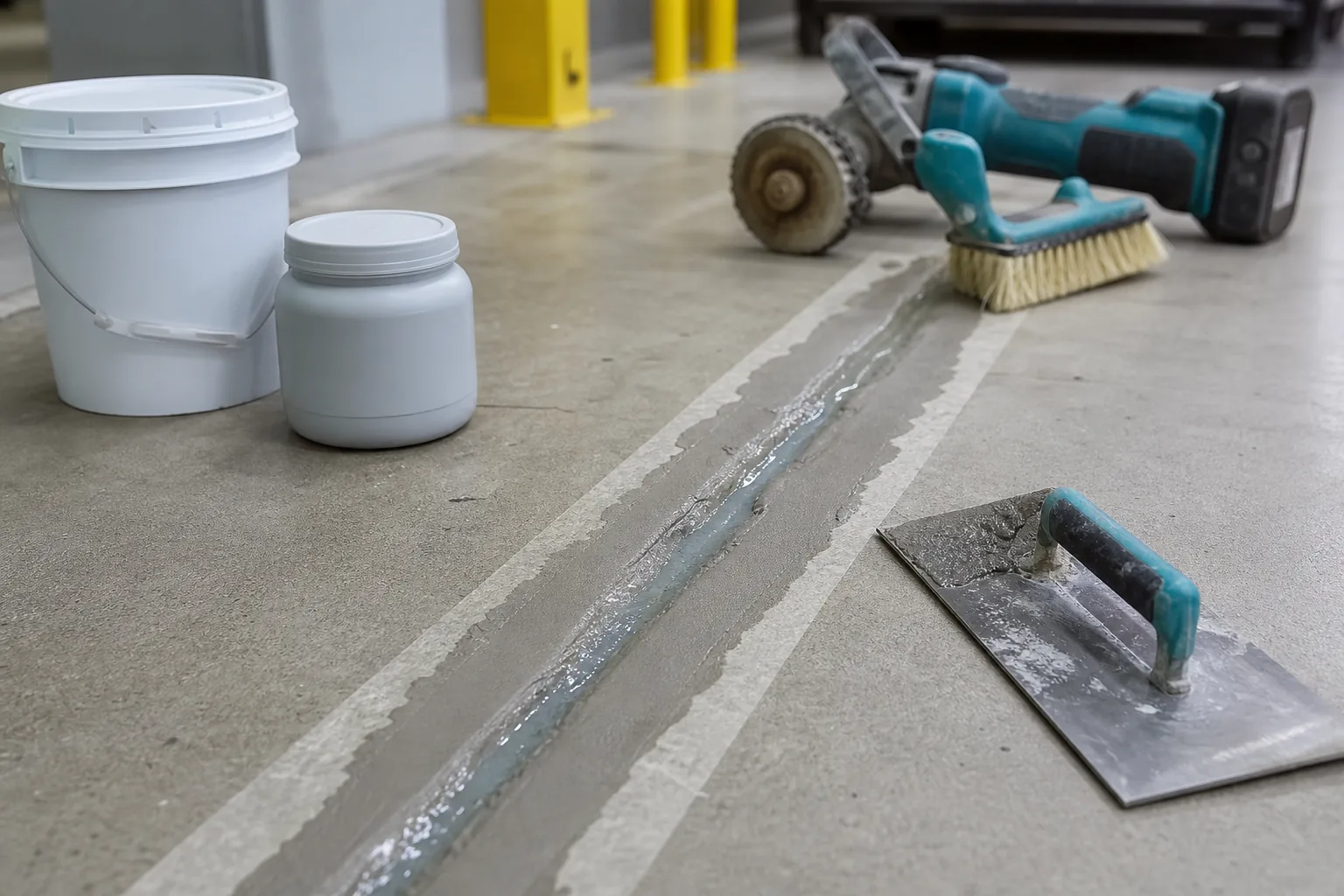
Yes. Cracks, chips, spalled concrete, joint edges and weak patches should be reviewed before coating. The repair route depends on movement, slab strength, moisture, traffic and the old coating condition.
Why is an epoxy floor peeling or lifting?
Peeling usually means the coating has lost bond. Common causes include weak surface preparation, dust, oil contamination, moisture, incompatible old coating or a closed concrete surface. The fix is to remove loose coating, test the slab, mechanically prepare, prime and recoat with a compatible system.
How do you fix bubbles or blisters in epoxy flooring?
Bubbles and blisters can come from trapped air, porous concrete, moisture vapor or applying coating during temperature changes. The damaged area should be opened, ground, moisture-checked, sealed with the right primer and rebuilt in controlled coating layers.
How do you fix a slippery epoxy floor?
First identify whether the problem is detergent film, oil, standing water, smooth topcoat or wrong texture. A professional fix may include deep cleaning, surface abrasion, anti-slip aggregate, textured topcoat, improved drainage or a safer zoning plan.
What causes concrete floor dusting under epoxy?
Dusting can come from weak concrete, laitance, poor curing, surface wear or coating applied over unsound material. The weak layer should be removed by grinding, the slab should be checked, and the surface should be primed or resurfaced before coating.
Can oil-contaminated floors be repaired before recoating?
Often yes, but oil must be treated before coating. The floor may need degreasing, mechanical preparation, contamination extraction and bond testing. Deep oil contamination in workshops or kitchens may require stronger repair planning.
Why does water ponding damage epoxy floors?
Ponding water can enter failed joints, edges, coving and cracks. It can also create slip risk and cleaning problems. The fix may include drainage review, local leveling, joint repair, waterproofing review and a texture suitable for wet use.
Why does epoxy flooring turn yellow or fade?
Yellowing and fading can be caused by UV exposure, heat, chemicals or unsuitable topcoat selection. The repair route may include cleaning, sanding or abrasion, then applying a UV-stable or chemically resistant finish where suitable.
How can ESD or anti-static epoxy flooring be repaired?
ESD repair starts with correct resistance testing, cleaning review, grounding inspection and checking whether the conductive layer is worn or damaged. Repairs may require approved cleaning, grounding correction or recoating of conductive layers.
Which areas commonly need epoxy maintenance?
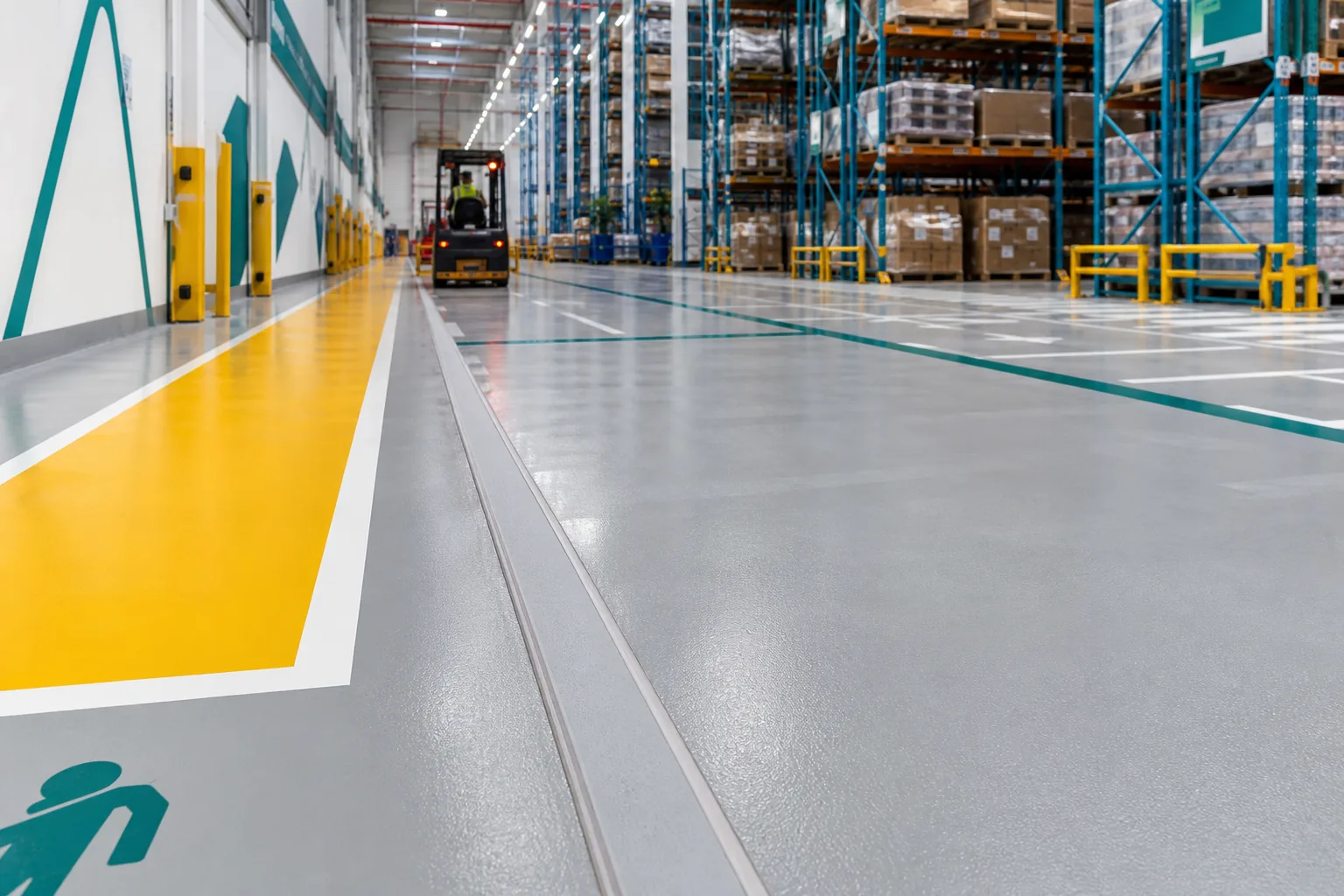
Common areas include warehouses, factories, logistics floors, workshops, food processing areas, commercial kitchens, hospitals, laboratories, parking decks, showrooms, plant rooms and basements.
Which Saudi cities does SolidDrops support?
SolidDrops supports inquiries all over Saudi Arabia, including Jeddah, Riyadh, Dammam, Jubail, Makkah, Madinah, Medina and Tabuk.
What information should be sent for a maintenance quotation?
Send the city, approximate area, photos, drawings or BOQ, substrate condition, expected traffic, chemical exposure, cleaning method, damaged zones and target schedule.
Does epoxy maintenance include line marking and anti-slip upgrades?
It can. Depending on site condition, maintenance may include line marking refresh, walkway zones, forklift lane markings, anti-slip aggregate, textured topcoat or localized safety improvement.
What should be checked before specifying epoxy maintenance?
Before specifying epoxy maintenance, check substrate strength, moisture risk, vapor pressure signs, surface profile, contamination, cracks, joints, coving, slope, drainage, traffic, chemical exposure, cleaning method and required shutdown time.
How do I decide between cleaning, repair, recoating and replacement?
Choose cleaning when the coating is bonded and only dirty, localized repair when damage is limited, recoating when the bonded topcoat is worn, and full replacement when failure, moisture, contamination or weak concrete is widespread.
What is a good epoxy floor maintenance schedule for warehouses?
Warehouses should remove dust and spills daily, scrub and inspect traffic lanes weekly, check joints and impact zones monthly, review slip resistance and line markings quarterly, and plan annual professional inspection for topcoat or joint repair needs.
Can SolidDrops review BOQ, drawings or consultant notes?
Yes. For epoxy maintenance inquiries, SolidDrops can review BOQ notes, marked drawings, photos and site details to help route the request toward cleaning, repair, recoating, joint treatment, anti-slip improvement or full resurfacing.
Which photos are useful for epoxy floor repair quotation?
Send wide photos of the area, close-ups of peeling, cracks, joints, bubbles, oil stains, wet zones, worn traffic lanes and line markings, plus any drawings or BOQ notes that show quantities and room names.
Do Jeddah, Riyadh, Dammam and Jubail floors need different maintenance planning?
Yes. Jeddah projects may need more moisture and humidity review, Riyadh floors often need dust and abrasion planning, and Dammam or Jubail industrial floors may need chemical, production and shutdown-window review.
How can I contact SolidDrops?
Call or WhatsApp +966 50 213 1112, or email [email protected] with project details and site photos.


 Chat Online