
Review the roof
Collect roof area, drawings or BOQ, photos, leak history, existing build-up, drainage information and site-access constraints. Confirm the project requirement before selecting a system.
Roof waterproofing & thermal-insulation planning
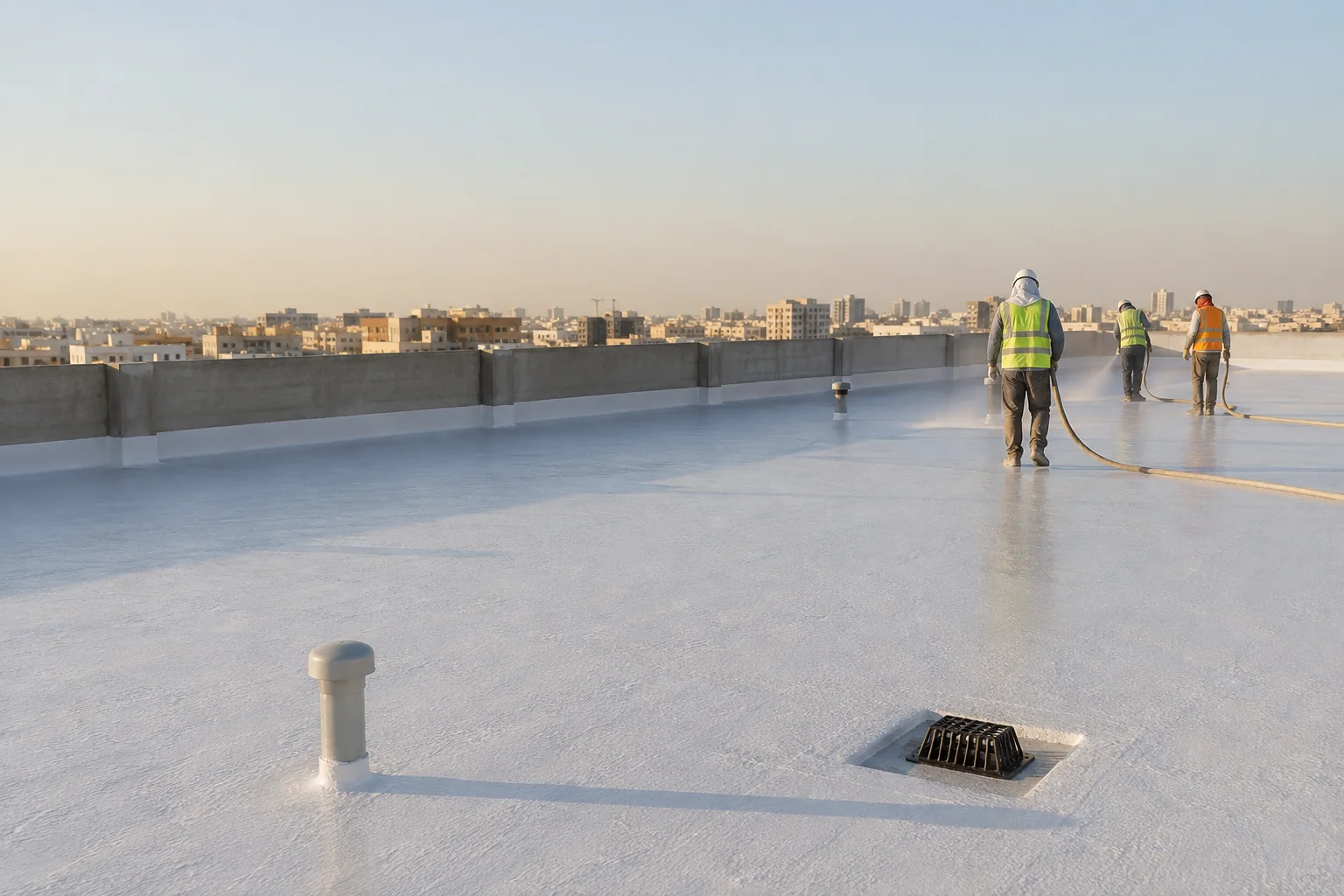
PU foam roof waterproofing is a spray-applied roof assembly used where insulation and a continuous roof surface are being considered together. The correct approach starts with the actual roof—not a generic thickness or price—and should account for the deck, existing waterproofing, moisture, drainage, joints, penetrations, UV exposure and access.
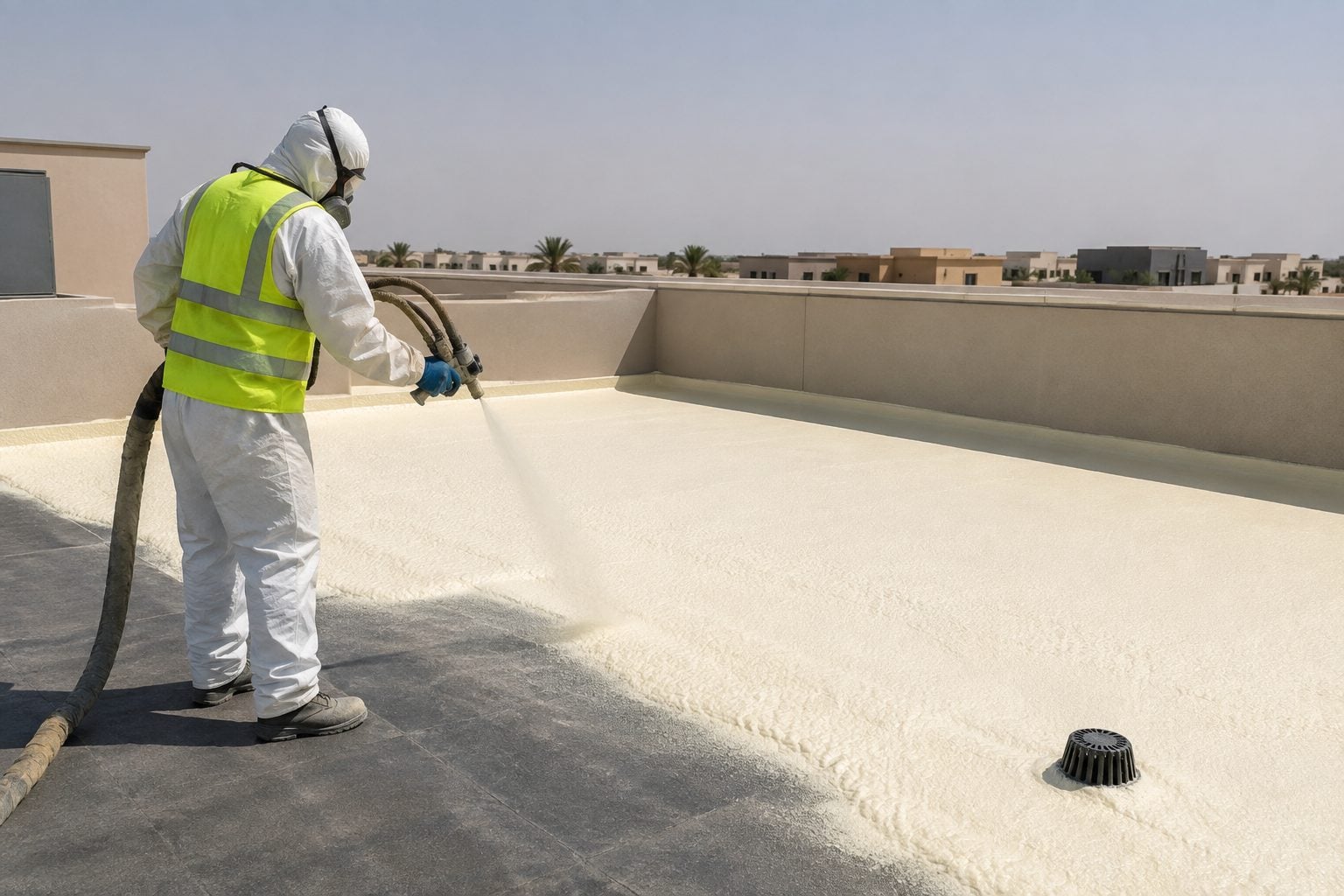
Start with suitability
A technical review can consider a PU foam roof assembly for suitable flat or low-slope roof areas, including selected concrete, metal or other roof substrates where preparation and compatibility have been confirmed. It may be relevant for commercial roofs, warehouses, facilities and other buildings that need a coordinated waterproofing and thermal-insulation discussion.
The specified foam, protective coating, reinforcement at details and final finish must be selected for the actual roof and the selected manufacturer system. SolidDrops can help organise the project information needed for that discussion across Saudi Arabia.
Project process
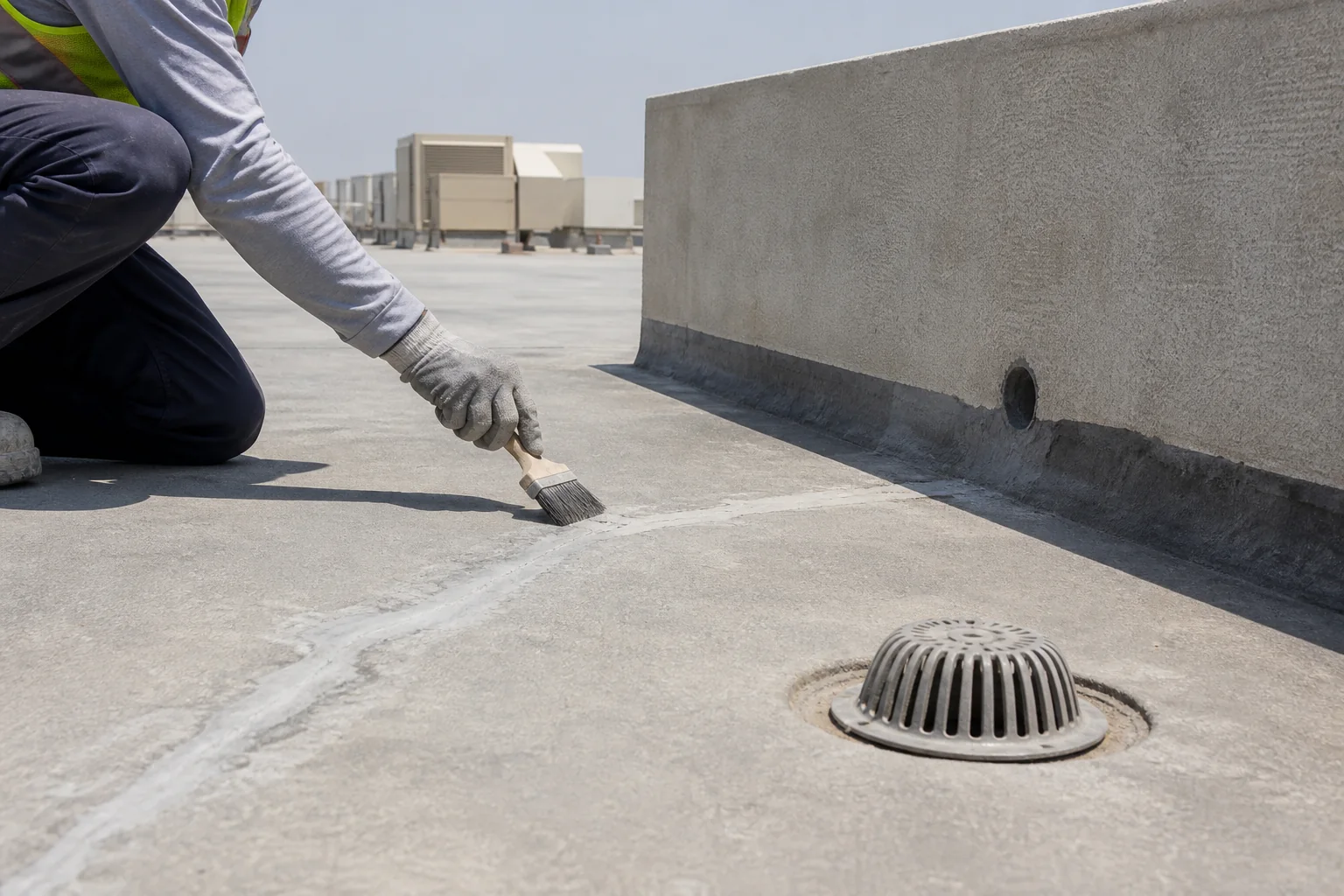
Collect roof area, drawings or BOQ, photos, leak history, existing build-up, drainage information and site-access constraints. Confirm the project requirement before selecting a system.
Cleaning, repair, removal of unsound materials and treatment of defects are determined by the existing roof condition and the selected system’s requirements.
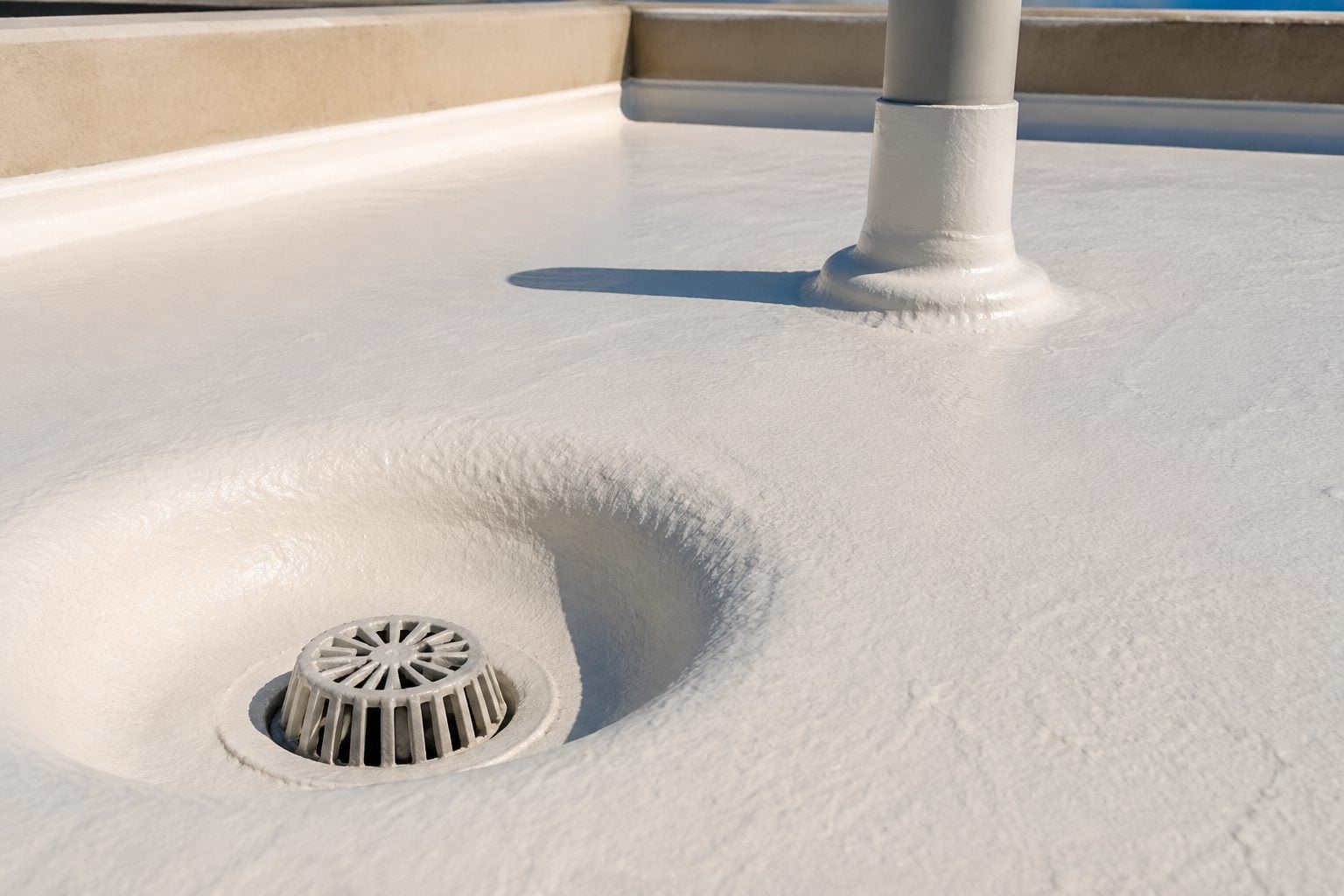
Drains, upstands, movement joints, penetrations, equipment plinths and terminations need an agreed approach before the main application begins.
Spray foam application and any compatible coating or reinforcement should follow the approved method statement, manufacturer documentation and agreed site controls.
Record visible condition, detail completion and any maintenance guidance needed for the specified roof system. Confirm the handover scope with the project team.
Future traffic, equipment servicing and any changes to the roof must be considered so the protection layer and details are not accidentally compromised.
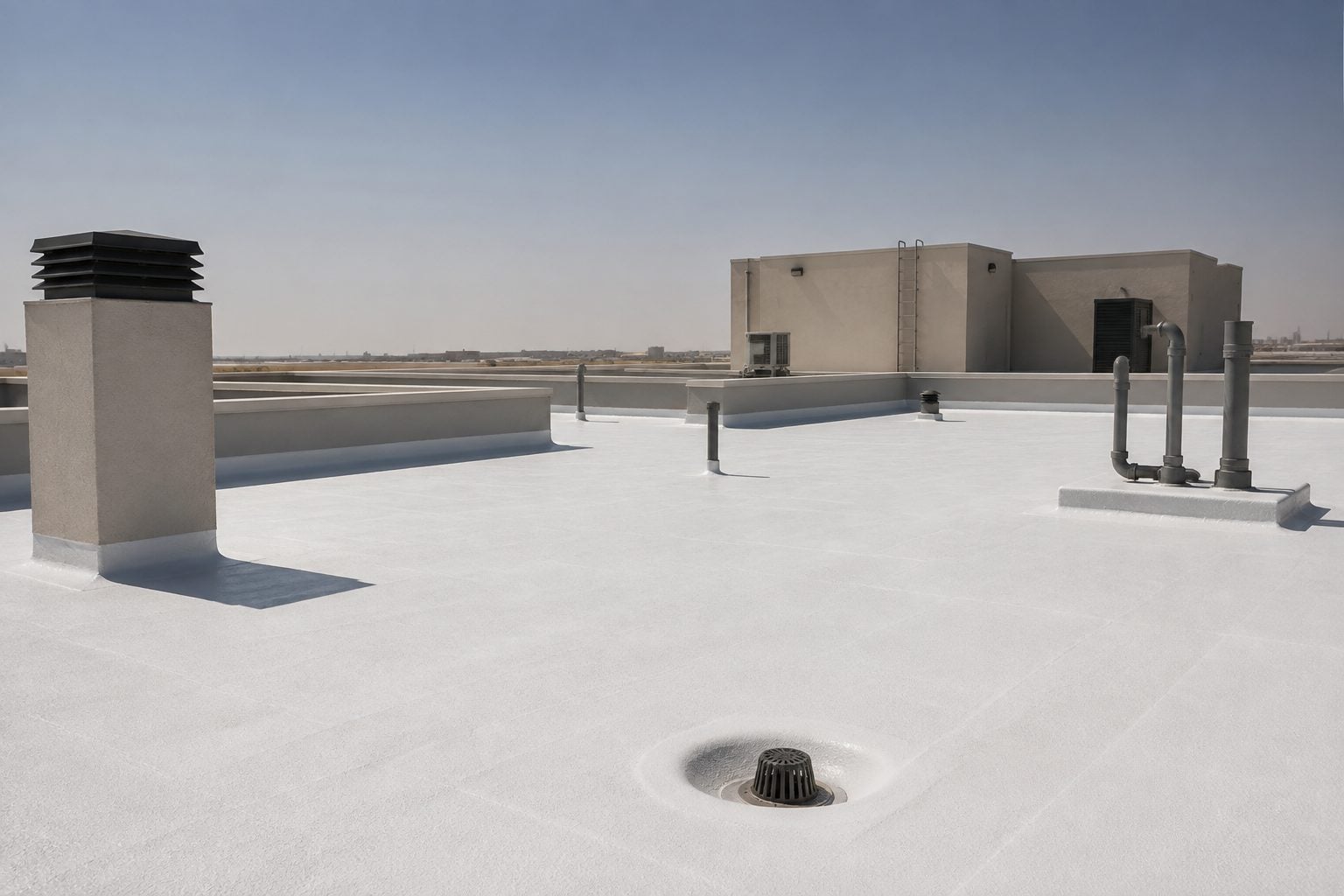
Critical roof details
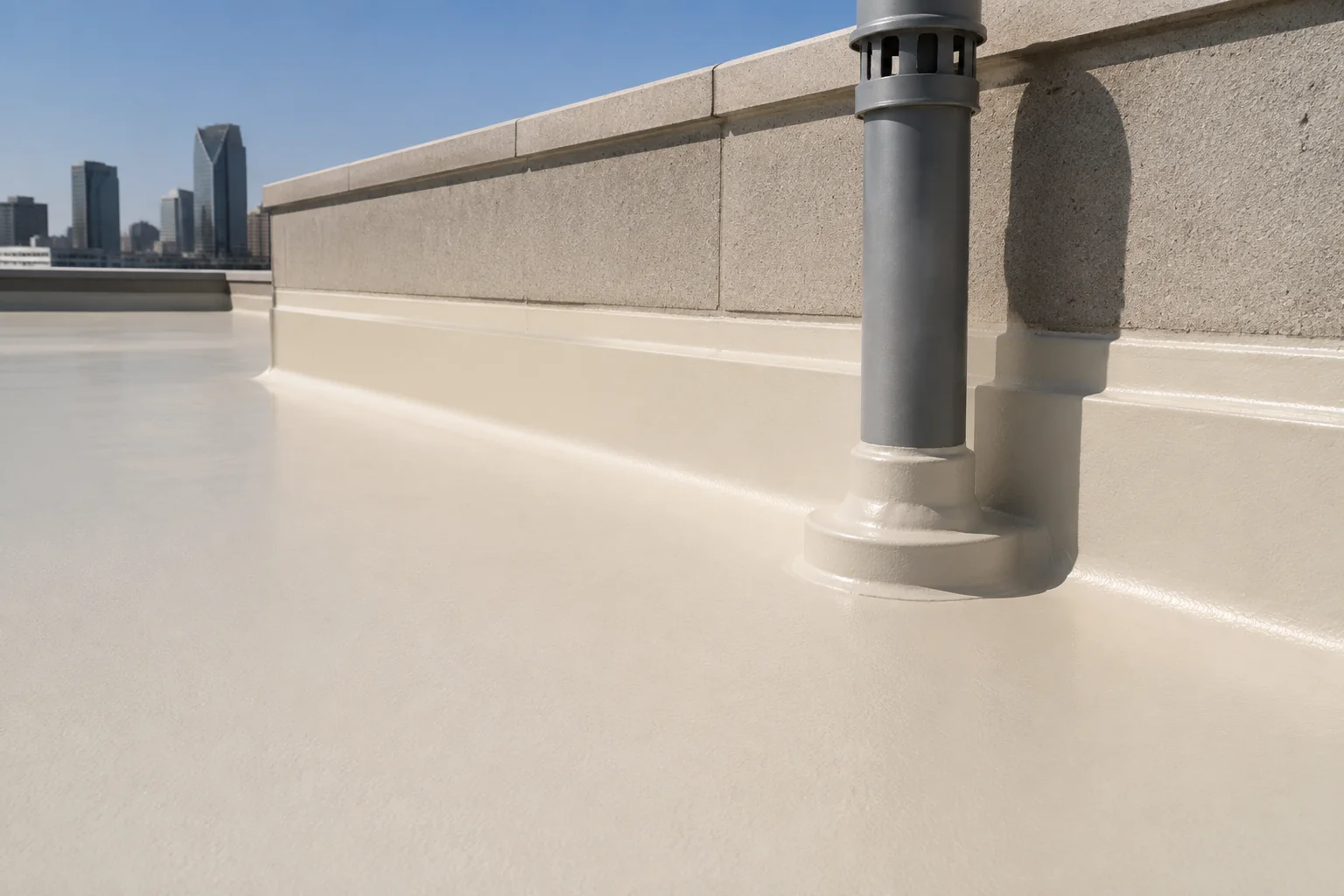
Many roof problems start at transitions rather than in the open roof area. A practical PU foam roof scope should make it clear how drains, pipe penetrations, parapet upstands, joints, equipment supports and changes of plane will be prepared, detailed and protected.
Do not assume a continuous surface automatically resolves poor drainage, trapped moisture or failing substrate conditions. Where roof falls, ponding history, structural movement or existing membrane defects are concerns, they should be assessed before selecting the final system.
Selection guide
| Approach to discuss | When it may be relevant | What still needs confirmation |
|---|---|---|
| PU foam plus a compatible protective coating | Roof projects considering a spray-applied insulation layer and a coordinated protective roof surface. | Substrate, moisture, detail design, coating compatibility, UV exposure, drainage and access. |
| Liquid-applied waterproofing membrane | Selected roofs with detail-heavy geometry or where a different membrane approach is better suited. | Substrate preparation, crack and joint treatment, curing conditions, reinforcement and system suitability. |
| Polyurea or hybrid protective coating | Selected waterproofing or protection scopes where rapid application or specified performance is required. | System design, primer, substrate profile, drainage, detail treatment and manufacturer documentation. |
| Sheet or other roof waterproofing systems | Projects whose roof design, specification or existing conditions point to a membrane-based solution. | Seams, terminations, penetrations, substrate condition, drainage and compatibility with the roof build-up. |
This table is a project-scoping guide, not a system specification. Final selection should follow the approved design, substrate review and current manufacturer documentation.
Related waterproofing support
For the broader material overview, see PU foam waterproofing.
For projects that extend beyond the roof, explore SolidDrops support for waterproofing systems in Saudi Arabia, polyurea coating options and cementitious waterproofing. Different areas of one project can require different compatible solutions.
Frequently asked questions
No. A site review should confirm the roof deck, existing membrane or coating, moisture condition, drainage, traffic, exposed details and required roof performance before a PU foam system is selected.
An exposed PU foam roof normally needs a compatible protective coating as part of the specified system. The coating, reinforcement and detailing should be selected to suit the roof condition and the chosen manufacturer system.
Possibly, but only after checking adhesion, moisture, contamination, loose material, existing defects and compatibility. A sound, dry and properly prepared substrate is a project decision, not an assumption.
Share the city, roof area, roof type, photos, drawings or BOQ, current leak history, existing waterproofing, drain locations, penetrations, access constraints and target programme. This helps define the right site review and scope.
SolidDrops supports PU foam roof waterproofing enquiries across Saudi Arabia, including Jeddah, Riyadh, Dammam, Jubail, Makkah, Madinah and Tabuk.
A meaningful quotation needs more than a square-metre rate. Roof area, existing wet or damaged materials, substrate repairs, specified foam thickness, protective coating, drain and parapet details, access and working restrictions all influence the scope. Compare quotations against the same roof build-up and inclusions; a lower rate may exclude preparation or detail work.
Ask for a written scope identifying the proposed system, measured area, preparation, thickness requirements, exclusions, inspection arrangements and any warranty terms. Final specifications and pricing require project review.
Copy this checklist into your email or WhatsApp enquiry to help clarify the project:
Request the proposed manufacturer’s technical data sheets, compatible coating details, substrate acceptance criteria, application method statement, inspection records and maintenance instructions. Confirm any claimed fire performance, approval or warranty against the exact proposed system and project requirements; these are not interchangeable between products.
Arrange periodic inspections and additional checks after severe weather or rooftop equipment work. Keep drainage routes clear, check the protective coating and inspect vulnerable edges and penetrations. Report exposed foam, damaged coating or persistent ponding for professional assessment. Use repairs and recoating materials approved for the existing system; do not assume a generic coating is compatible.
Agree an inspection and maintenance plan with the selected system provider. General industry background: SPFA roofing installation and maintenance guidance. Project specifications and local requirements take precedence.
Discuss your roof condition
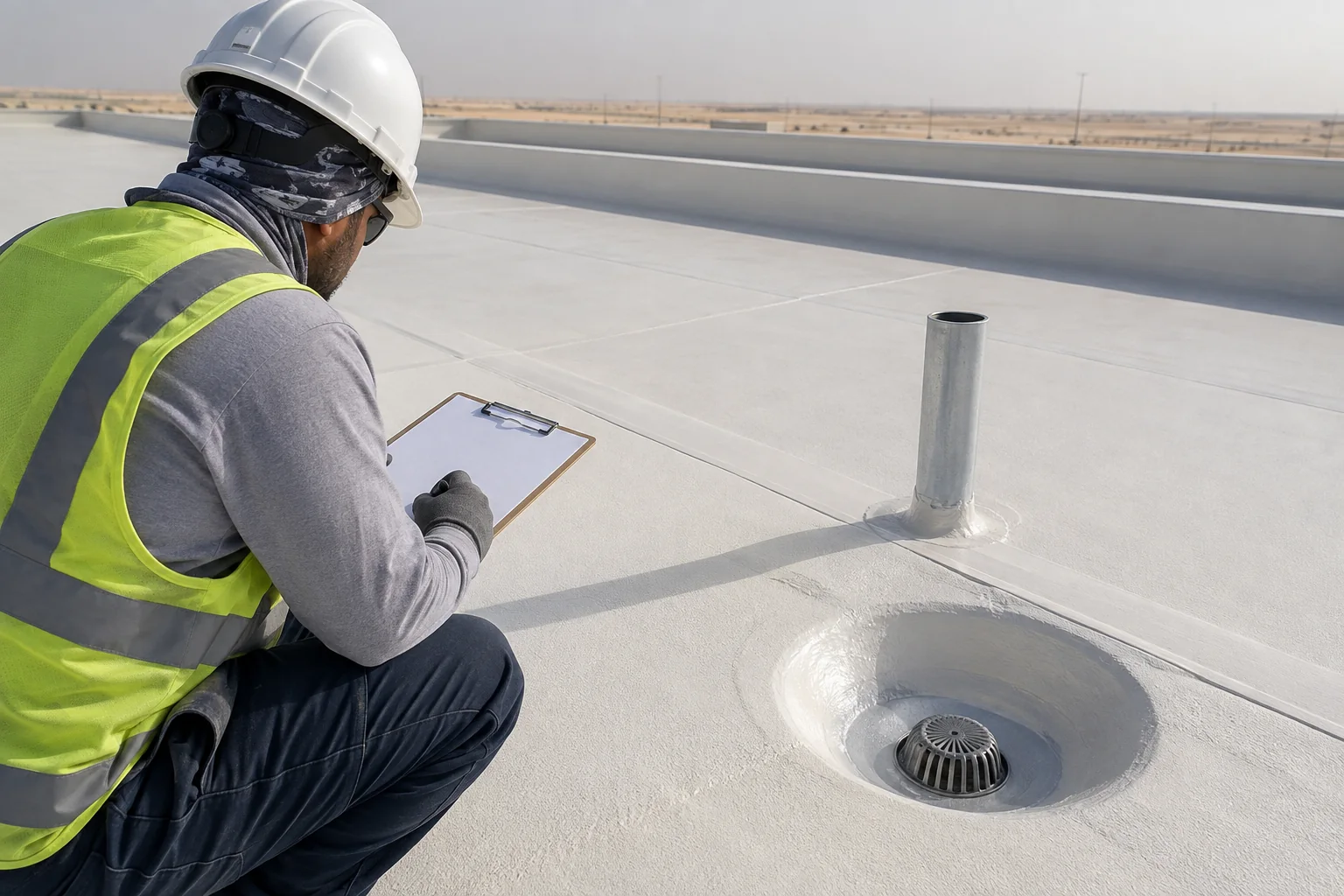
Send the city, approximate roof area, photographs, drawings or BOQ, existing roof build-up, drainage details, access constraints and target programme. SolidDrops can help direct the enquiry toward the appropriate waterproofing discussion.
 Chat Online
Use this feature to chat with our agent.