
Choose an ESD route when
- static-sensitive devices or assemblies are handled;
- the consultant specifies floor resistance or a floor-person test;
- the room is part of an electrostatic protected area;
- grounding and periodic verification are required.
Plan ESD flooring as part of the facility’s static-control strategy. Define the room use, required test method, approved acceptance criteria and substrate condition before comparing conductive or dissipative epoxy systems. Send these details to SolidDrops for a focused project-scope review.
Share your BOQ, room use, area, city, photos and ESD requirement. We can help route the inquiry toward a practical system, installation scope, testing plan and quotation.
Plan your project
“Anti-static” is not a complete acceptance specification. The project’s ESD specialist should define the applicable criteria and test approach before the floor system is selected.
| Project situation | What to establish | Useful next step |
|---|---|---|
| Design review | Protected activity, room use, required standard and acceptance criteria | Get the requirement confirmed by the responsible project specialist. |
| System review | Substrate, complete coating build-up and grounding arrangement | Review the proposed components together; do not substitute a layer without approval. |
| Handover | Test method, locations, environmental conditions and record format | Agree who tests, who reviews the results and how exceptions are resolved. |
| Operation | Footwear/other controls where applicable, cleaning and retesting | Include approved maintenance instructions and responsibilities in handover. |
Send your project city, drawings or BOQ, quantities and site photographs to [email protected], or call +966 50 213 1112. Confirm the proposed scope and supporting documents before ordering.
Anti-static ESD epoxy flooring is a seamless resin floor designed to control electrostatic charge through a specified electrical path. A complete route may include prepared concrete, primer, conductive primer, copper grounding details, a conductive or dissipative resin layer and final testing. Standard epoxy is not automatically an ESD system.
Use ESD flooring when static charge is an identified operational risk and the floor must form part of a defined control program. Use standard epoxy when the requirement is primarily dust control, cleanability, abrasion resistance or concrete protection.
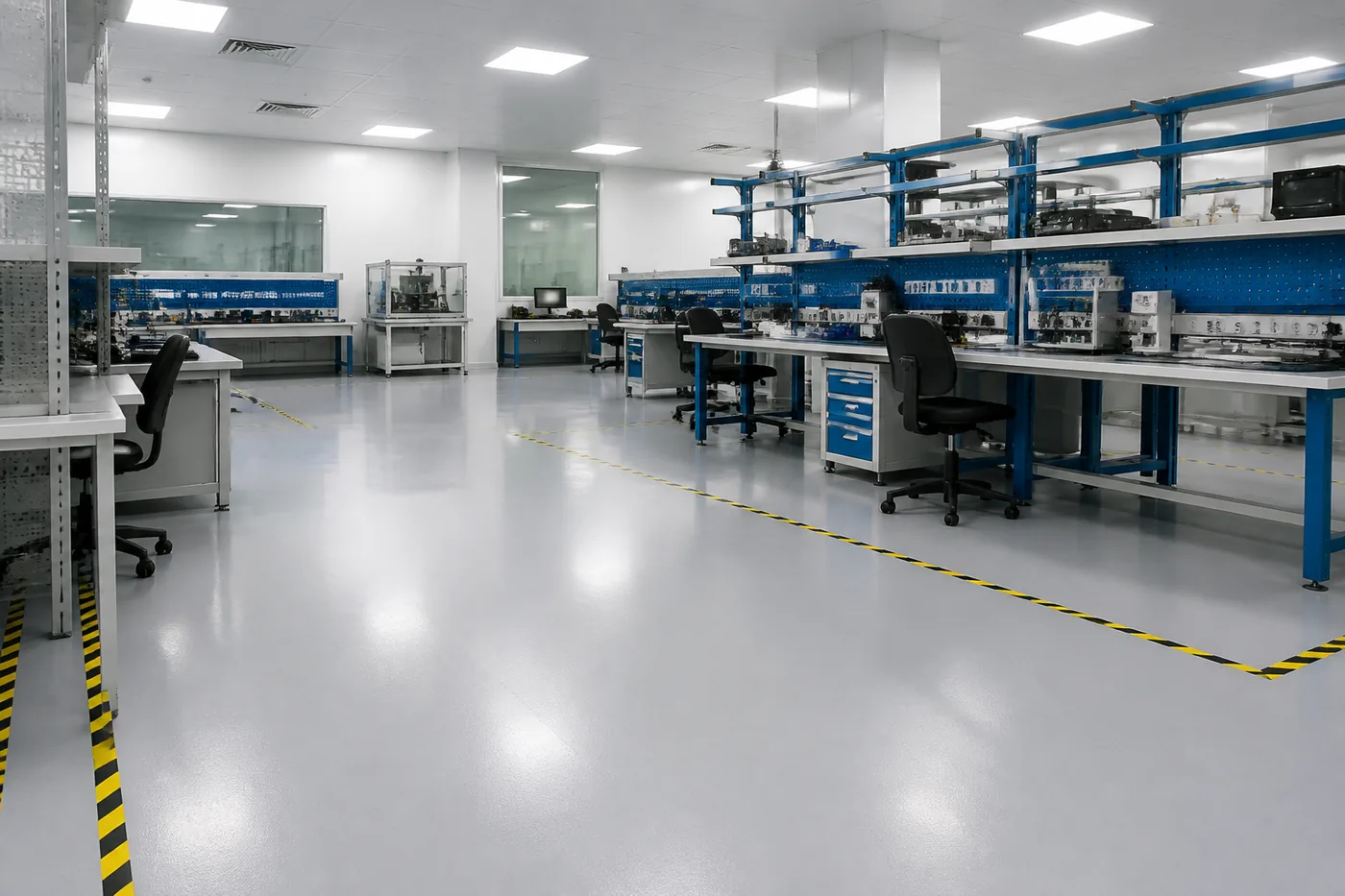
The room use matters more than a generic industry label. A data-center underfloor, electronics assembly line, hospital laboratory and clean pharmaceutical support area can require different finishes, details and acceptance checks.
Assembly, repair, calibration, testing, component handling and packaging areas where uncontrolled discharge can damage sensitive parts.
Technical rooms, network operation areas, equipment corridors and structural slabs beneath raised access floors where dust control and static management may be specified.
Seamless, cleanable surfaces with coved transitions, controlled cleaning and electrical performance coordinated with the room protocol.
Testing, utilities, controlled packaging and technical support rooms where cleanability, chemicals and static-sensitive processes must be reviewed together.
Electronics, battery components, sensors, instrument assembly and test areas with sensitive devices, carts or production equipment.
Facilities where operators, equipment and flooring need a coordinated path to ground under the project electrical and ESD requirements.
Send the room use, consultant notes and floor photos. SolidDrops can help identify the questions that must be answered before pricing.
Saudi Arabia is expanding digital and industrial infrastructure. MCIT has published an objective of 1,300 MW of data-center capacity by 2030; Google Cloud opened its Dammam region in 2023; PIF's HUMAIN is developing next-generation AI and data-center infrastructure; and AWS states that its Saudi infrastructure region is on track for December 2026. These projects increase demand for technically coordinated floors, but they do not make one floor system correct for every room.
Room-by-room rule: ESD flooring is not automatically mandatory in every data center or factory. The requirement should come from the project ESD program, equipment or process risk assessment, consultant specification, owner standard, or approved design. General plant areas may need standard industrial epoxy; a data-center structural slab may need only dust control; and an ESD finish may be required only in selected operating, assembly, repair or test zones.
Coordinate the exposed walking surface, raised-access panels, pedestal bonding, racks, grounding network, rolling loads and acceptance criteria. Do not assume that a conductive slab coating replaces the designed raised-floor and equipment-grounding system.
The structural slab may need a clean, dust-controlled coating, or a specified ESD resin finish. Confirm air-flow strategy, access, cable work, grounding points, moisture, repair access and whether the electrical requirement applies to the slab or the panel surface.
Network operations, control, UPS support, IT repair and test rooms need separate review. Component handling, personnel grounding, battery or chemical exposure, slip resistance and maintenance traffic can lead to different flooring routes.
Electronics production commonly evaluates the complete person-footwear-floor path alongside benches, tools, packaging and groundable points. Define the electrostatic protected area, process sensitivity, test method and operating conditions before approval.
Instrument assembly, sensors, control devices, automotive electronics and selected battery-component areas may need dissipative or conductive finishes. Chemical resistance, carts, impact, cleaning and shutdown constraints remain part of the system choice.
Clean technical rooms and controlled production areas may combine ESD performance with seamlessness, coving, low-shedding finishes and documented cleaning. The approved build-up should address all requirements rather than treating conductivity as the only criterion.
Send these data-center inputs: room or zone schedule, exposed floor type, raised-floor details, slab condition, grounding concept, rack or equipment layout, rolling loads, cleaning method, acceptance test and programme.
Send these factory inputs: process and components, EPA boundaries, required resistance or voltage criteria, footwear plan, chemicals, traffic, substrate, grounding points, BOQ, test plan and shutdown window.
Send the room schedule, BOQ or specification. SolidDrops will help separate dust-control, standard industrial flooring and ESD-system requirements before quotation.
Choose the route against the complete requirement. Electrical classification alone does not answer questions about substrate moisture, seamlessness, repairs, rolling traffic, cleanability or shutdown time.
| Floor route | Typical fit | Why buyers consider it | Questions before approval |
|---|---|---|---|
| Conductive epoxy | Specialist electronics, production and controlled technical zones. | Seamless resin finish with a designed path to ground. | Required resistance, grounding layout, primer, tape, footwear, test method and sampling plan. |
| Static dissipative epoxy | Labs, clean technical rooms, support spaces and selected electronics areas. | Controlled charge dissipation with concrete protection and cleanability. | Whole-system target, traffic, cleaners, topcoat compatibility, humidity and maintenance. |
| ESD vinyl sheet or tile | Healthcare, laboratories, offices and interiors preferring resilient flooring. | Factory-produced resilient finish and planned sheet or tile replacement. | Subfloor moisture and flatness, adhesive, seams, welding, grounding strips and rolling loads. |
| Raised access floor finish | Data centers, control rooms and technical areas needing underfloor services. | Access to services with selected ESD laminate, vinyl or carpet finishes. | Panel system, pedestal grounding, finish, load, air leakage, maintenance access and slab coating below. |
| Standard epoxy coating | Warehouses, workshops and non-ESD utility spaces. | Dust control, abrasion resistance, cleanability and concrete protection. | Do not market or approve it as ESD flooring without verified static-control performance. |

A credible specification names the complete system and verification route, not only the final coat. Exact layers and consumption rates must follow the approved manufacturer data and the actual slab condition.
Sound concrete with contamination removed, defects repaired and moisture risk assessed.
Selected for adhesion, slab condition and the approved ESD system sequence.
Conductive primer plus copper tape, plates or another manufacturer-approved grounding detail where specified.
The conductive or dissipative resin layer installed at the specified thickness and finish.
Edges, thresholds, penetrations, drains and movement joints coordinated without interrupting performance.
Agreed points, conditions, method, results, repairs, cleaning guidance and maintenance schedule.
This checklist is designed to make BOQ reviews and quotation comparisons more useful. Final criteria remain the responsibility of the project consultant, ESD coordinator, approved manufacturer and testing plan.
| Specification item | What to define | Why it changes the offer |
|---|---|---|
| Room and process | Room use, sensitive devices, operators, carts, equipment and ESD-protected-area status. | Determines whether the floor is a material finish or part of personnel/equipment grounding. |
| Electrical requirement | Conductive or dissipative route, resistance or voltage criteria, test method and acceptance limits. | Controls product selection, grounding, application and verification. |
| Substrate | Concrete age, strength, moisture, contamination, cracks, old coating, joints and flatness. | Changes preparation, repair, primer and moisture-mitigation scope. |
| Mechanical exposure | Foot traffic, carts, pallet jacks, forklifts, dropped tools and maintenance equipment. | Influences thickness, resin type, wear layer and repair planning. |
| Chemicals and cleaning | Detergents, disinfectants, solvents, spills, cleaning machine and frequency. | Affects resin and topcoat compatibility and long-term conductivity. |
| Finish and safety | Smoothness, slip requirement, color, gloss, coving and line marking. | Texture and decorative choices can alter cleaning and electrical behavior. |
| Grounding coordination | Ground points, copper tape layout, connection responsibility and electrical verification. | Prevents gaps between flooring, electrical and ESD scopes. |
| Handover | Test points, reports, as-built grounding notes, approved cleaner and retest frequency. | Turns a coating installation into a maintainable static-control system. |
Important: a quoted resistance range from a product sheet is not a substitute for a project-level ESD design. Confirm whether the requirement applies to the floor material, floor-to-ground measurement, or the complete person-footwear-floor system.
The exact method statement follows the approved material system, site survey and consultant requirement. This sequence keeps the commercial scope aligned with the technical risk.
Confirm room use, ESD criteria, area, location, traffic, cleaners, details and shutdown window.
Review moisture, contamination, laitance, cracks, joints, old coatings, levels and repair needs.
Coordinate product data, layer build-up, grounding design, samples, method statement and test plan.
Mechanically prepare, repair, prime, ground and apply the ESD layers under controlled site conditions.
Complete visual checks, agreed electrical testing, records, cleaner guidance and maintenance planning.
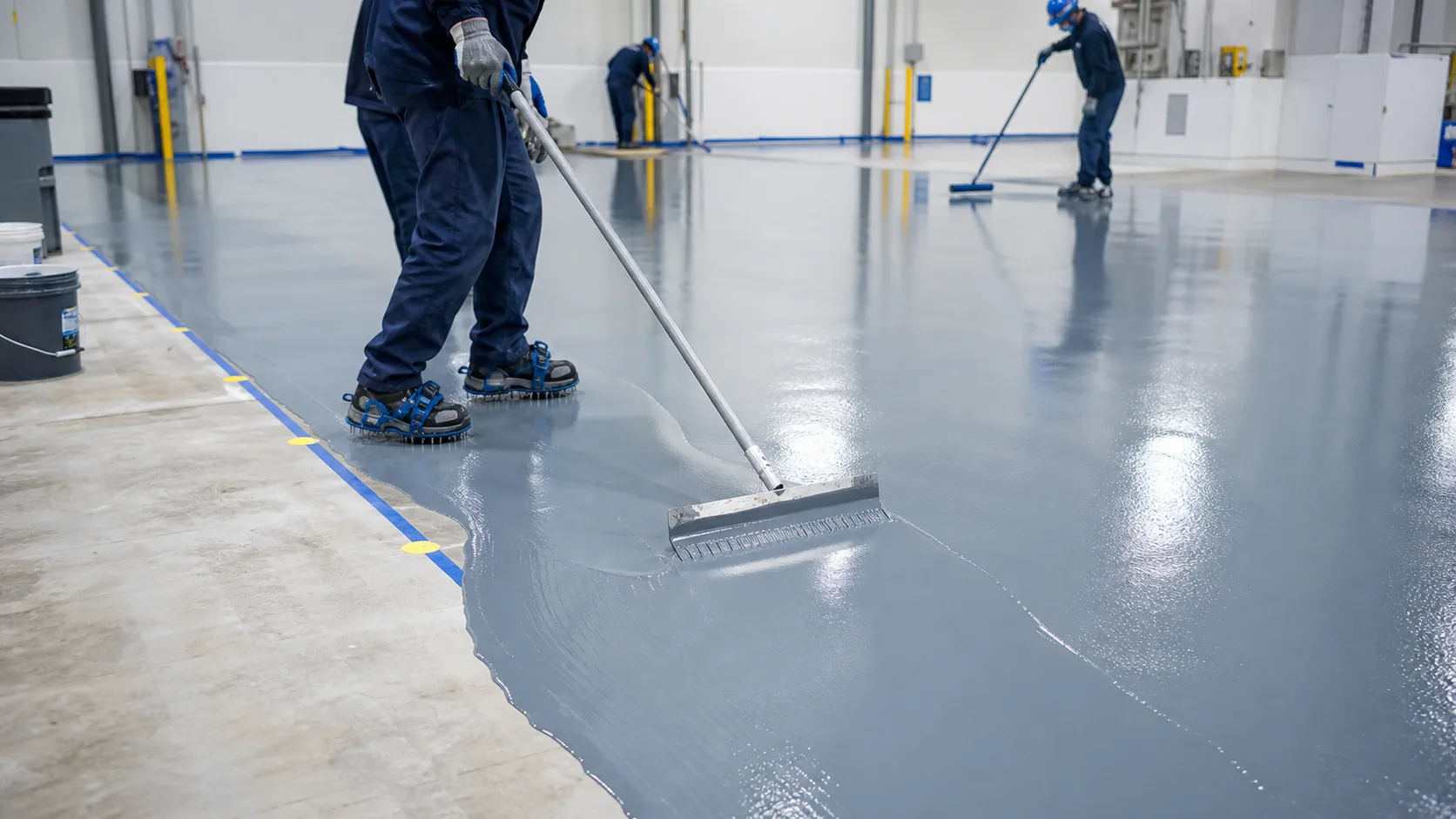

Electrical test failure is not always caused by one bad topcoat. The problem can begin at specification, substrate, grounding, application, cleaning, repair or testing.
“Anti-static” is used as a generic label without a defined resistance range, floor-person requirement or acceptance method.
Coating is applied over an unsuitable slab, old contamination or unverified moisture conditions.
Tape, conductive layer, earth point and electrical responsibility are not coordinated before installation.
Generic wax, polish, cleaner residue or non-ESD repairs change the intended surface behavior.
High-traffic lanes, thresholds, turning areas and impact zones are not inspected or retested.
No baseline readings, sample plan, grounding record, approved cleaner or retest schedule is handed over.
Joints, coves, columns, doorways and penetrations interrupt the system or create difficult repair zones.
Different instruments, electrodes, humidity conditions or procedures are used without an agreed standard.
A responsible quotation cannot come from area alone. Two rooms with the same square metres can need very different preparation, grounding, details, testing and shutdown planning.
Coating removal, grinding, repairs, moisture treatment, levels and joint work.
Conductive or dissipative route, thickness, finish, chemical and mechanical exposure.
Copper layout, earth points, coves, penetrations, thresholds and room geometry.
City, access, phasing, occupied building, curing window, temperature and humidity.
Test method, sample count, reporting, retesting and consultant documentation.
Material-only, approved applicator support, complete application or repair/recoat scope.

An existing floor should be assessed before a repair product is chosen. The goal is to restore both physical integrity and the specified static-control route.
Map delamination, cracks, wear, contamination, damaged coves, grounding points and previous patches.
Where appropriate, document current readings and compare them with the available original requirement.
Check whether the existing resin can accept a compatible repair or recoat after preparation.
Confirm that grounding details remain connected and accessible before covering them.
Use a controlled sample or trial where adhesion, appearance and electrical performance need confirmation.
Record completed repairs, final readings, approved cleaning route and future inspection points.
SolidDrops supports consultants, contractors, facility teams, owners and procurement groups. Include the project city in the inquiry so logistics, access and execution planning can be considered early.
This page is the main SolidDrops service route for anti-static ESD epoxy flooring. Related guides, product pages and categories support deeper research without replacing this page.
The ESD Association describes ANSI/ESD STM7.1 as a method for floor-material qualification, acceptance and monitoring. ANSI/ESD STM97.1 addresses the resistance of a person wearing footwear while standing on a flooring system. These are different questions and should not be mixed in a quotation.
Specifications also need practical controls for substrate preparation, moisture, grounding, installation, testing, cleaning and protection. Always use the current project-approved standard and manufacturer technical data rather than relying on a generic website range.
Use these answers as a starting point. Product approval and installation criteria must still follow the actual project specification and site condition.
Anti-static ESD epoxy flooring is a seamless resin system designed to give electrostatic charge a controlled route to ground. Unlike standard epoxy, the complete build-up can include a compatible primer, conductive layer, copper grounding details and an ESD top layer selected against a defined test requirement.
No. Ordinary epoxy can protect concrete and control dust, but it should not be treated as an ESD floor unless the complete system has defined electrical performance, grounding details and an agreed verification method.
Both are static-control routes, but they are specified for different resistance and operational requirements. The correct choice depends on the ESD program, sensitive devices, personnel grounding method, room use and acceptance criteria. Product names alone are not enough to make the selection.
The floor is one part of the ESD control system. When personnel grounding is required, footwear, floor, person and ground path need to work together. The project ESD coordinator or consultant should define the complete system and test method.
Many resin ESD systems use conductive primer and copper tape or another approved grounding detail, but the layout varies by manufacturer, room geometry, earth points and project specification. The grounding plan should be approved before application starts.
Common applications include electronics assembly and repair, cleanrooms, laboratories, control rooms, selected data-center and server-room zones, pharmaceutical support areas, EV component work, testing rooms and static-sensitive packaging areas.
No. The requirement should come from the project ESD program, equipment or process risk assessment, consultant specification, owner standard, or an approved design. Many general factory areas only need durable industrial flooring, and some data-center zones use raised-access panels while the slab below only needs a dust-control coating. Confirm the room-specific requirement before selecting or pricing the floor.
ESD epoxy is seamless and suits many concrete technical areas, while ESD vinyl can suit projects that prefer resilient sheet or tile finishes. Subfloor moisture, joints, rolling loads, cleanability, repair strategy, shutdown time and test requirements should decide the route.
It can be considered beneath raised access flooring where the design calls for a clean, dust-controlled or static-control finish on the structural slab. The raised-floor assembly, grounding strategy, access needs and electrical design must be reviewed together.
Testing may include floor resistance measurements and, where required, evaluation of the person-footwear-floor system. The current project-approved standard, sampling plan, environmental conditions and pass criteria should be stated before installation and repeated as required after handover.
Potential causes include the wrong system, incomplete grounding, poor mixing or application, excessive substrate moisture, incompatible repairs, contamination, insulating polish or cleaner residue, worn traffic lanes, damaged surfaces and testing that does not follow the agreed method.
Cost depends on area, slab condition, removal and preparation, crack repair, moisture risk, system thickness, resistance requirement, grounding layout, coves and details, access, city, shutdown window, testing scope and documentation. A useful quotation needs project information rather than a generic square-metre rate.
Possibly, but the existing floor, adhesion, contamination, grounding continuity and remaining electrical performance must be assessed first. Generic epoxy patches can interrupt the intended static-control path, so repair materials and retesting should be planned as one system.
Send the project city, facility and room use, approximate area, drawings or BOQ, site photos, slab condition, ESD or resistance requirement, grounding information if available, traffic, cleaning method and required schedule.
SolidDrops supports anti-static and ESD flooring inquiries across Saudi Arabia, including Riyadh, Jeddah, Dammam, Jubail, Makkah, Madinah, Tabuk and other KSA project locations by coordination.
Use the form below for a system recommendation, BOQ/specification review, budget quotation, supply-and-installation inquiry, or an existing-floor repair assessment. For urgent coordination, call or send the details by WhatsApp.
Complete the project details below. Required fields are kept short; drawings, BOQ and photos can be shared during follow-up.
Further reading — SolidDrops technical guides
 Chat Online
Use this feature to chat with our agent.