
Synergy · UL Listed wet-chemical system
Kitchen Fire Suppression System in Saudi Arabia
Automatic wet-chemical protection for cooking appliances, hood plenums and exhaust ducts. SolidDrops supplies and installs the Synergy Kitchen Fire Suppression System for restaurants, hotels, hospitals and food courts across the Kingdom.
- UL Listed
- Designed to NFPA & UL standards
- Automatic + manual actuation
- Non-toxic agent
- Gas shut-off integration
In brief
The Synergy Kitchen Fire Suppression System is a UL Listed wet-chemical fire suppression system for commercial kitchens in Saudi Arabia. Fusible links above the appliances detect fire, the cylinder discharges a low-pH liquid agent onto the cooking surface, hood plenum and exhaust duct, and the gas supply is shut off automatically. SolidDrops designs, supplies and installs it Kingdom-wide.
Key facts
What you get, at a glance
Overview
What a kitchen fire suppression system is, and where it belongs
A kitchen fire suppression system is a fixed, automatic extinguishing system that protects the cooking appliances, the hood plenum and the exhaust duct of a commercial kitchen with a wet-chemical agent.
Cooking-oil fires are a different problem from ordinary fires. Oils and fats ignite at high temperatures, and once burning they hold that heat; water spreads them, and a hand extinguisher rarely reaches the plenum or the duct where grease has built up. Add open flames, red-hot cooking surfaces and a grease-laden environment and a small flare-up can move through the hood and into the ductwork in seconds. This is the hazard the Synergy Kitchen Fire Suppression System was developed for. It is built to NFPA and UL standards and is intended for the kitchens of hotels, restaurants, hospitals, institutes and similar occupied premises.
In Saudi Arabia the demand comes from three directions: new food-and-beverage fit-outs in malls and hotels, hospital and university central kitchens, and existing restaurants asked by their landlord, insurer or the authority having jurisdiction to bring hood protection up to standard. SolidDrops supplies and installs the system for all three, and coordinates the drawings and documentation the approving authority will ask to see.
Typical applications
- Fast-food chains
- Hotels & lodging
- Healthcare facilities
- Sports stadiums & complexes
- Educational facilities
- Corporate cafeterias
- Shopping-mall food courts
- Marine galleys
Operation
How the Synergy system detects, suppresses and isolates
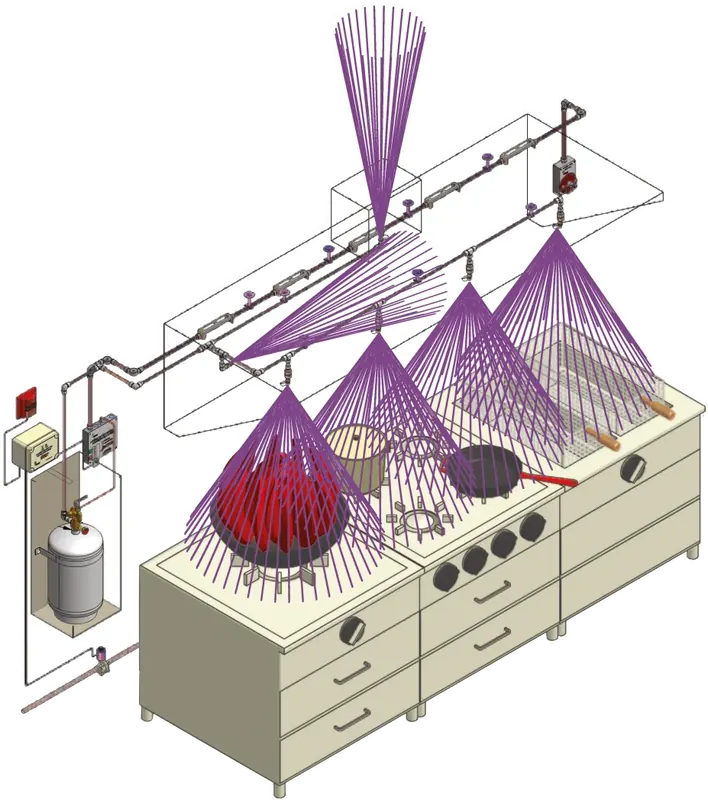
The sequence is mechanical from start to finish, which is why it keeps working during a power failure. Detect early, suppress rapidly, isolate safely: that is the whole design brief, and each step below maps to a component you can point to under the hood.
-
Detection
Fusible links sit over the cooking range and inside the hood duct on a tensioned steel wire. When the link metal reaches its fixed release temperature it melts and the two halves separate.
-
Actuation
Loss of wire tension releases the mechanical activation panel. A needle pierces a CO2 propellant cartridge, and the gas opens the cylinder valve through a hose.
-
Discharge
The cylinder sprays a low-pH liquid fine suppressant through the nozzles onto the plenum, the cooking surfaces and the exhaust duct at a predetermined flow rate.
-
Suppression
On contact with hot grease the agent forms a soap-like foam layer that insulates the grease from the air and cuts off its oxygen supply, so the fire cannot re-flash.
-
Isolation
A micro-switch on the panel stops the ventilation fan and cuts gas or electrical supply to the appliances. Gas shut-off valves and an audio-visual alarm can be tied in.
Manual release at any time. The manual pull station lets kitchen staff trigger the system at the first sign of fire, before the fusible links reach temperature. Both routes end in the same discharge and the same appliance shutdown.
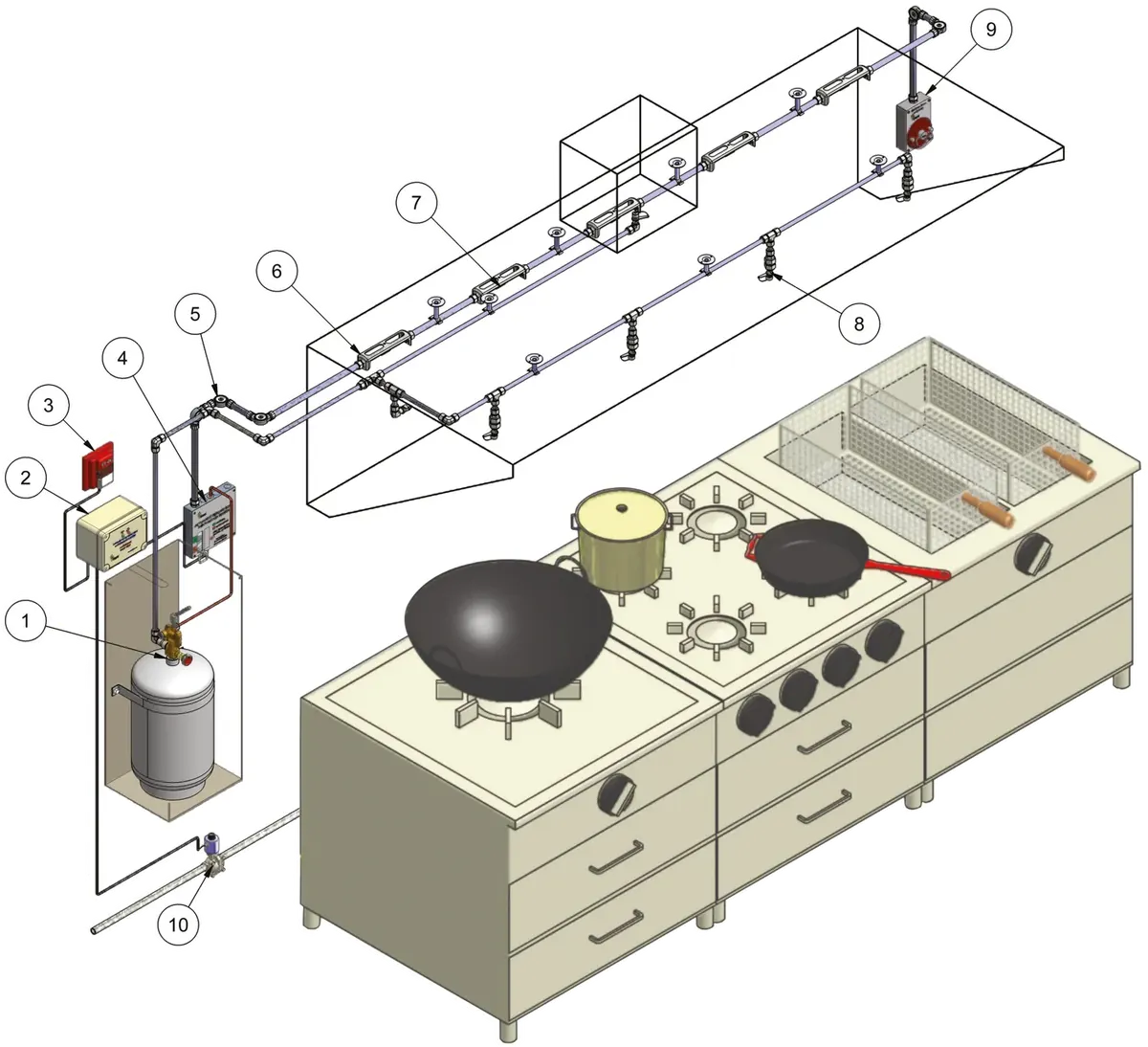
System components
The ten components of the Synergy kitchen fire extinguishing system
Everything ships as a matched, pre-engineered kit from the manufacturer. Piping runs are flexible, so the layout can follow the hood rather than the hood being redesigned around the system.
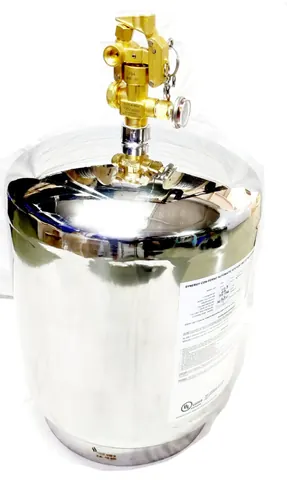
Cylinder with valve & pressure gauge
K-class stainless steel body, 9 to 30 litres
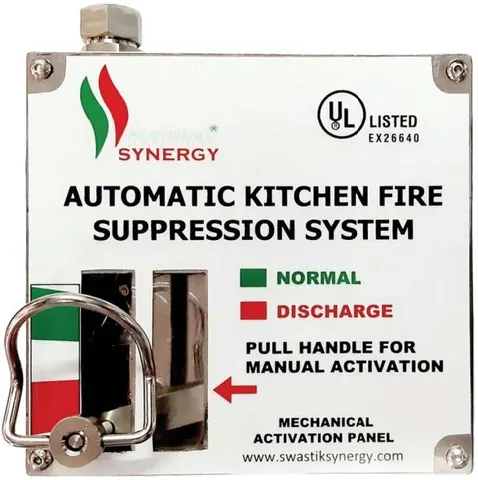
Automatic mechanical activation panel
CO2 cartridge, piercing needle, wire tension apparatus, micro-switch
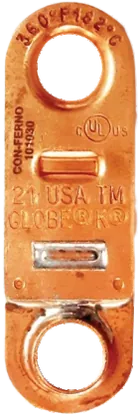
Fusible link
Fixed-temperature thermal release over the range and in the duct
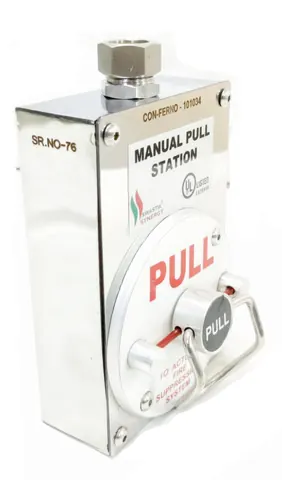
Manual activation pull station
Immediate release from a safe position near the exit
| Sr. | Component | Function |
|---|---|---|
| 1 | Cylinder with valve and pressure gauge | Stores the wet-chemical agent; gauge shows readiness at a glance |
| 2 | Activation relay unit | Carries the trip signal to fan and appliance shutdown circuits |
| 3 | Audio-visual alarm | Alerts staff on discharge |
| 4 | Automatic mechanical activation panel | Releases the cylinder when wire tension is lost |
| 5 | Corner pulley | Routes the detection wire around bends in the hood |
| 6 | Fusible link bracket | Holds each link in the hot-gas path |
| 7 | Fusible link | Fixed-temperature detector |
| 8 | Nozzle | Directs agent at appliance, plenum or duct |
| 9 | Manual activation pull station | Manual release |
| 10 | Gas shut-off valve | Isolates fuel supply on actuation |
Technical specifications
Cylinder sizes and agent properties
The K-class cylinder has a stainless steel body and is available in eight nominal capacities. The right size and the number of cylinders depend on the appliance line-up under each hood, the plenum length and the duct run; SolidDrops confirms this against the manufacturer’s design manual for each kitchen rather than quoting a rule of thumb.
| Property | Value |
|---|---|
| Cylinder body | Stainless steel, K-class |
| Cylinder sizes | 9, 12, 15, 18, 21, 24, 27 and 30 litres |
| Agent appearance | Light brown liquid |
| Agent specific gravity | 1.02 – 1.05 g/cm³ |
| Agent freeze point | −7.0 °C |
| Agent character | Low-pH wet chemical; forms a soap-like foam layer on hot grease |
| Toxicity | No toxic vapours released on discharge; suitable for normally occupied premises |
| Detection | Fixed-temperature fusible links on tensioned wire; manual pull station |
| Actuation | Mechanical, CO2 cartridge; no external power required |
| Interlocks | Ventilation fan stop; gas or electrical cut-off; optional gas shut-off valve and audio-visual alarm |
| Listing / standards | UL Listed; developed according to NFPA and UL standards |
Source: Synergy Kitchen Fire Suppression System brochure, 2026 edition. System configuration, capacities and certifications are subject to project-specific technical verification.
Overlapping nozzle design
Nozzle coverage overlaps across the appliance line, so cooking equipment can be re-ordered under the hood later without re-engineering the system.
Minimal downtime after discharge
The agent wipes off. Clean the equipment, recharge the cylinder and the kitchen is back in service, which matters to a restaurant far more than to a warehouse.
Unobtrusive installation
Flexible piping configurations let the system follow the hood geometry and stay out of the cook line’s way. It is protection that staff do not have to work around.
Saudi site conditions
What we check before quoting a Saudi kitchen
Appliance line-up and hood geometry
Every fryer, char-grill, range, wok and griddle under the hood is listed with its position and dimensions, because nozzle type and count are set per appliance. Hood length, plenum length and the duct route to the roof or wall termination decide how many detection points and duct nozzles the layout needs.
Gas and electrical isolation
The interlock is only as good as the valve it closes. We identify the gas line, the shut-off valve location and the electrical feeds to the appliances so the activation panel’s micro-switch and relay unit isolate the right circuits. Where the kitchen is all-electric, the shutdown is wired accordingly.
Approvals and handover
Shop drawings, the manufacturer’s UL documentation and the commissioning record are prepared for the authority having jurisdiction and the client’s insurer. Final acceptance of any fire system rests with that authority, so we build the file they will want to see from day one.
What to send for a quotation
- Kitchen layout or a sketch with hood positions and dimensions
- List of appliances under each hood (type and width)
- Photos of the hood interior, plenum and duct entry
- Gas supply route and existing shut-off valve, if any
- Project city and whether this is a new fit-out or a retrofit
- Any specification, BOQ or authority comment you have received
Process
From survey to handover
Synergy’s scope is design, supply, installation, integration and service, and SolidDrops delivers it in that order. The steps are short to read and long to do properly, which is the point.
- Site survey and appliance schedule. We measure the hood, plenum and duct and record every appliance in position. On a retrofit we also note existing detection wire routes and any old system to be removed.
- System design. Cylinder size and count, nozzle selection per appliance, detection-line routing with corner pulleys, and the shutdown scheme are worked out to the manufacturer’s design basis. Shop drawings follow.
- Supply. Cylinders, agent, activation panel, links, nozzles, piping and the gas shut-off valve are supplied as a matched kit.
- Installation. Piping, nozzles and detection line are installed in the hood and duct, the activation panel is mounted, and the manual pull station is placed on the exit path.
- Integration. Fan stop, gas and electrical cut-off, the alarm and any building-system interface are connected and tested.
- Commissioning and service. The system is tested, documented and handed over. Periodic service keeps the fusible links, cartridge and cylinder in a ready state.
Selection guidance
Is a wet-chemical hood system the right choice for your kitchen?
Choose it when
You cook with oil or fat under a hood in a commercial setting, staff are present, and you need appliance, plenum and duct protection in one listed system. That covers nearly every restaurant, hotel kitchen, hospital kitchen and food-court unit.
Look at something else when
The risk is an electrical cabinet, server room or generator enclosure rather than a cook line. For those, a clean-agent system such as the Synergy Firessense direct low-pressure system is the correct tool, and a wet-chemical agent is not.
Pair it with
A fire alarm system that receives the discharge signal, and a hygienic, slip-resistant commercial kitchen floor that can be hosed down after a discharge. SolidDrops supplies all three.
Frequently asked questions
Kitchen fire suppression in Saudi Arabia: what clients ask us
How does a kitchen hood fire suppression system work?
Fusible links above the appliances and in the duct hold a tensioned wire. When a link melts, the wire releases a mechanical activation panel that pierces a CO2 cartridge and opens the agent cylinder. Wet-chemical agent discharges from nozzles onto the cooking surface, hood plenum and exhaust duct, forms a soap-like foam on the burning grease and cuts off its oxygen, while the fuel supply and fan are shut down.
Is the Synergy kitchen fire suppression system UL Listed?
Yes. The Synergy Kitchen Fire Suppression System is UL Listed wet-chemical suppression for cooking appliances, hood plenum and exhaust ducts, and it was developed according to NFPA and UL standards. Certification for a specific project configuration is confirmed during technical verification, and SolidDrops provides the manufacturer’s documentation for the approving authority.
Which cylinder size does my kitchen need?
The K-class stainless steel cylinder is available in 9, 12, 15, 18, 21, 24, 27 and 30 litres. The size and number of cylinders depend on how many appliances sit under the hood, their type, and the plenum and duct lengths, because each protected point needs a nozzle with a defined flow. Send us the appliance list and hood dimensions and we size it to the manufacturer’s design basis.
Does the system work if the power fails?
Yes. Detection and actuation are mechanical: fusible links, a tensioned wire and a CO2 cartridge, with no dependence on mains power. The system is described as 24-hour protection because the automatic detection and actuation controls are always on. The optional audio-visual alarm and building-system interfaces are the only electrically powered parts.
Can the system shut off the gas supply automatically?
Yes. A micro-switch in the automatic mechanical activation panel cuts the gas or electrical supply to the appliances and stops the ventilation fan when the system trips. A gas shut-off valve is one of the ten standard components, and an audio-visual alarm can be integrated as well.
Is the wet-chemical agent safe for a kitchen where staff are working?
The agent does not release toxic vapours during discharge, which is why the manufacturer describes the system as suitable for normally occupied premises. It is a low-pH liquid that wipes off equipment after a discharge, so clean-up and restart are quick compared with dry-powder alternatives.
Can the system be retrofitted to an existing hood?
Yes. Piping is flexible and the detection line runs on corner pulleys, so the system follows the existing hood and duct rather than requiring a new hood. On retrofits we survey the hood interior, duct entry and gas line first, and remove or decommission any earlier system before installing.
Which cities does SolidDrops cover for kitchen fire suppression?
SolidDrops supplies and installs the Synergy system across Saudi Arabia, including Jeddah, Riyadh, Dammam, Khobar, Jubail, Makkah, Madinah and Tabuk. We are based in Jeddah and coordinate site surveys, installation and commissioning nationally.
Request a quotation
Send us the hood, we’ll send back the system
Share the appliance list, hood dimensions and a few photos. A SolidDrops engineer reviews them against the Synergy design basis and replies with a configuration and quotation. حياكم الله — we work in English and Arabic.
- +966 50 213 1112 (24/7)
- WhatsApp SolidDrops
- [email protected]
- Jeddah, Saudi Arabia · serving the Kingdom
Kitchen fire suppression enquiry
Fields marked * are required. Attach drawings or photos if you have them.
 Chat Online