
Stonlux ESD
Final 2-3 mm self-leveling ESD epoxy surface for smooth, clean, chemical-resistant and static-control areas.
SolidDrops supports Saudi Arabia project teams with Stonhard Stonlux ESD system selection, supply coordination, installation planning and submittal review for cleanrooms, electronics, data centers, automotive plants, laboratories and other static-sensitive facilities.

Stonlux ESD is a three-component, pigmented, liquid-rich self-leveling conductive epoxy flooring system used where static electricity must be controlled. The system is commonly reviewed for electronics manufacturing, packaging, assembly, testing, clean environments, data centers, laboratories, automotive component areas and sensitive equipment rooms.
This page is based on the attached Stonlux ESD submittal and current public product research. Final specification should follow the latest manufacturer data sheet, project BOQ and site conditions.
Consultants, owners, contractors, facility managers, procurement teams and project engineers can use this page to ask the right questions before choosing a conductive or dissipative ESD flooring system in Saudi Arabia.
For Stonlux ESD inquiries, SolidDrops reviews the complete system build-up, not only the final epoxy layer. That keeps the recommendation practical for grounding, moisture, surface preparation, coving, cleaning and handover testing.
Final 2-3 mm self-leveling ESD epoxy surface for smooth, clean, chemical-resistant and static-control areas.
Substrate primer used to fill voids, support bond and identify outgassing before the ESD overlayment.
Conductive ATK or dissipative ATM primer is selected according to the project ESD resistance requirement.
Stonprime 786 OPR, Stondri MVT, Stonset QS5 and Pro-Struct repair products are reviewed where slab condition requires them.
Stonshield CR-980 Cove Base and Pro-Struct 748 joint sealant support hygienic transitions and movement-joint detailing.
Stonclad, Stonshield, Stonblend, Stonkote, Stonglaze, Stonchem and Stondeck options can be considered for adjacent project areas.
The most important decision is not the product name alone. The correct system depends on the risk profile, ESD program, traffic, slab condition, chemical exposure, cleaning method and acceptance test requirement.
| Selection factor | What to confirm before quotation | Why it matters |
|---|---|---|
| Conductive or dissipative target | Required resistance range, test method and ESD program requirements. | ATK and ATM primer routes produce different resistance behavior and must be tested. |
| Substrate and moisture | Concrete strength, moisture, oil contamination, old coating and surface profile. | Weak preparation can cause pinholes, poor bond, outgassing or inconsistent readings. |
| Traffic and equipment | Forklifts, carts, point loads, assembly lines, maintenance access and expected abrasion. | The floor must support both ESD control and the real mechanical load. |
| Chemicals and cleaning | IPA, solvents, fuels, oils, detergents, process chemicals and washdown frequency. | Product data and chemical resistance guidance should be checked before approval. |
| Detailing | Grounding points, copper bridges, joints, coves, drains, wall junctions and shutdown time. | ESD performance depends on the installed system and continuity, not only the top surface. |
The attached submittal points to a controlled process: surface preparation, priming, conductive or dissipative primer, application, conditioning and electrical testing. SolidDrops helps turn this into a practical Saudi Arabia site plan for BOQ, shutdown and handover coordination.
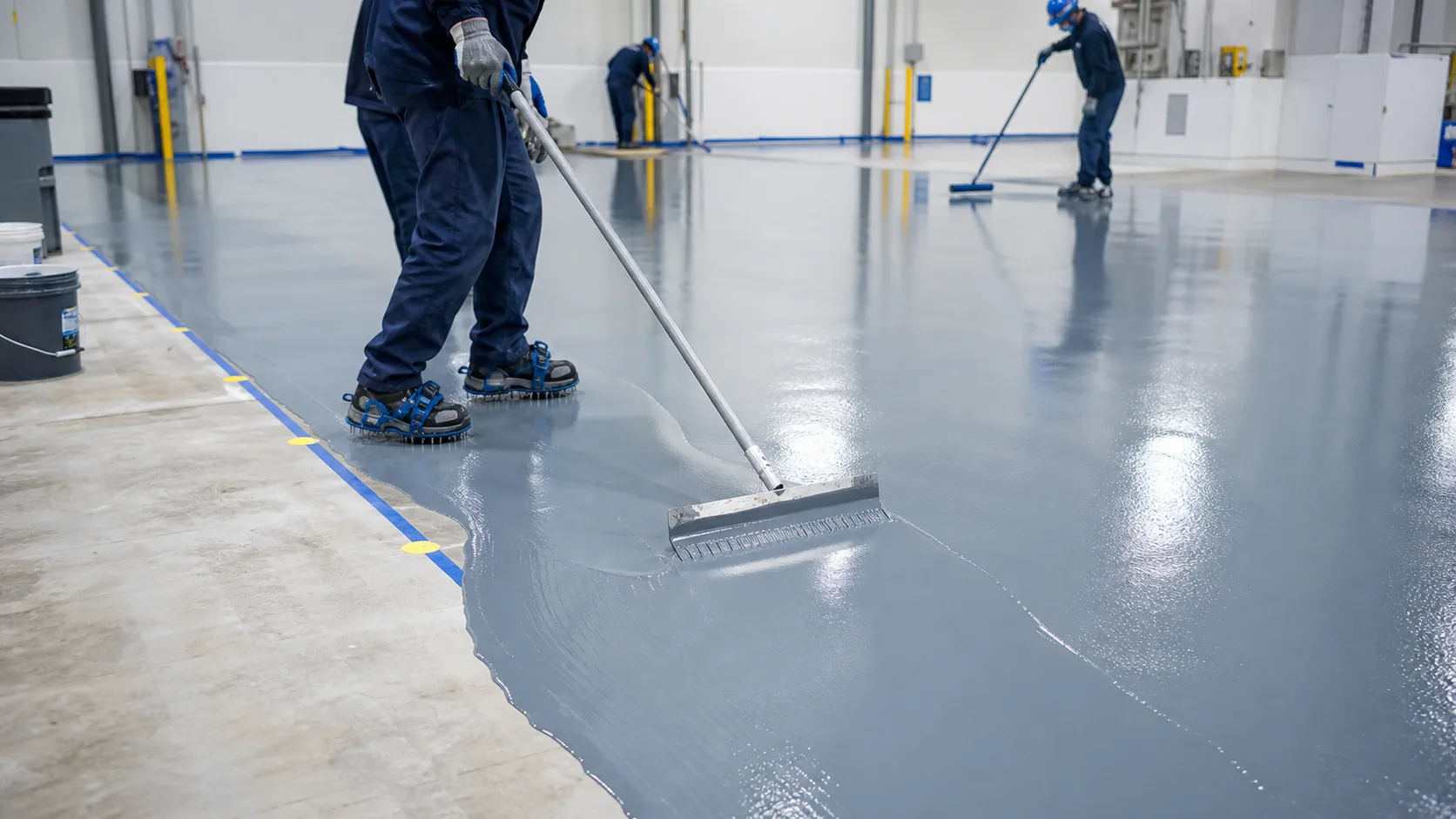
Confirm room use, ESD target, traffic, chemicals, cleaning method, substrate condition and access schedule.
Remove oil, grease and contamination; create the required profile; check moisture and tensile bond expectations.
Prime, remove ponded resin and squeegee lines, repair pinholes and skim blowholes before the ESD layer.
Apply ATK or ATM primer and verify resistance readings before installing Stonlux ESD over the surface.
Apply the 2-3 mm self-leveling system with proper tools, spiked shoes, de-aeration and joint protection.
Condition the floor, take point-to-point and point-to-ground readings, document results and advise maintenance.
Assembly lines, battery rooms, component testing, inspection labs, control rooms and clean production corridors.
Electronics assembly, repair benches, server support areas, clean technical rooms and sensitive equipment zones.
Laboratories, controlled packaging, testing areas, clean corridors, QA rooms and low-dust maintenance zones.
Static-sensitive packaging, labelling, film handling, production lines and areas with carts or rolling equipment.
Chemical handling support areas, workshops, control rooms and production spaces needing a clean, smooth surface.
Existing ESD floors that need survey, recoating, repair planning or replacement without losing required performance.
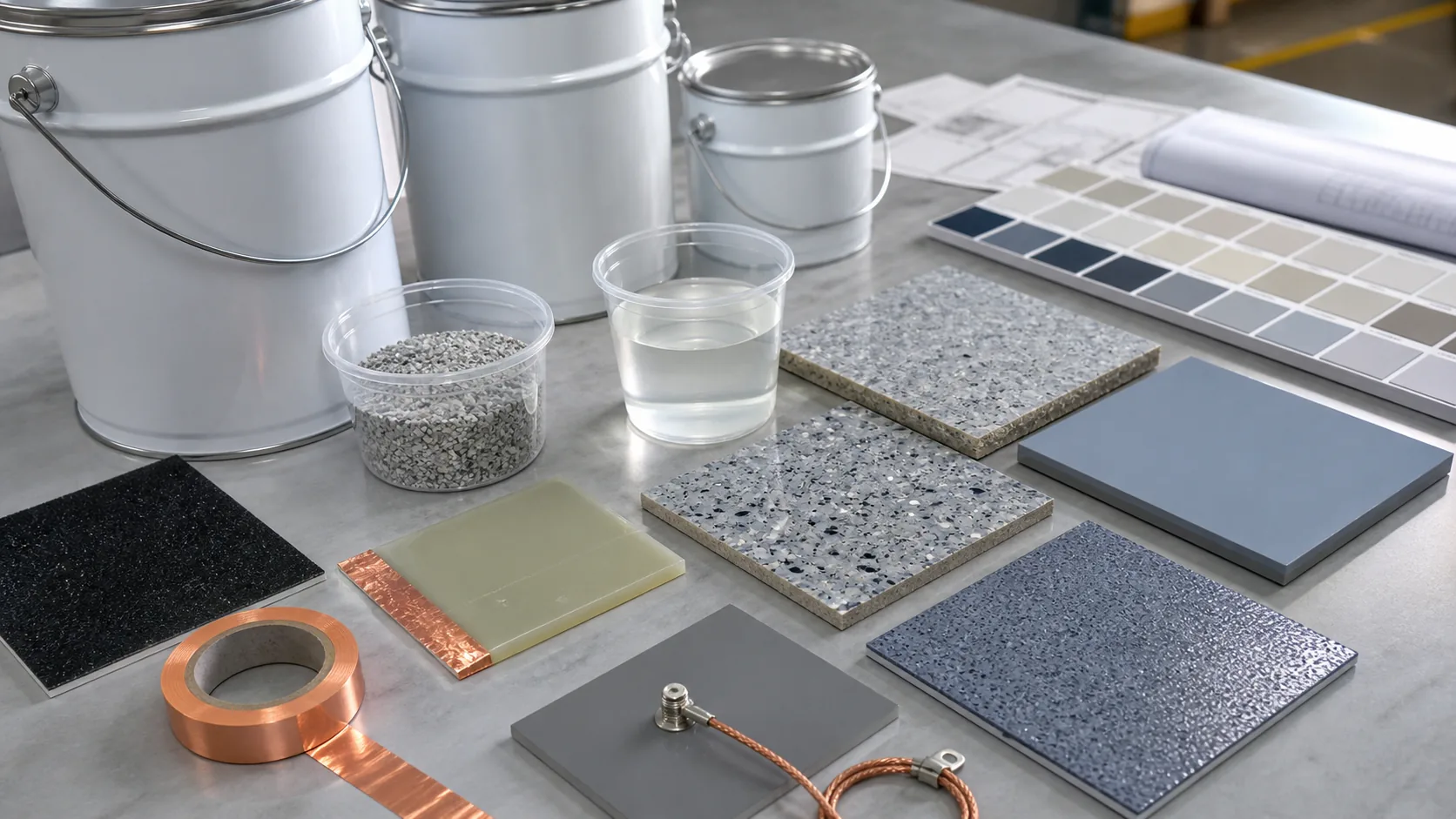

Static-control performance, seamless surface, smooth self-leveling finish, chemical resistance, abrasion resistance, cleanability and testable handover requirements.
Helps reduce uncontrolled static discharge risk, supports sensitive equipment areas, simplifies cleaning and gives facility teams a clear inspection and maintenance route.
System mapping helps consultants and buyers compare primer, grounding, patching, coving, joint treatment, surface preparation and testing instead of comparing only topcoat names.
SolidDrops supports Stonhard and ESD flooring inquiries all over Saudi Arabia, including Jeddah, Riyadh, Dammam, Jubail, Makkah, Madinah and Tabuk. Send the city, approximate area, photos, drawings, BOQ, existing slab condition, cleaning method, expected traffic and target ESD requirement for faster routing.
City, room type, area in m2, substrate photos, BOQ/drawings, chemical list, ESD target, traffic load, shutdown window, preferred color, cove base needs and any old coating or moisture concern.
A Stonlux ESD floor is often only one part of a Saudi industrial or commercial project. SolidDrops can route related inquiries across flooring, waterproofing, sports flooring, FRP panels, chemicals, pigments, fire alarm systems and building materials.
| SolidDrops category | How it connects to Stonlux ESD projects |
|---|---|
| Flooring | Epoxy, PU, PU-cement, ESD, self-leveling, anti-slip, hygienic and heavy-duty resin floors. |
| Waterproofing | Roof, wet area, tank, basement, podium and concrete protection coordination for the same facility. |
| Sports flooring | Indoor and outdoor sports surfaces for schools, clubs, gyms and multipurpose areas. |
| FRP panels | Hygienic wall and ceiling panels for cleanrooms, kitchens, cold rooms, wet areas and renovation zones. |
| Chemicals trading | Construction chemicals, sealants, coatings, repair materials and industrial supply support. |
| Pigments | Color and material support for coatings, concrete products and decorative or industrial finishes. |
| Fire alarm systems | Project support for fire alarm materials and related building-safety inquiry routing. |
| Building materials | Supporting materials for contractors, maintenance teams, fit-out works and industrial project supply. |
No. Standard epoxy is generally selected for durability and cleanability. Stonlux ESD is reviewed where static control is required, using conductive or dissipative layers, grounding details and electrical testing.
It is commonly reviewed for electronics, cleanrooms, data centers, automotive and EV facilities, laboratories, packaging areas, control rooms and other static-sensitive industrial zones.
The attached product data describes Stonlux ESD as a 2-3 mm self-leveling epoxy system. Final thickness should follow the current data sheet, project specification and actual site requirement.
Area size, slab condition, preparation method, moisture, grounding design, primer selection, system thickness, cove base, joints, chemical exposure, testing and city logistics all affect the quotation.
Many ESD systems require conductive layers, copper bridges or grounding details. The exact grounding design must be reviewed before installation and confirmed during electrical testing.
Yes, when the system selection, substrate condition, coving, detailing, cleaning plan and ESD test requirements fit the cleanroom standard and project specification.
ESD floors are normally checked with agreed point-to-point and point-to-ground resistance readings after the primer stage and again after the Stonlux ESD surface is installed and conditioned.
SolidDrops supports inquiries across Saudi Arabia, including Jeddah, Riyadh, Dammam, Jubail, Makkah, Madinah, Tabuk and other KSA project locations.
Send the city, area in m2, drawings or BOQ, photos, slab condition, chemicals, cleaning method, ESD requirement, traffic load and schedule to [email protected] or WhatsApp +966 50 213 1112.
For consultants and procurement teams, the important question is not simply whether a floor is described as anti-static. The proposed build-up, resistance target, primer, grounding route, test method, substrate and return-to-service conditions must agree with the current Stonlux ESD product data and the project ESD control plan.
| Specification item | Published Stonlux ESD data | What to confirm for the project |
|---|---|---|
| System type and thickness | Three-component, pigmented, self-leveling epoxy installed at 2 mm or 3 mm. | Traffic, substrate flatness, room use, finish expectation and approved system build-up. |
| Conductive performance | Surface resistance below 1.0 megohm when used with ATK Primer, tested using ESD S7.1. | Required point-to-point and point-to-ground readings, earth points, test voltage and acceptance record. |
| Body-voltage generation | Published value below 100 volts using ESD STM97.2; footwear and environmental conditions can affect results. | The complete person-footwear-flooring system and the facility's approved ESD control program. |
| Static-dissipative option | ATM Primer can be considered where a static-dissipative range is required. | Do not substitute conductive and dissipative routes without consultant and manufacturer review. |
| Return to service at 25°C | Published guidance lists 48 hours for light traffic and 72 hours for normal operations. | Actual site temperature, ventilation, curing conditions, access sequence and written project approval. |
| Installation conditions | Product components should be conditioned between 18°C and 30°C; water or steam near application can affect working properties. | Saudi summer storage, shaded staging, HVAC, slab temperature, moisture and dew-point controls. |
| Prepared substrates | Suitable over properly prepared concrete, wood or steel; unsuitable surfaces must be mechanically removed before priming. | Pull-off condition, contaminants, old coatings, cracks, joints, flatness and moisture-vapour risk. |
Source basis reviewed 31 August 2026: official Stonhard Stonlux ESD product page, official Stonlux ESD product data, and the EOS/ESD Association's ANSI/ESD S20.20-2021 standard page. Final values must be checked against the latest project-approved documents.
A reliable quotation needs enough information to define the floor build-up and the acceptance route. Sending only the floor area can produce an incomplete comparison because preparation, repairs, grounding, conductive primer, coving, joints and electrical testing may be separate scope items.
Share the room function, sensitive equipment, process risk, required ESD standard, resistance target and whether the floor is part of the personnel grounding system.
Provide photos, drawings, approximate square metres, current coating, cracks, joints, contamination, flatness concerns, moisture history and any available concrete test results.
List pedestrian and rolling loads, chemicals, cleaning products, washdown, required gloss or slip profile, cove height, drainage details and the permitted shutdown window.
State the required PDS, SDS, method statement, material approvals, mock-up, grounding layout, test grid, calibration evidence, result format and maintenance guidance.
For faster support, share the city, approximate area, BOQ/drawings, site photos, required ESD performance, chemical exposure, traffic load, shutdown window and preferred finish. SolidDrops will route the inquiry for Saudi Arabia project support.
Send the Saudi project location, floor area, room use, ESD target and available BOQ or photos. SolidDrops can route the inquiry for product selection, supply coordination, installation planning and handover-testing requirements.
Choose “Epoxy / PU flooring” and add “Stonlux ESD” plus the resistance target in the project details.
Further reading — SolidDrops technical guides
 Chat Online
Use this feature to chat with our agent.