
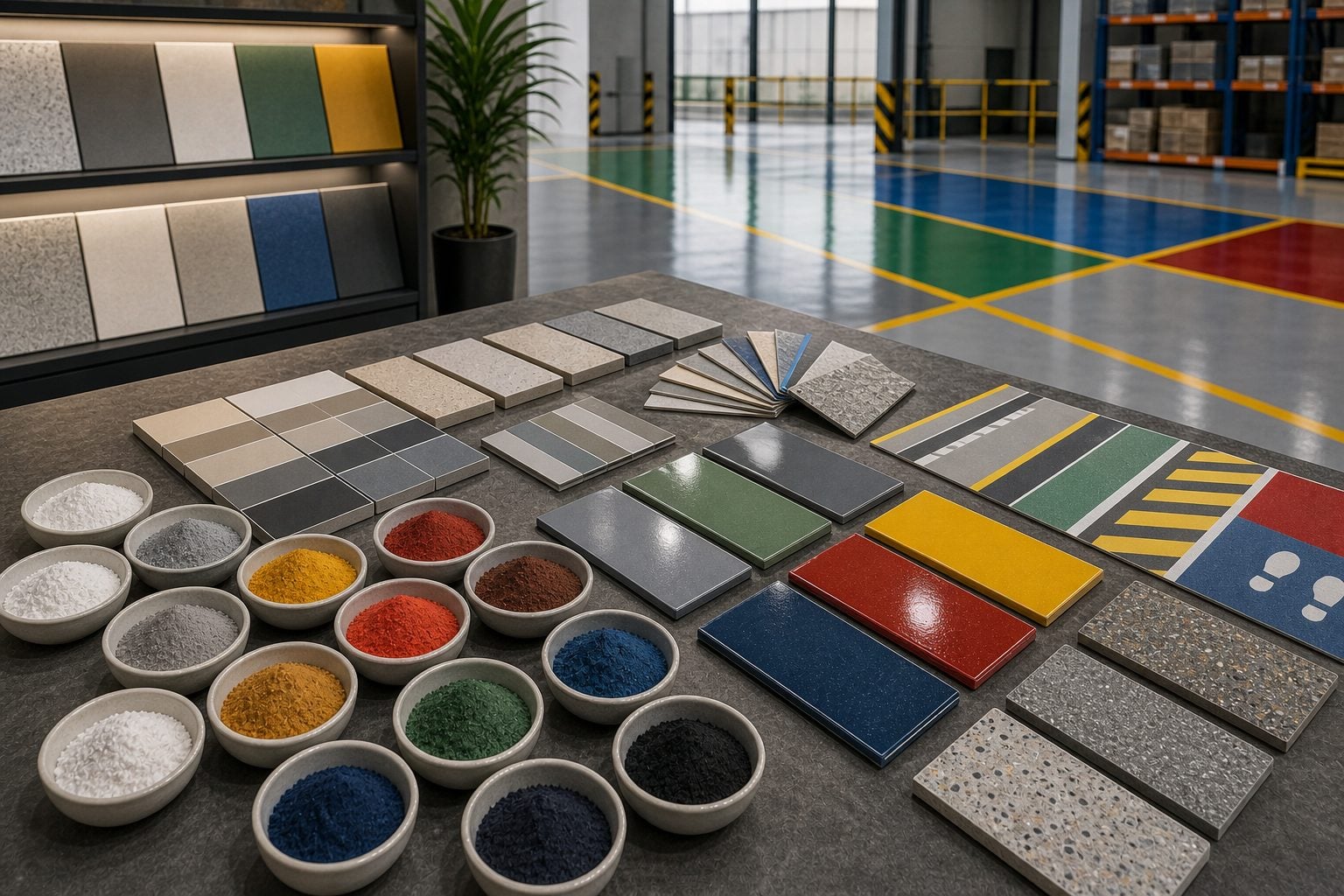
27 Jun Pigments and Color Systems for Epoxy and Concrete Floors in Saudi Arabia
Pigment and floor colour support across Saudi Arabia
Pigments and Color Systems for Epoxy and Concrete Floors in Saudi Arabia
SolidDrops helps contractors, consultants, facility teams and procurement buyers evaluate pigment and colour-system routes for epoxy floors, concrete, cementitious finishes and protective coatings across Saudi Arabia.
Use this page to plan colour zoning, compare practical options, identify the project inputs that matter, and start a focused pigment enquiry for Jeddah, Riyadh, Dammam, Jubail, Makkah, Madinah, Tabuk or another KSA location.
What SolidDrops supports
A practical route from colour intent to system selection
A pigment choice is not only a shade decision. It needs to work with the chosen binder, substrate, exposure, finish and application method. SolidDrops helps route enquiries around those project inputs so buyers can assess the relevant pigment or floor-colour system before approval.
System fit
Clarify whether the project involves epoxy, PU, concrete, cementitious overlay, microcement-style finish, line marking, flake or quartz broadcast flooring.
Operational fit
Map traffic, pedestrian movement, cleaning, moisture, UV, chemical exposure, hygiene needs, equipment zones and visual-management requirements.
Approval fit
Set the shade reference, sample or mock-up requirement, documentation request and any consultant or client approval step before large-area work.
Options at a glance
Which colour-system route fits the project?
| Route | Typical applications | What to confirm |
|---|---|---|
| Epoxy floor pigments | Self-leveling epoxy, industrial coatings, broadcast floors and decorative resin finishes. | Resin compatibility, pigment dosage, dispersion, topcoat, gloss, UV exposure, cleaning and chemical conditions. |
| Concrete colour pigments | Concrete, cementitious overlays, selected microcement-style finishes and architectural concrete. | Cement chemistry, water ratio, curing, alkali exposure, batch consistency and sample approval. |
| Coating pigments | Protective floor coatings, maintenance paint, line marking and selected waterproofing details. | Binder, film thickness, hiding power, exterior exposure, chemical contact and cleaning method. |
| Metallic, flake and quartz effects | Showrooms, retail, hospitality, clinics, garages and selected commercial interiors. | Mock-up, applicator method, broadcast rate, clear topcoat, surface texture and maintenance expectation. |
| Safety colours and zoning | Walkways, forklift lanes, loading areas, equipment outlines and controlled zones. | Contrast, lighting, wear, facility safety plan, repainting approach and final floor-system compatibility. |
Industrial colour zoning
Plan floor colours around how the facility operates
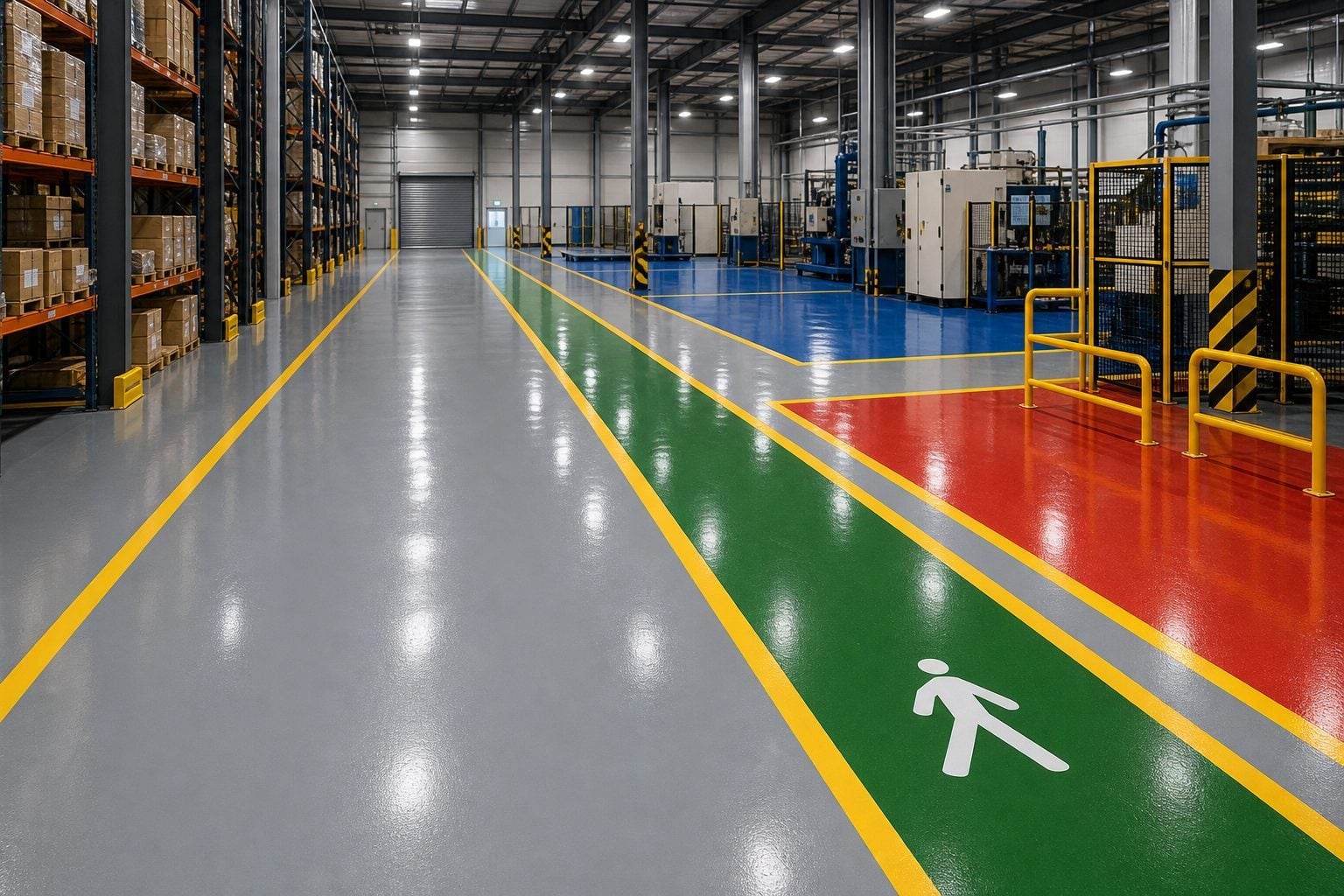
In warehouses, factories and process areas, colour can help distinguish operational zones when it is coordinated with the facility’s own safety and circulation plan.
- Main floor areas: practical tones that suit traffic, cleaning and the chosen system.
- Pedestrian and vehicle routes: clear contrast where the facility plan requires separation.
- Loading, storage and equipment zones: legible boundaries that support day-to-day operations.
- Wet, chemical or maintenance areas: colours chosen with the underlying system and maintenance conditions in mind.
- Showrooms and customer-facing spaces: colour, gloss and texture coordinated with the intended interior finish.
Applications
Where pigment and floor-colour planning adds value
Warehouses and logistics
Traffic areas, loading zones, pedestrian routes, equipment boundaries and durable industrial floor finishes.
Factories and process rooms
Production cells, maintenance routes, machine areas, controlled zones and practical cleaning visibility.
Hygiene-sensitive facilities
Cleanable finishes, visible maintenance conditions and coordinated wall-to-floor material choices, subject to the selected system.
Commercial interiors
Retail, offices, hospitality, education spaces and showrooms where appearance and maintenance need to work together.
Concrete and decorative finishes
Concrete, cementitious overlays, microcement-style surfaces and decorative epoxy where sample approval is important.
Sports and gym areas
Gym zones, court surrounds, movement areas and related floor-colour coordination for active spaces.
Selection and enquiry process
What to confirm before approving a pigment or colour system
- Define the application. Identify the floor, coating or concrete system and the existing substrate.
- Map the exposure. Note UV, moisture, traffic, cleaning, chemicals, temperature and expected wear.
- Set the visual requirement. Provide a RAL, Pantone, physical reference, approved sample, finish or zoning drawing where available.
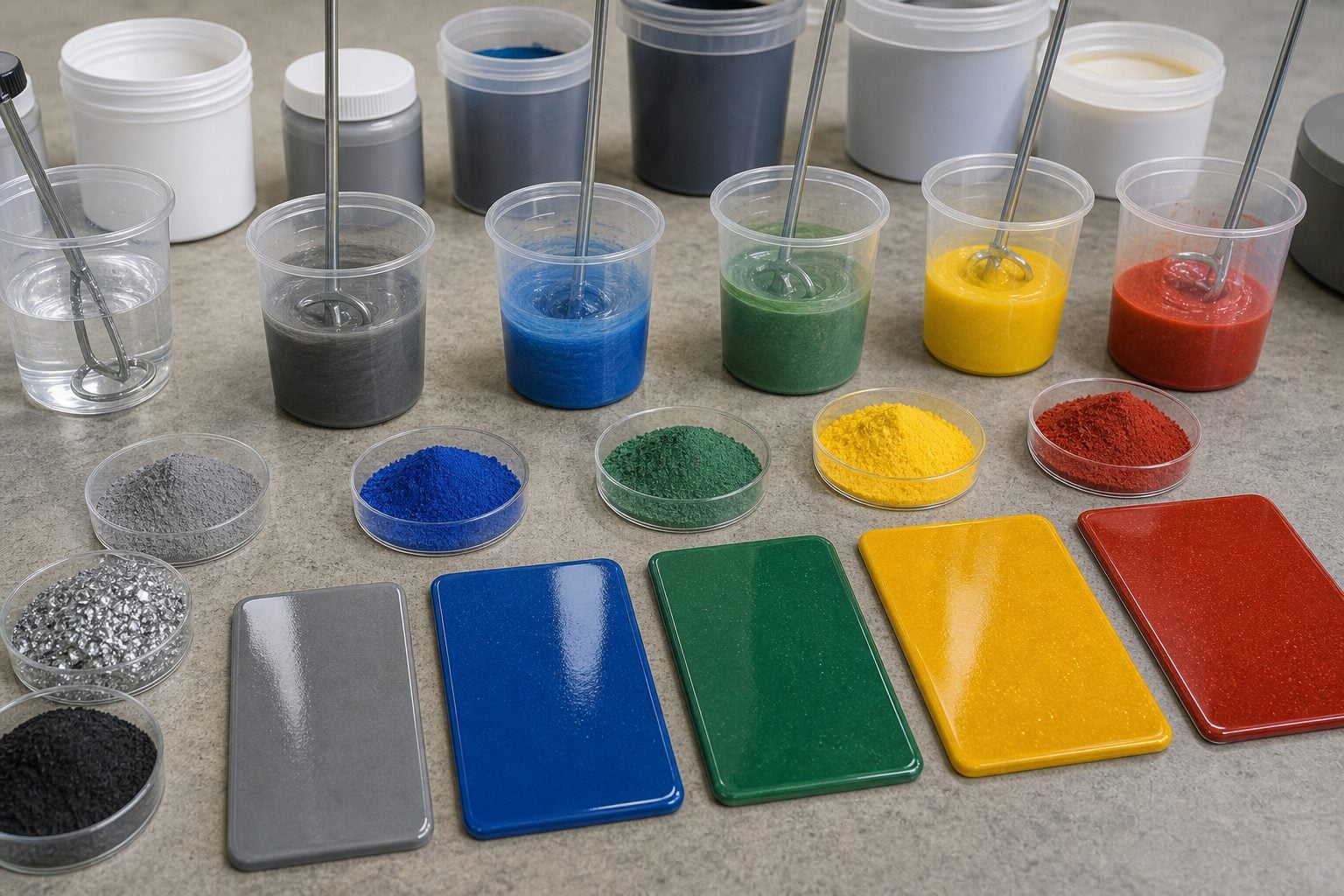
- Check compatibility. Review pigment, binder, dosage, mixing method, topcoat and technical-documentation requirements for the selected product.
- Approve the sample. Use a physical sample or mock-up before large-area application where shade, gloss or texture matters.
Make the enquiry more useful
Send these details for a more relevant pigment discussion
Application
State the floor, coating, concrete, repair, line-marking or decorative application and the intended use area.
Colour and finish
Share the shade reference, sample, brand palette, gloss or texture expectation, and whether a mock-up is required.
Conditions and quantity
Include exposure, substrate, area or quantity, delivery city, required date and any BOQ, drawing or consultant specification.
Saudi Arabia coverage
Pigment and floor-colour enquiries across KSA
SolidDrops supports enquiries across Saudi Arabia, including Jeddah, Riyadh, Dammam, Jubail, Makkah, Madinah and Tabuk. Service-area coverage does not imply a branch or office in each city.
Buyer FAQ
Questions about pigments and industrial floor colours
Which pigment route is suitable for epoxy floors?
The suitable route depends on the selected resin system, target colour, opacity, finish, UV exposure, cleaning regime and topcoat. Confirm compatibility and dosage against the selected system’s current technical documentation before approval.
Can concrete colour pigments be used in cementitious finishes?
They can be considered for compatible concrete, cementitious overlay and microcement-style systems. Cement chemistry, water ratio, curing, alkali exposure, batch consistency and the approved sample should be reviewed before use.
How should warehouse floor colours be planned?
Start with the operating plan: main traffic lanes, pedestrian routes, storage, loading, equipment, hazard areas and maintenance paths. Contrast, lighting, wear and the facility’s own safety plan should guide the final zoning.
What information is needed for a pigment enquiry?
Send the application, binder or floor system, desired shade or physical reference, exposure conditions, quantity, delivery city and any documentation or approval requirement. These inputs make it easier to assess the relevant route.
Can a brand colour be matched for a floor finish?
A practical colour match depends on pigment availability, the binder, gloss, topcoat, lighting and site conditions. Approve a physical sample or mock-up before work on a large area.
Which Saudi cities does SolidDrops support?
SolidDrops supports pigment and floor-colour enquiries across Saudi Arabia, including Jeddah, Riyadh, Dammam, Jubail, Makkah, Madinah and Tabuk.
Need a pigment or floor-colour route for a KSA project?
Send the system, city, area or quantity, shade reference, exposure conditions and any approval or documentation requirement. SolidDrops can route the enquiry around the relevant material and project inputs.
Phone: +966502131112 · Email: [email protected] · Coverage: Saudi Arabia
 Chat Online