
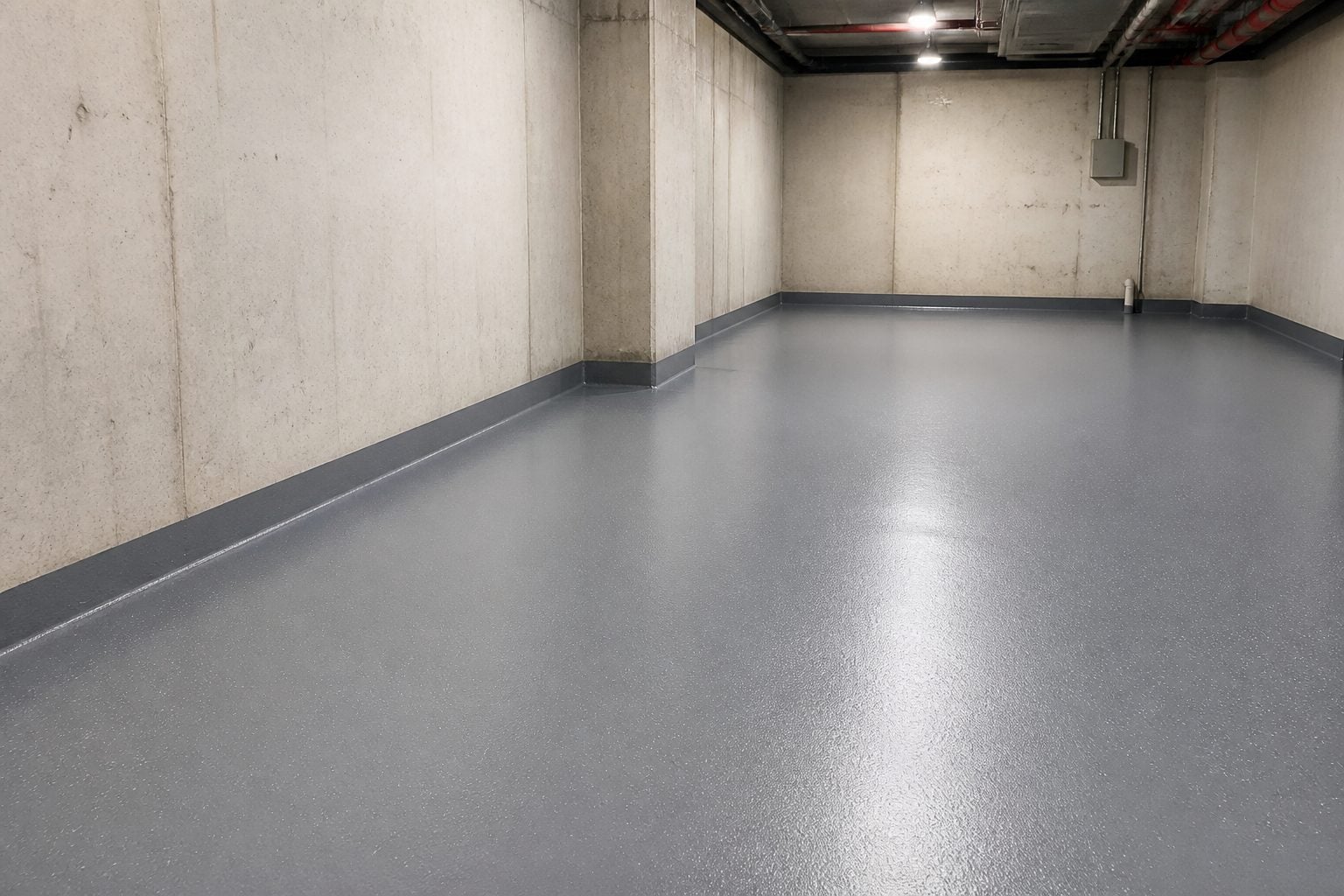
Moisture-aware basement floor coating across KSA
Basement Epoxy Flooring in Saudi Arabia
SolidDrops helps owners, consultants, contractors and facility teams specify basement epoxy flooring only after the slab, moisture source, cracks, drains, traffic, cleaning method and waterproofing risk are understood.
Direct answer
What is basement epoxy flooring?
Basement epoxy flooring is a resin floor coating installed over prepared concrete in lower-ground or below-grade areas after moisture, cracks, contamination and traffic needs are reviewed. It can create a cleaner, harder-wearing and easier-to-maintain surface for basement parking, plant rooms, service corridors, storage rooms and villa basements.
The expert point is simple: epoxy is not a waterproofing shortcut. If the slab has active seepage, hydrostatic pressure, wall leakage or uncontrolled vapor emission, SolidDrops first looks at waterproofing, negative-side treatment, crack repair, drainage or moisture-tolerant primer options before recommending the final floor finish.
Best-fit use cases
- Basement parking floors where dust control, tire traffic and line marking matter.
- Plant rooms, pump rooms and utility zones where cleaning and spill control are needed.
- Storage rooms and service corridors where bare concrete is dusty or hard to maintain.
- Lower-ground commercial areas where the slab is sound and moisture is controlled.
- Villa basement floors where appearance, cleanability and practical maintenance matter.
Expert specification gaps
What a basement floor specification must cover
Moisture cannot be assumed
Basement floors should be reviewed for vapor pressure, active leakage, damp patches and negative-side waterproofing risk before epoxy is selected.
System selection must be explicit
Standard epoxy, broadcast anti-slip epoxy, vapor-aware primers, PU cement, cementitious repair and waterproofing coordination each fit different conditions.
Buyer questions need direct answers
Suitability, damp slabs, waterproofing first, cost factors, preparation, maintenance and quotation inputs should be answered before a site team compares prices.
QA handover should be specific
A practical handover covers surface preparation, moisture observations, crack treatment, coating build-up, texture, cure and maintenance notes.
Related categories should be visible
Basement work can connect flooring, waterproofing, FRP panels, chemicals, pigments, fire alarm systems and building materials in one project route.
Inquiry details save time
City, area, photos, damp zones, traffic, drains, cleaning method and BOQ details help SolidDrops recommend a practical system faster.
System selection
Epoxy, waterproofing and PU options for basement floors
| Basement condition | Possible system route | Why it matters |
|---|---|---|
| Sound, dry concrete with normal foot or light cart traffic | Epoxy primer, epoxy body coat and suitable topcoat | A clean, sealed and maintainable finish may be enough when moisture and substrate risks are low. |
| Basement parking, ramps or wet-cleaned drive lanes | Broadcast anti-slip epoxy or traffic coating with line marking and wear-zone planning | Texture, abrasion resistance, tire movement and cleaning method matter more than gloss alone. |
| Damp patches, vapor risk or below-grade slab uncertainty | Moisture review, vapor-aware primer, crack repair and possible waterproofing treatment before coating | Coating over trapped moisture can cause blistering, whitening, debonding or early failure. |
| Plant rooms, pump rooms or service areas with tougher exposure | Epoxy mortar, PU cement, chemical-resistant coating or coved detail where suitable | Thermal changes, spills, drainage, equipment vibration and maintenance access affect the floor build-up. |
| Active leakage, wall seepage or hydrostatic pressure | Basement waterproofing, negative-side treatment, drainage review or polyurea/cementitious options before flooring | Epoxy flooring should not be used to hide a water-ingress problem that needs waterproofing design. |
Consultant note: A good basement flooring specification should identify the moisture source, preparation method, primer type, crack and joint treatment, coating layers, texture, topcoat, cure time, cleaning method and expected traffic before pricing is compared.
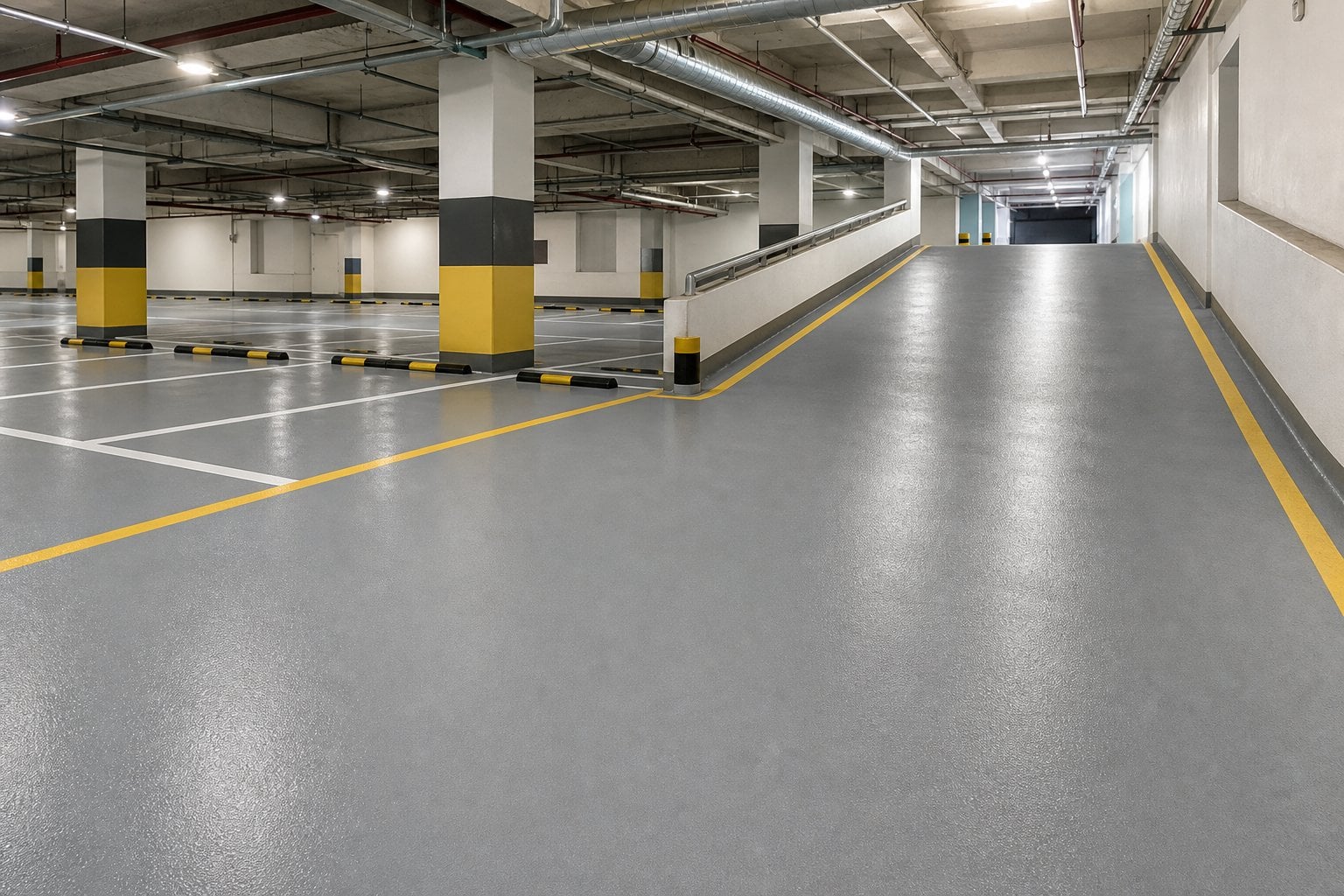
Applications
Where basement epoxy flooring is used in KSA buildings
- Basement parking bays, drive lanes, ramps and pedestrian paths.
- Plant rooms, pump rooms, generator rooms and utility areas.
- Storage rooms, workshops, maintenance rooms and service corridors.
- Villa basements, lower-ground residential areas and private garages.
- Commercial lower-ground floors below offices, showrooms, clinics and mixed-use buildings.
- Dust control and easier cleaning for bare concrete.
- Anti-slip texture for wet cleaning, ramps and drain zones.
- Better surface appearance for handover and facility operation.
- Stain resistance for normal service spills when compatible.
- Maintenance planning for joints, drains, ramps and wear paths.
Implementation overview
SolidDrops basement epoxy flooring process
Review the basement condition
Share city, area, floor photos, damp areas, cracks, drains, use, traffic, cleaning method and BOQ or drawings if available.
Identify moisture and repair risks
Review visible seepage, vapor risk, hollow or weak concrete, old adhesive, oil, salts, wall-floor junctions, joints and drainage details.
Select the practical system
Choose epoxy, broadcast epoxy, epoxy mortar, PU cement, waterproofing treatment, moisture-tolerant primer or a hybrid route based on exposure.
Prepare and apply
Clean and mechanically prepare the concrete, complete repairs, prime, apply body layers and finish with the agreed texture or topcoat.
Hand over with maintenance guidance
Confirm cure expectations, cleaning method, joint checks, ramp/wear-zone inspection and future repair route.
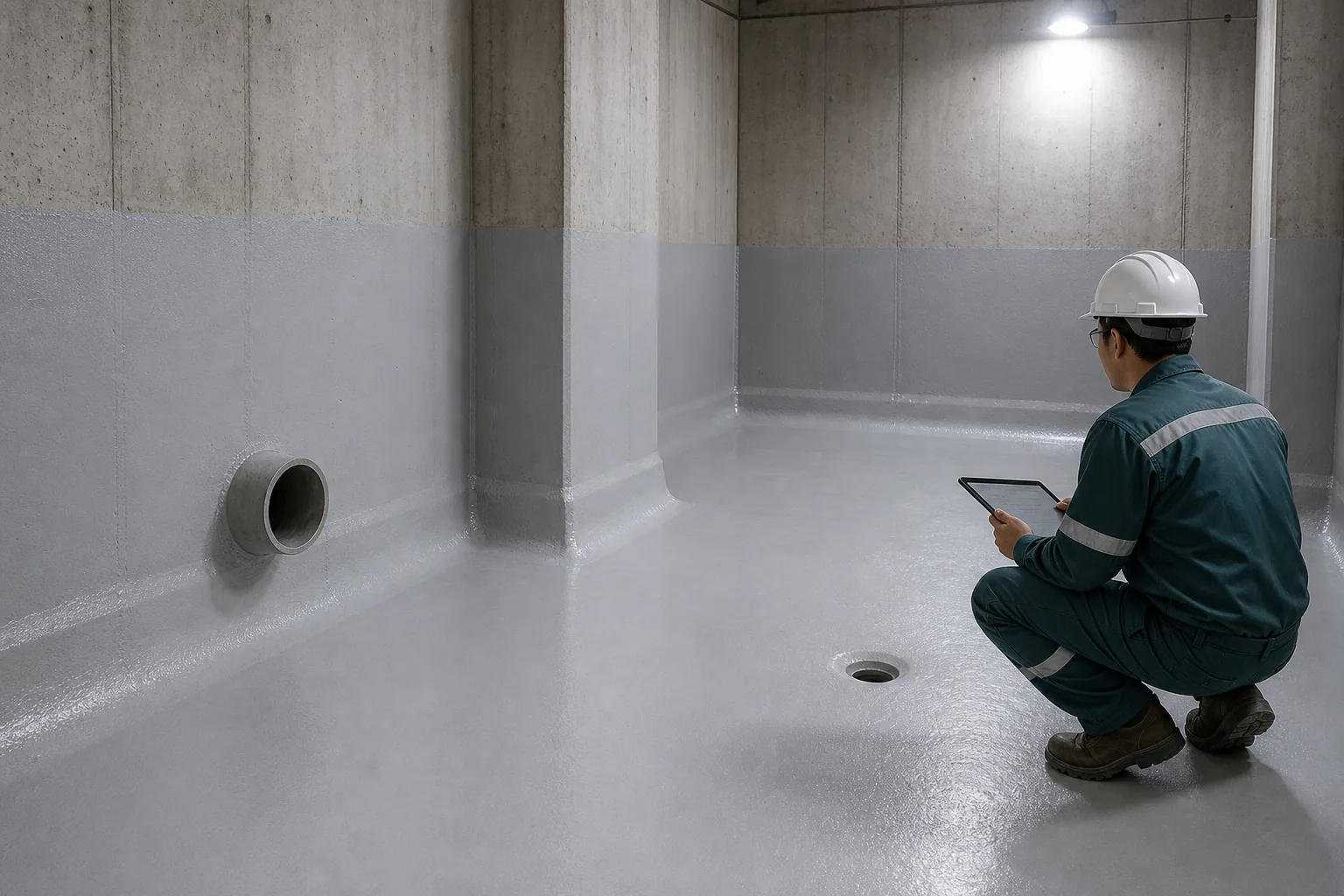
QA and handover
Quality checks that protect basement epoxy performance
Substrate readiness
Check weak concrete, laitance, dust, oil, old coating, tile adhesive, hollow patches, level changes and surface profile before primer.
Moisture observations
Document damp zones, wall seepage, drain areas, vapor concerns and any need for moisture-tolerant primer, negative-side treatment or waterproofing.
Crack and joint treatment
Open cracks, movement joints, saw cuts, drains and wall-floor junctions should be repaired or detailed before the coating build-up starts.
Application controls
Track primer, coating layers, broadcast aggregate, topcoat, coverage, batch references and cure conditions according to the selected system.
Safety and texture
Ramps, pedestrian paths, wet-cleaned areas and parking lanes need suitable slip-resistance planning rather than only a smooth glossy finish.
Maintenance plan
Handover should explain cleaning, chemical compatibility, tire marks, worn paths, drain checks, joint inspection and small repair timing.
Materials and related systems
Basement floors often need more than one product family
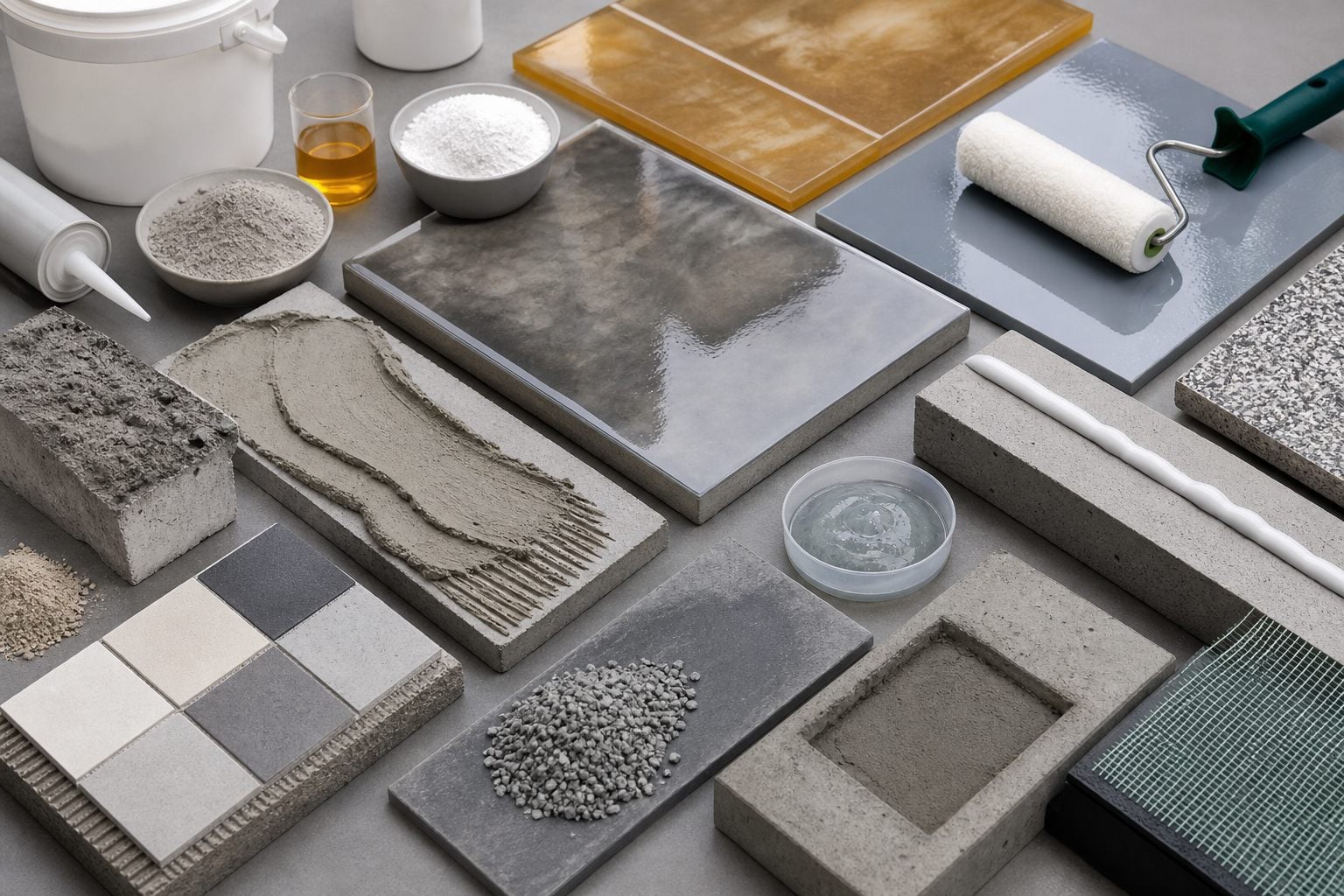
Basement epoxy projects can involve flooring, waterproofing, concrete repair, joint sealants, FRP wall protection, construction chemicals, pigments for coating color, and wider building-material support. SolidDrops routes the inquiry based on the problem, not only the product name.
Do not miss this: If the floor is part of a basement parking structure, review ramps, expansion joints, drains, line marking, waterproof traffic layers and top-deck water movement. See the related car park waterproofing and flooring page.
Saudi Arabia coverage
Basement epoxy flooring service areas
SolidDrops supports basement epoxy flooring and related waterproofing/material inquiries across Saudi Arabia, including Jeddah, Riyadh, Dammam, Jubail, Makkah, Madinah, Tabuk and nearby project areas.
FAQ
Basement epoxy flooring FAQ
Is epoxy suitable for basement floors in Saudi Arabia?
Epoxy can be suitable for basement floors when the concrete is assessed first and the coating system is selected around moisture, slab condition, traffic, drainage, cleaning and ventilation. If active water pressure or leakage is present, waterproofing and repair should be addressed before the finish is specified.
What is the biggest risk before applying basement epoxy flooring?
The biggest risk is coating a damp, contaminated or weak slab without diagnosing the moisture source. Trapped moisture, hydrostatic pressure, salts, oil, old adhesive or loose concrete can cause blistering, whitening, peeling or early wear.
Does basement epoxy flooring replace basement waterproofing?
No. Epoxy flooring is a traffic and finish system, not a cure for active leakage. Basement waterproofing, negative-side treatment, crack repair, drainage review or vapor-control primers may be needed before epoxy or PU flooring is installed.
Which basement areas can SolidDrops support?
SolidDrops supports basement parking bays, ramps, drive lanes, plant rooms, pump rooms, utility rooms, storage rooms, service corridors, workshops, villa basements and lower-ground commercial areas across Saudi Arabia.
Which system is better for a damp basement: epoxy, PU cement or polyurea?
There is no single best system without site review. Epoxy may fit dry or controlled slabs, PU cement may suit heavier thermal or wet-service areas, and polyurea or cementitious waterproofing may be part of moisture or protection work. The right choice depends on exposure, movement, water source, substrate and use.
How much does basement epoxy flooring cost in KSA?
Cost depends on area, surface preparation, crack repair, moisture treatment, number of coating layers, anti-slip texture, topcoat type, access, shutdown window, city and whether the project is supply only or supply and installation. SolidDrops should review photos or a BOQ before estimating.
What information should I send for a basement flooring quotation?
Send the city, approximate area, current floor photos, close-ups of damp or cracked zones, use of the basement, expected traffic, cleaning method, drain locations, previous coating or tile condition, BOQ drawings if available and the required finish.
How should a basement epoxy floor be maintained?
Use regular dust removal, neutral cleaning, prompt spill cleanup and periodic inspection of joints, drains, ramps and high-traffic paths. Avoid aggressive chemicals unless the coating supplier confirms compatibility with the installed system.
Send the basement details before choosing a coating
For a faster recommendation, send the city, approximate area, floor photos, damp/crack close-ups, basement use, traffic, cleaning method, drain locations and any BOQ or consultant specification.
 Chat Online