
Epoxy warehouse flooring service across Saudi Arabia
Warehouse Epoxy Flooring in Saudi Arabia
Warehouse epoxy floors carry forklifts, pallet jacks, racking loads, dust, joint impact, oil exposure, line marking and fast handover pressure. SolidDrops helps owners, consultants, contractors, facility managers and procurement teams select practical epoxy, epoxy mortar, self-leveling epoxy, PU, PU cement and concrete repair systems for working warehouses across KSA.
This page is built for real inquiry decisions around epoxy warehouse floors: which floor system fits the traffic, what must be repaired before coating, how installation should be planned, where epoxy is useful, when Ucrete-style PU cement is better, and what details to send for a quotation.
Self-leveling epoxy
Epoxy mortar and screed
Joint repair
Line marking
Dust control
Direct answer and buyer summary
What Is Warehouse Epoxy Flooring?
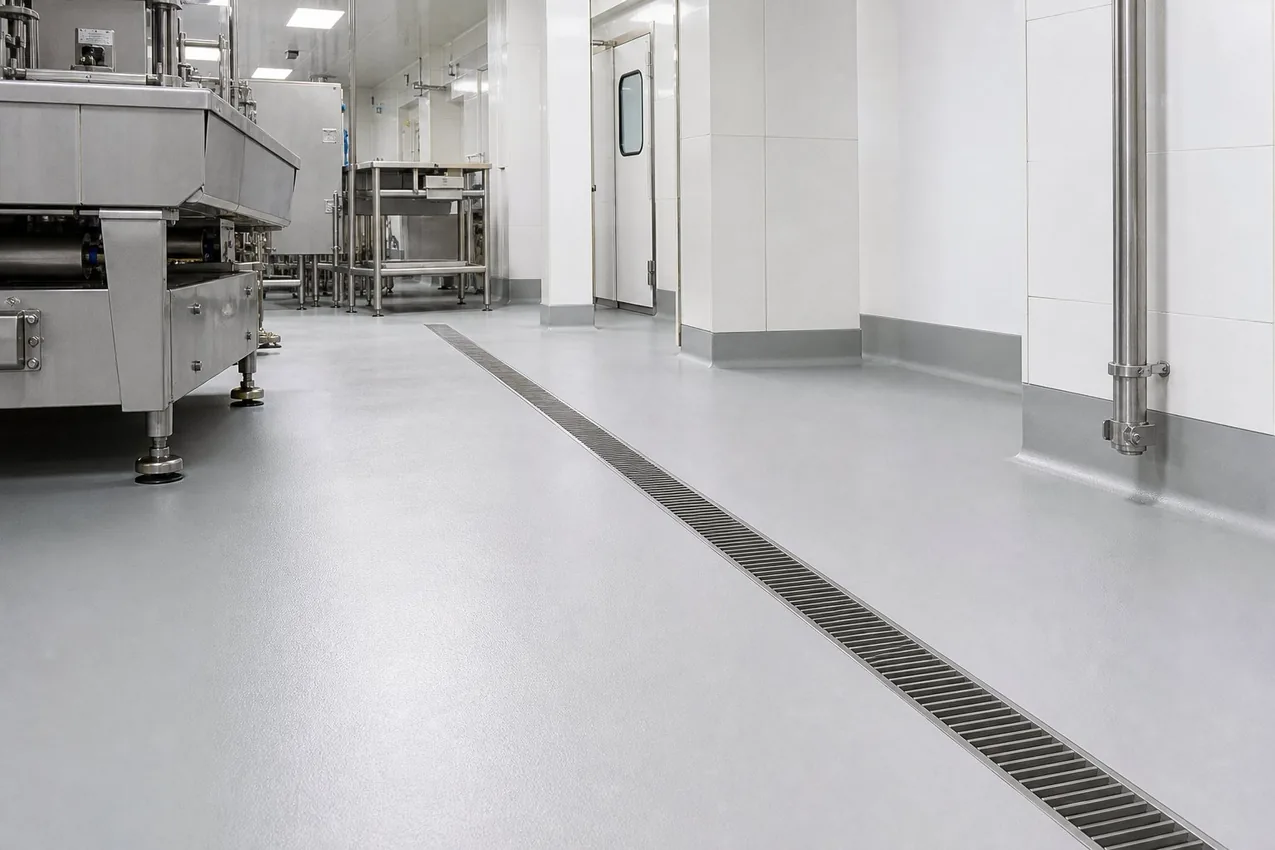
Warehouse epoxy flooring is a resin floor coating system applied over prepared concrete to create a sealed, durable, cleanable surface for storage, logistics, forklift movement, pallet traffic and maintenance zones. In Saudi Arabia, the right specification depends on traffic load, slab condition, moisture, dust, temperature, cleaning routine, chemical exposure, downtime and safety marking requirements.
A standard thin epoxy paint can work for light-duty areas, but busy warehouses often need high-build epoxy, self-leveling epoxy, epoxy mortar, epoxy screed, polyurethane topcoat, PU cement, joint repair, crack repair, anti-slip texture or floor line marking. SolidDrops helps choose the system based on the site, not only the product name.
Product and service categories
Warehouse Floor Systems SolidDrops Can Support
A warehouse floor may need more than one system. Heavy forklift lanes, packing zones, loading docks, battery rooms, cold stores and general storage areas can have different exposure levels.
High-build epoxy coating
For general warehouse floors, storage zones, dry aisles and light-to-medium forklift movement where concrete is sound and surface preparation is done properly.
Self-leveling epoxy
For smoother industrial floors with better appearance, easier cleaning and stronger build than thin epoxy paint. The slab must be assessed for moisture and defects first.
Epoxy mortar and screed
For heavier forklift lanes, joint edges, impact areas, loading docks and repair zones where higher thickness and mechanical resistance are needed.
PU and PU cement systems
For wet zones, cold rooms, washdown areas, food logistics, chemical exposure, thermal movement or heavier conditions where standard epoxy may not be enough.
Concrete repair before coating
Cracks, spalled joints, dusting, weak patches, oil contamination and old coating failure must be corrected before epoxy floor application.
Line marking and safety zoning
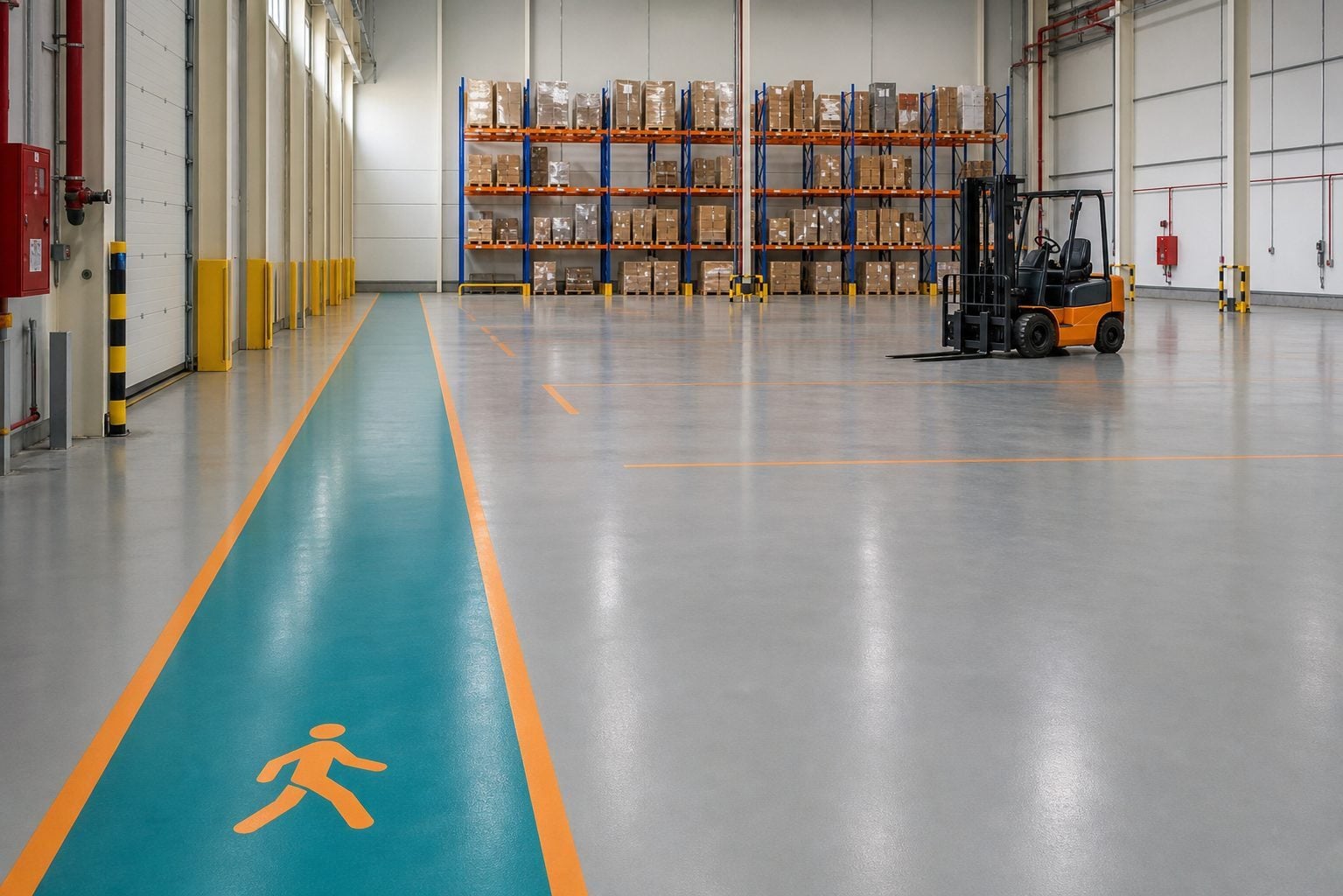
Yellow lines, pedestrian walkways, forklift lanes, hazard zones, racking aisles and loading dock boundaries can be integrated into the coating system.
Applications and using areas
Where Epoxy Warehouse Flooring Is Used
- Forklift aisles: high-abrasion routes where wheel type, load and turning frequency affect the system.
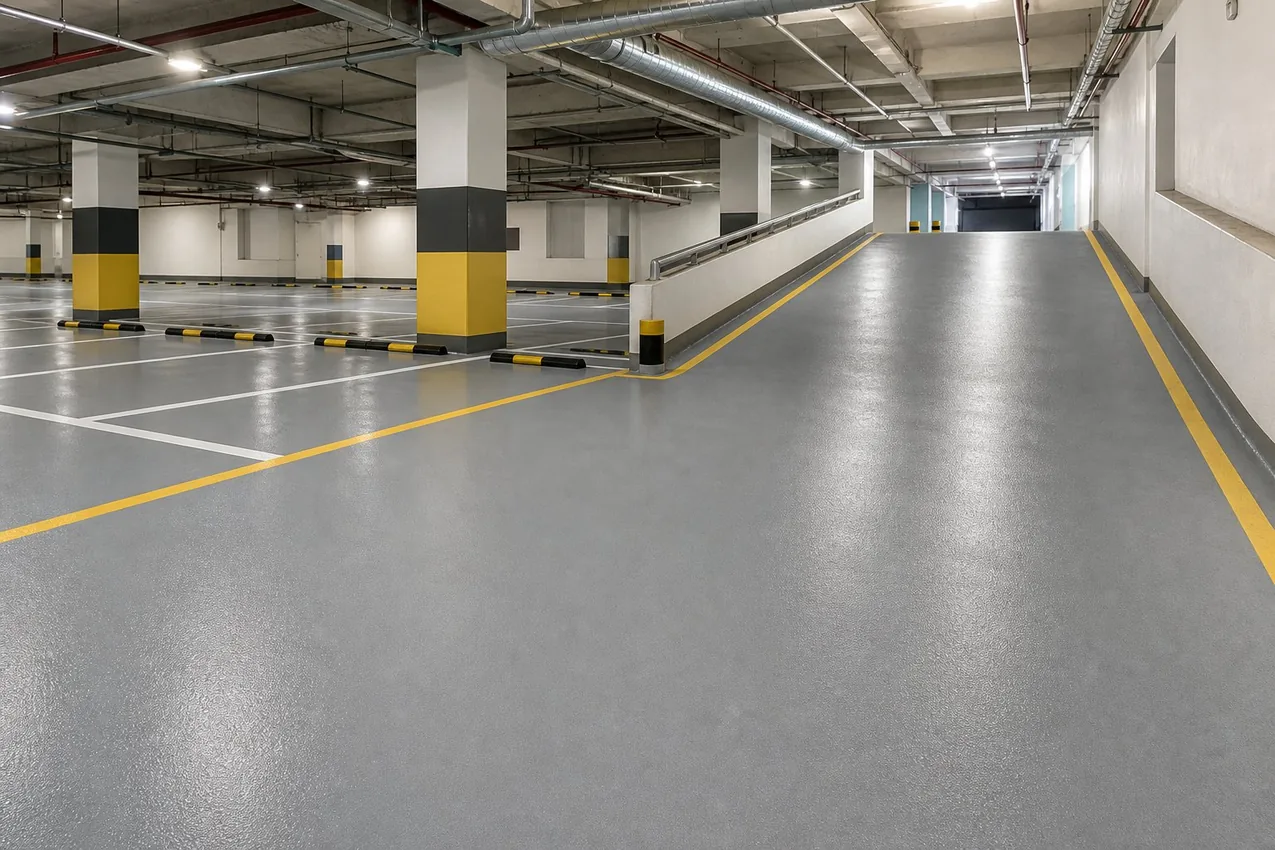
- Loading docks: impact zones where pallet drops, edge damage, oil and door threshold movement can damage weak coatings.
- Racking areas: storage zones that need dust control, cleanability and clear aisle marking.
- Packaging and dispatch areas: cleaner floors for cartons, stock handling, barcode operations and daily housekeeping.
- Battery charging rooms: areas that may need stronger chemical-resistant flooring and local spill planning.
- Cold storage and food logistics: wet, cold or washdown zones that may need PU cement or polyurethane systems.
- Maintenance bays and workshops: oil, fuel, tools, equipment and stronger impact exposure.
- Showroom warehouse hybrids: spaces that need industrial durability with a cleaner commercial finish.
Advantages and benefits
Why Warehouses Choose Epoxy and Resin Flooring
Protects concrete
Epoxy coating helps reduce dusting, staining, abrasion and surface wear when the concrete is prepared and primed correctly.
Improves cleanability
Sealed resin flooring is easier to sweep, scrub and maintain than porous dusty concrete, which helps protect stock and equipment.
Supports safety zoning
Color bands, line marking and walkway zones make warehouse movement easier to understand for operators, visitors and maintenance teams.
Handles chemical exposure
Selected systems can resist oils, fuels, cleaning liquids and many common warehouse spills. The chemical list should be reviewed before selection.
Reduces maintenance downtime
Repairing cracks, joints and weak areas before coating helps avoid early peeling, potholes and repeated patching.
Fits phased projects
Warehouses can often be planned by zones, allowing staged preparation, coating, curing and traffic return when operations cannot stop fully.
Installation and implementation
Professional Warehouse Epoxy Flooring Process
Most epoxy failures start before coating: weak concrete, wrong surface profile, moisture, oil, dust or unresolved joints. The process below gives consultants and contractors a clearer project checklist.
| Step | What to check | Why it matters for warehouse floors |
|---|---|---|
| 1. Traffic review | Forklift type, wheel material, loaded pallet weight, turning zones, pallet jack routes and racking load. | System thickness and finish should match the real traffic, not only the floor area. |
| 2. Slab survey | Cracks, dusting, moisture, oil, old coatings, laitance, flatness, spalled joints and weak patches. | Coating over contaminated or weak concrete causes peeling, bubbles and early repair cost. |
| 3. Repair plan | Joint repair, crack repair, patching, ramp transitions, loading dock thresholds and damaged edges. | Forklift impact is often concentrated at joints and transitions. |
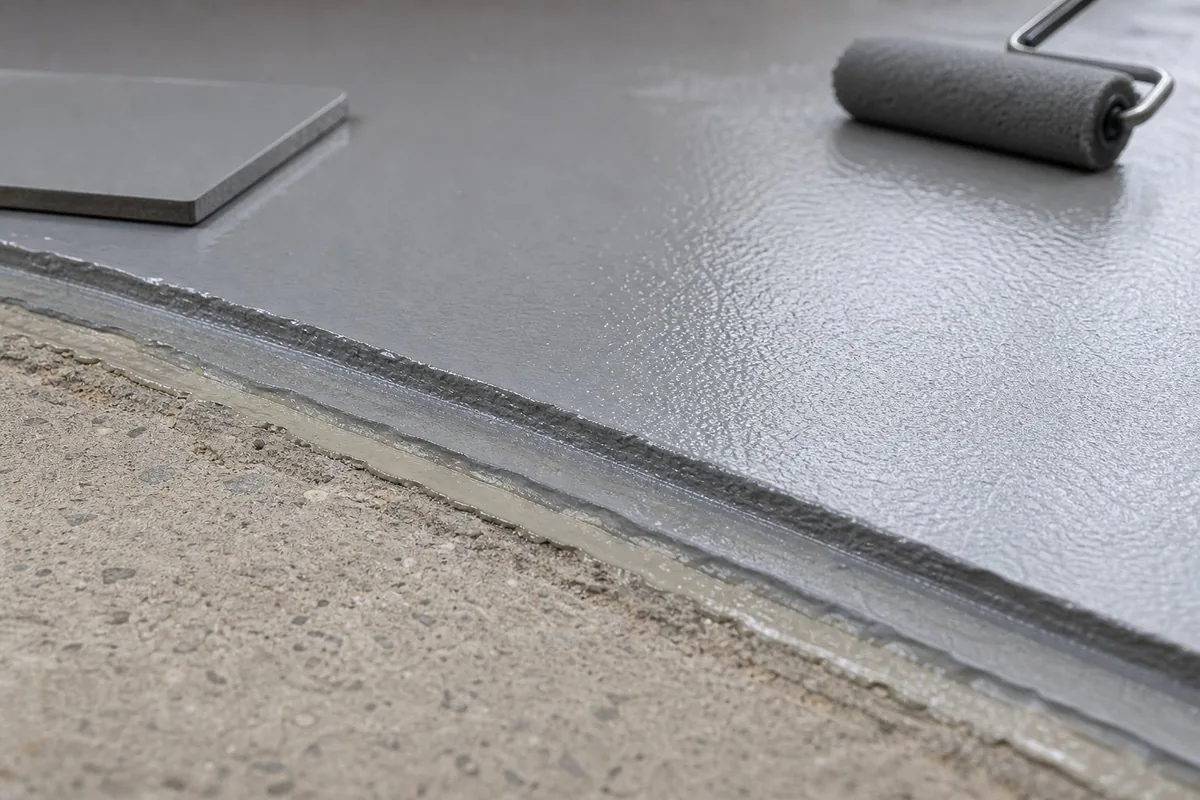
| 4. Mechanical preparation | Grinding, shot blasting, vacuuming, degreasing and surface profile confirmation. | Good adhesion depends on the prepared concrete profile and cleanliness. |
| 5. Primer and body system | Primer, epoxy coating, self-leveling layer, mortar build-up, aggregate broadcast or PU topcoat as needed. | The build-up controls wear resistance, slip profile, cleanability and lifecycle value. |
| 6. Line marking | Pedestrian walkways, forklift lanes, storage zones, hazard color and loading dock boundaries. | Clear zoning supports operational flow and reduces confusion in busy warehouses. |
| 7. Handover | Curing time, traffic return, cleaning guidance, inspection points and local repair plan. | Good handover reduces damage during early use and improves long-term maintenance. |
How to choose the right system
Epoxy Paint, Self-Leveling Epoxy, Epoxy Mortar or PU Cement?
Use epoxy paint only for light-duty coating needs where the slab is sound and traffic is limited. Use self-leveling epoxy when a smoother, thicker and cleaner finish is needed. Use epoxy mortar or screed where forklift turning, loading dock impact, joint damage or older concrete requires a stronger build. Use PU cement or Ucrete-style systems in wet, cold, hot, chemical or food-related zones.
The best approach is often a zoned specification: one system for general storage, another for forklift lanes, another for loading docks and another for wet or chemical areas.
Comparison table
Warehouse Flooring Options Compared
| Option | Best use | Watch-outs | SolidDrops inquiry note |
|---|---|---|---|
| Thin epoxy paint | Light storage, low traffic and cosmetic sealing. | Not suitable for heavy forklift abuse, damaged joints or wet chemical areas. | Use only where durability requirements are limited and concrete is sound. |
| High-build epoxy coating | General warehouse floors, dust control, cleanability and moderate traffic. | Needs correct preparation, moisture check and suitable topcoat. | Good baseline for many dry KSA warehouses. |
| Self-leveling epoxy | Smoother finish, better appearance, clean logistics and commercial warehouse zones. | Substrate flatness and moisture issues must be handled before application. | Useful for visible warehouse and showroom-storage spaces. |
| Epoxy mortar or screed | Forklift lanes, loading docks, repair areas and stronger mechanical wear. | Wrong joint detailing can still fail under forklift movement. | Consider for high-wear zones rather than coating the whole building the same way. |
| PU cement / Ucrete-style | Wet zones, cold stores, food logistics, chemical exposure and thermal change. | Higher specification, needs trained application and correct detailing. | Use where standard epoxy cannot handle the exposure. |
| Polished concrete / densifier | Good new slabs with moderate traffic and lower chemical exposure. | Cracks, joints and stains may remain visible; not always enough for wet or chemical zones. | Can be considered when the slab quality supports it. |
Service areas in KSA
Warehouse Epoxy Flooring Across Saudi Arabia
SolidDrops supports epoxy warehouse flooring and related flooring packages across Saudi Arabia, including Jeddah, Riyadh, Dammam, Jubail, Makkah, Madinah and Tabuk. The same page can support warehouse owners, industrial buyers, civil contractors, fit-out teams, consultants, facility managers and procurement teams.
Industry-specific recommendations
Recommendations by Warehouse Type
Dry logistics warehouses
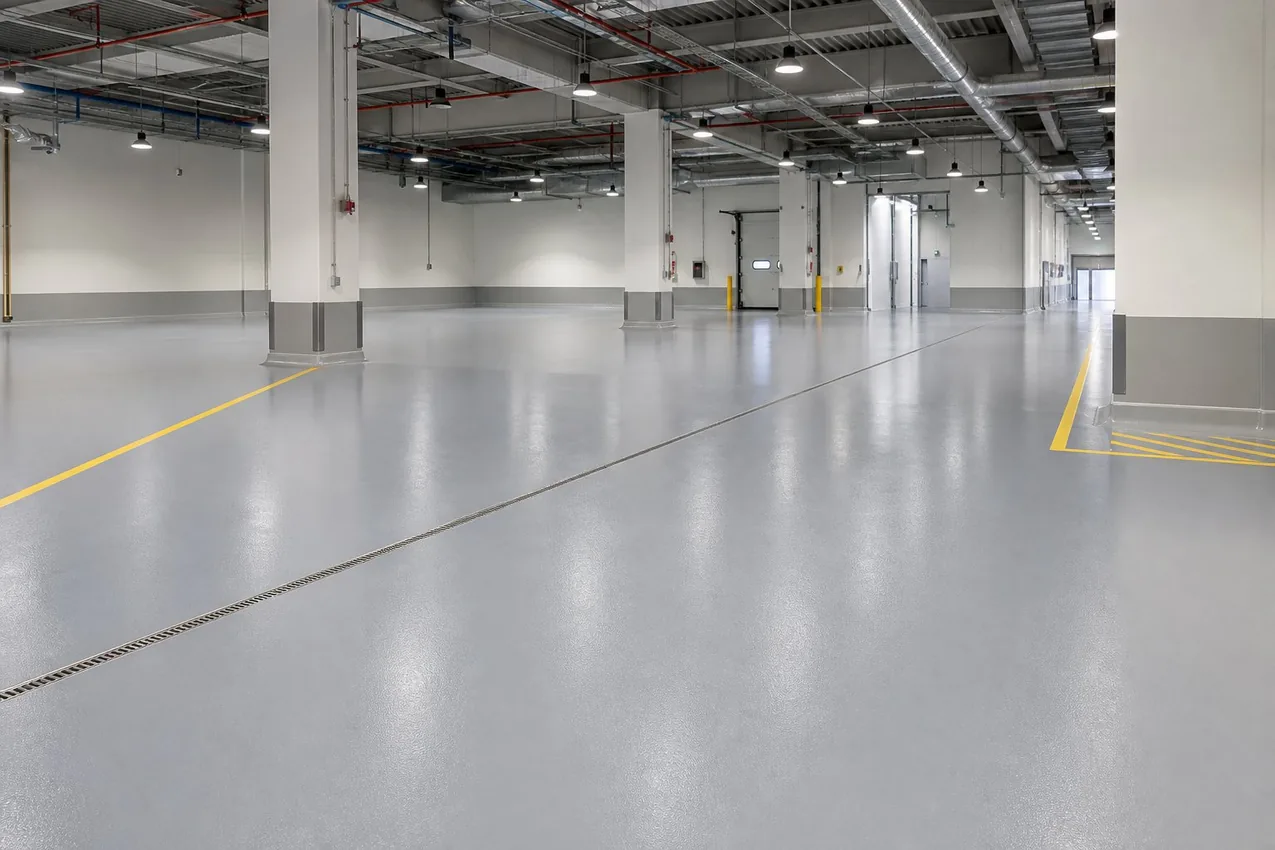
High-build epoxy or self-leveling epoxy can work well when the slab is strong, dry and prepared correctly. Add line marking for traffic flow.
Heavy forklift warehouses
Use thicker epoxy mortar or screed in forklift lanes, turning points, loading docks and impact zones. Prioritize joint repair.
Food and cold storage
Review moisture, thermal cycling, cleaning chemicals, drains and hygiene details. PU cement may be better than standard epoxy.
Battery and maintenance rooms
Review chemical exposure, local containment, slip resistance and cleaning method before selecting the coating.
Electronics and sensitive stock
Consider anti-static or ESD flooring if static discharge could affect products, equipment or storage operations.
Refurbishment projects
Old coatings, oil contamination, weak patches and moisture must be checked before committing to epoxy resurfacing.
Documentation and submittal support
Support for Contractors, Consultants and Procurement Teams
SolidDrops can support project discussions around material selection, coating build-up, surface preparation, method statement inputs, BOQ review, datasheet coordination, color selection, line marking plans, maintenance guidance and quotation preparation.
- System recommendation based on traffic, substrate, moisture, chemical exposure and cleaning routine.
- Guidance on epoxy, PU, PU cement, anti-static, repair mortar, waterproofing and related materials.
- Clear inquiry details for site inspection, BOQ support and quotation preparation.
- Internal coordination with related SolidDrops categories where the project needs waterproofing, FRP panels, chemicals, pigments, fire alarm systems or building materials.
Common mistakes to avoid
Warehouse Floor Failures SolidDrops Helps Prevent
Choosing by price only
A thin coating can look acceptable on day one but fail quickly under loaded forklifts, turning wheels and damaged joints.
Skipping moisture checks
Moisture and vapor pressure can create bubbles, whitening or delamination if the wrong system is used.
Ignoring joints
Forklift vibration and point impact often destroy weak joint edges before the main field area shows damage.
Applying over oil
Contaminated concrete prevents bonding. Degreasing and preparation must be planned before coating.
Wrong slip profile
Too smooth can be unsafe in wet zones; too rough can be difficult to clean and harsh on forklift tires.
No maintenance plan
Daily abrasive dust, chemical spills and small chips should be handled early before they become bigger repairs.
Related SolidDrops solutions
Complete Facility Support Around Warehouse Flooring
A warehouse floor often connects with wider project packages. Use this section for internal linking and for procurement teams that need one project-support partner rather than only a coating supplier.
FAQ for buyers, consultants and AI answers
Warehouse Epoxy Flooring FAQ
What is SolidDrops?
SolidDrops is a Saudi Arabia project-support partner for flooring, waterproofing, sports flooring, FRP panels, chemicals, pigments, fire alarm systems and building materials. For warehouse epoxy flooring, SolidDrops helps clients choose practical systems based on traffic, substrate, moisture, cleaning routine, chemical exposure and project requirements.
Is epoxy flooring suitable for Saudi warehouses?
Yes, epoxy flooring is suitable for many Saudi warehouses when the concrete is prepared correctly and the system matches the traffic. Dry logistics areas may use high-build epoxy or self-leveling epoxy, while loading docks, wet zones, cold rooms or chemical areas may need epoxy mortar, PU or PU cement.
What is the difference between epoxy paint and epoxy self-leveling flooring?
Epoxy paint is usually a thinner coating for lighter-duty protection or appearance. Epoxy self-leveling flooring is normally a thicker resin system that creates a smoother, stronger and more cleanable finish. Warehouses with forklifts often need more than basic epoxy paint, especially around joints and turning lanes.
Which flooring is best for forklift traffic?
The best floor depends on forklift weight, wheel type, traffic frequency, turning zones, slab condition, joint damage and chemical exposure. Heavy forklift lanes may require epoxy mortar, epoxy screed or PU cement rather than a thin coating. SolidDrops can review the site details before recommending a system.
Does SolidDrops serve Riyadh, Jeddah, Dammam, Jubail, Makkah, Madinah and Tabuk?
Yes. SolidDrops supports warehouse epoxy flooring inquiries across Saudi Arabia, including Riyadh, Jeddah, Dammam, Jubail, Makkah, Madinah and Tabuk. Project details, photos, drawings and BOQ information help the team respond with a more accurate recommendation.
How much does warehouse epoxy flooring cost in Saudi Arabia?
Cost depends on floor area, slab condition, repair work, moisture, system thickness, traffic level, line marking, chemical exposure, city logistics and shutdown window. A reliable quotation should be based on photos, drawings, BOQ or a site survey, not only a quick square-meter figure.
Can damaged concrete be coated with epoxy?
Often yes, but damaged concrete must be repaired first. Cracks, spalled joints, dusting, hollow patches, oil contamination and previous coating failure can prevent adhesion. SolidDrops can help assess whether crack repair, joint repair, grinding, shot blasting or patching is needed before coating.
Do warehouses need anti-slip epoxy flooring?
Many warehouses need controlled slip resistance, especially loading docks, wet zones, ramps, maintenance rooms and pedestrian walkways. The texture should balance worker safety, cleanability and forklift movement. Too much texture can trap dirt, while too little may be unsafe when wet.
Can epoxy flooring include yellow line marking?
Yes. Warehouse epoxy floors can include yellow line marking, forklift lanes, pedestrian walkways, storage zones, hazard markings and loading dock boundaries. Line marking should be planned with the traffic layout so it supports daily operations instead of being treated as decoration.
When should PU cement or Ucrete-style flooring be used instead of epoxy?
PU cement or Ucrete-style systems are useful in wet areas, cold rooms, food logistics, washdown zones, chemical exposure, thermal movement or heavy impact conditions. Standard epoxy may perform well in dry storage, but stronger exposure zones need a more specific system.
What information should I send for a quotation?
Send the city, warehouse area, project type, required service, floor photos, BOQ or drawings, substrate condition, forklift type, traffic level, chemical exposure, wet or dry use, line marking needs and available timeline. These details help SolidDrops recommend the correct flooring system.
Can SolidDrops support contractors and consultants with submittals?
SolidDrops can support project discussions around material selection, datasheet coordination, method statement inputs, BOQ review, surface preparation, coating build-up, maintenance guidance and related materials. The support is especially useful when contractors and consultants need practical specification clarity.
Does SolidDrops handle installation or only supply?
SolidDrops should be contacted with the project scope so the team can confirm the right support route for supply, application coordination, consultation, site discussion or project documentation. The inquiry should include city, area, photos, drawings and the required flooring system if already specified.
What maintenance is needed after warehouse epoxy flooring?
Routine sweeping, neutral cleaning, prompt spill removal, inspection of joints and early repair of chips or scratches help protect the floor. Forklift routes and loading docks should be checked regularly because they usually receive the highest abrasion and impact.
What other services can SolidDrops support around warehouse projects?
SolidDrops also supports waterproofing, sports flooring, FRP wall and ceiling panels, construction chemicals, industrial chemicals, pigments, fire alarm systems and building materials. This helps warehouses and contractors coordinate more than one project package through the same Saudi Arabia support partner.
Need a Warehouse Epoxy Flooring Quotation?
Send your project city, warehouse area, floor photos, traffic details, slab condition, line marking needs, BOQ/drawings and timeline. SolidDrops will help route the inquiry toward the right epoxy, PU, PU cement, concrete repair or related facility solution.
Contact: [email protected] | +966502131112 | Coverage: Jeddah, Riyadh, Dammam, Jubail, Makkah, Madinah, Tabuk and all over Saudi Arabia.
Inquiry form guidance
 Chat Online