
Electronics manufacturing
Assembly, packaging, testing and repair zones for sensitive components.
Anti-static epoxy flooring is a seamless resin floor designed to dissipate static charge safely to ground. SolidDrops supports ESD and conductive flooring inquiries across Saudi Arabia for electronics plants, cleanrooms, labs, data centers, pharma support areas and other facilities where electrostatic discharge can damage products or equipment.
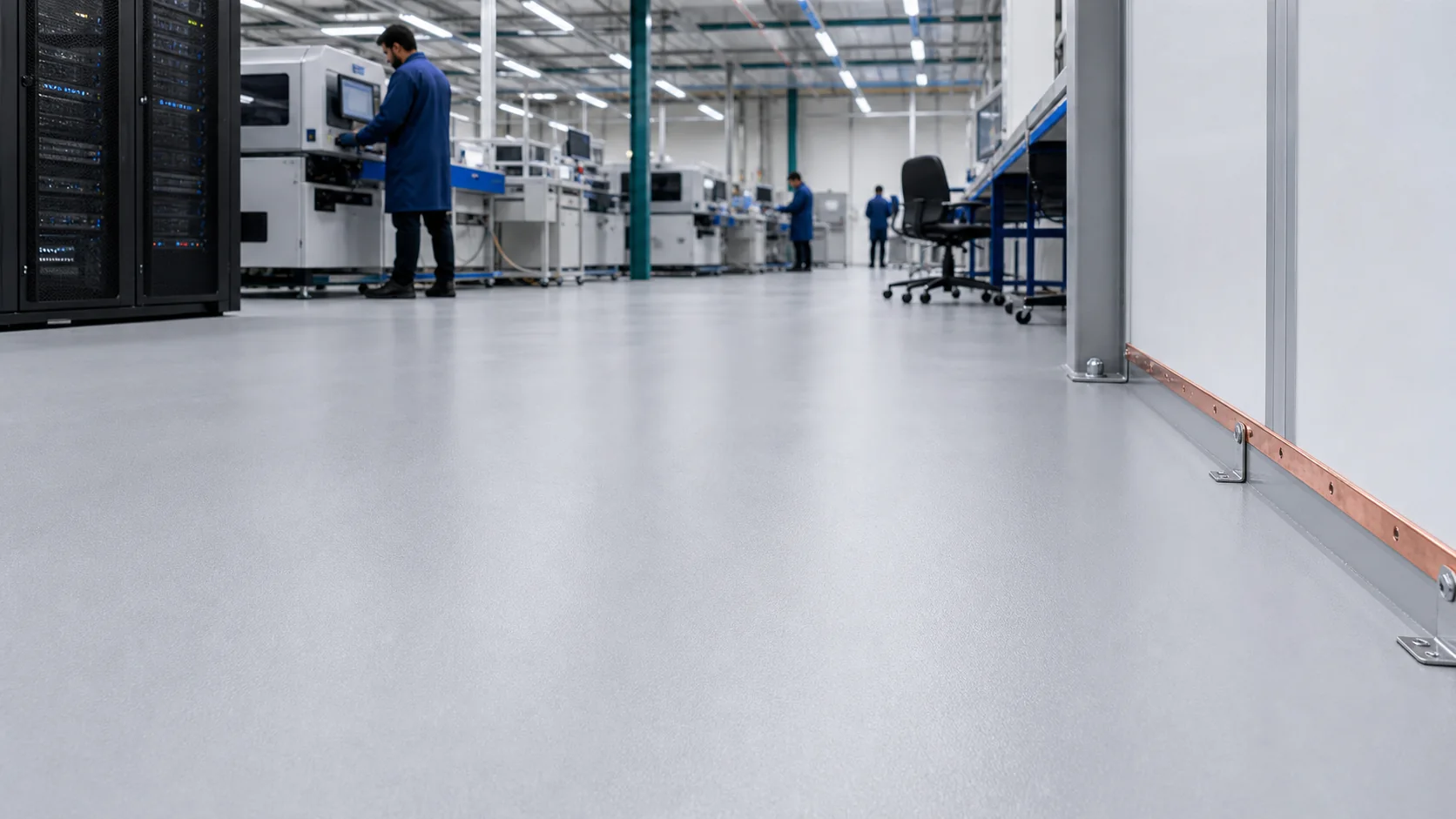
ESD and conductive epoxy flooring should be selected by real site use, not by a generic product name. The application, cleaning method, traffic, moisture, chemical exposure, design target and handover expectation all matter.
Assembly, packaging, testing and repair zones for sensitive components.
Support areas where static control, dust control and cleanability matter.
Clean support spaces, testing rooms and controlled movement paths.
Battery, component and controlled assembly areas that need a reviewed ESD strategy.
Smooth seamless floors, coved details and disciplined grounding coordination.
Areas where sensitive parts are packed, moved, stored or transferred.
The page keeps the existing product intent, but presents it in a cleaner consultant format so procurement teams, consultants and owners can compare the right options.
For controlled zones where static charge must be routed through a grounded floor build-up.
A smooth, easy-clean finish for cleanrooms, electronics assembly and light-to-medium process zones.
Grounding detail that should be planned before the body coat, not added as an afterthought.
Useful where cleaning liquids, process splash or controlled maintenance routines are expected.
For healthcare, labs or interiors where resilient sheet systems fit the design better than resin.
Strong ESD pages answer the selection question clearly: the correct floor depends on the required electrical resistance range, grounding plan, room use, chemicals, cleaning method, slab moisture, traffic and acceptance testing method.
Confirm whether the project needs conductive or static dissipative performance and how it will be tested after installation.
Plan copper tape, conductive primer and connection points before the floor body coat is applied.
Review sensitive electronics, explosive dust or vapor risk, cleanroom controls, lab equipment and static-sensitive packaging.
Check whether the floor will face dry cleaning, wet mopping, disinfectants, detergents, washdown or chemical splash.
Match thickness, resin type and topcoat to foot traffic, trolleys, pallet movement, forklifts and maintenance equipment.
Moisture, cracks, weak concrete, oil contamination and existing coatings must be checked before selecting the ESD build-up.
Consultants and facility managers often compare conductive epoxy, static dissipative epoxy and anti-static vinyl before approving a floor. SolidDrops can help route the inquiry to the right system family.
| System type | Best fit | Important check |
|---|---|---|
| Conductive epoxy | Controlled electronics, cleanrooms, server support and specialist production zones. | Needs a complete grounding design, conductive primer and site acceptance testing. |
| Static dissipative epoxy | Clean technical rooms, light process areas and production zones where controlled discharge is required. | Performance depends on full system build-up, topcoat choice and maintenance routine. |
| ESD vinyl | Healthcare, labs, interiors and selected clean support spaces where resilient flooring is preferred. | Requires suitable subfloor preparation, seams, adhesive and grounding coordination. |
| Standard epoxy | General dust control and concrete protection where ESD is not required. | Should not be described as anti-static unless the system is designed and tested for ESD performance. |
The page now answers high-intent quotation searches by telling buyers exactly what to send. This reduces back-and-forth and gives AI/search systems clearer project context.
City and site area: Jeddah, Riyadh, Dammam, Jubail, Makkah, Madinah, Tabuk or other KSA location.
Electronics assembly, data center support, lab, cleanroom, battery component zone, pharma support or packaging area.
Approximate square meters, layout, floor plans, sections, doorways, coves, drains, joints and transitions.
Required ESD range, test method, consultant specification or client acceptance criteria if available.
Photos, cracks, laitance, oil contamination, old coating, moisture concern and repair requirements.
Shutdown window, working hours, phasing, access restrictions, other trades and target handover date.
Long-term ESD performance depends on correct cleaning, grounding integrity, surface condition and periodic checks. This section targets maintenance, facility manager and QA searches.
Check the installed system against the agreed resistance target and grounding arrangement before reopening the area.
Use cleaning products and methods compatible with the ESD topcoat, avoiding residues that can interfere with performance.
Review traffic lanes, chair wheels, trolley paths, pallet movement and repair zones before surface wear becomes a failure.
Keep grounding points accessible and inspect them during maintenance or future fit-out changes.
Repair cracks, gouges or worn topcoat areas using compatible ESD materials rather than generic patching.
Give the facility team clear cleaning, protection and reporting guidance after the floor is opened.
A better page must help the buyer make a better decision. The main advantage is not only appearance or material supply; it is matching the floor to the real exposure and maintaining it correctly.
Most flooring failures start before the final coat is applied. SolidDrops structures inquiries around substrate truth, preparation, correct system selection, detailing and realistic curing or handover windows.
Confirm traffic, ESD requirement, electrical grounding points, moisture risk, cleaning method and shutdown window.
Grind or shot-blast concrete, repair cracks and spalls, and remove contamination before priming.
Install conductive primer, copper tape and connection points according to the ESD design.
Apply the selected conductive or dissipative epoxy system with the required finish.
Check visual finish, continuity, grounding coordination and cleaning guidance before reopening.
These are the spaces where buyers commonly search for ESD and conductive epoxy flooring in Saudi Arabia.
Coverage includes Jeddah, Riyadh, Dammam, Jubail, Makkah, Madinah, Medina, Tabuk and nearby project locations across Saudi Arabia.
Project inquiry support for ESD and conductive epoxy flooring with related SolidDrops flooring, waterproofing, FRP, chemicals, pigments, fire alarm and building material categories.
Project inquiry support for ESD and conductive epoxy flooring with related SolidDrops flooring, waterproofing, FRP, chemicals, pigments, fire alarm and building material categories.
Project inquiry support for ESD and conductive epoxy flooring with related SolidDrops flooring, waterproofing, FRP, chemicals, pigments, fire alarm and building material categories.
Project inquiry support for ESD and conductive epoxy flooring with related SolidDrops flooring, waterproofing, FRP, chemicals, pigments, fire alarm and building material categories.
Project inquiry support for ESD and conductive epoxy flooring with related SolidDrops flooring, waterproofing, FRP, chemicals, pigments, fire alarm and building material categories.
Project inquiry support for ESD and conductive epoxy flooring with related SolidDrops flooring, waterproofing, FRP, chemicals, pigments, fire alarm and building material categories.
Project inquiry support for ESD and conductive epoxy flooring with related SolidDrops flooring, waterproofing, FRP, chemicals, pigments, fire alarm and building material categories.
Many projects need more than one material category. SolidDrops also supports waterproofing, sports flooring, FRP panels, chemicals, pigments, fire alarm systems and building materials.
The page avoids keyword stuffing and instead covers natural buyer language, local city searches, application searches and consultant questions.
| Focus keywords | anti static epoxy flooring Saudi Arabia, ESD flooring KSA, conductive epoxy floor coating, anti static floor contractor Saudi Arabia, cleanroom epoxy flooring Saudi Arabia |
|---|---|
| Organic terms | static dissipative epoxy floor, conductive flooring system, ESD floor grounding tape, anti static floor coating, electronics factory flooring, data center flooring Saudi Arabia, pharmaceutical cleanroom flooring, chemical resistant ESD floor, seamless epoxy flooring KSA, industrial flooring contractor Saudi Arabia |
| Long-tail searches | best anti static epoxy flooring system for electronics factory in Saudi Arabia; ESD epoxy floor contractor in Riyadh Jeddah Dammam and Jubail; conductive epoxy floor coating for cleanrooms and laboratories in KSA; anti static epoxy flooring with copper grounding tape Saudi Arabia; what floor system protects sensitive electronics from electrostatic discharge |
It is a resin floor system designed to reduce or dissipate static charge so electrostatic discharge risk is controlled in sensitive facilities.
It is normally reviewed for electronics, cleanrooms, data centers, labs, pharma support areas, automotive components and controlled packaging zones.
No. Standard epoxy is generally insulating. ESD floors use conductive or dissipative layers and grounding details so the full system can control charge.
Area size, slab condition, preparation level, grounding layout, system thickness, ESD performance target, topcoat, shutdown window and location all affect cost.
Conductive floors usually discharge static more directly through a grounded system, while static dissipative floors control the discharge more gradually. The correct option depends on the project specification, risk level and test requirement.
Many ESD epoxy systems use a conductive primer and copper tape network connected to grounding points. The exact grounding design should be confirmed before installation.
Yes, when the selected build-up, coving, cleaning method and acceptance testing fit the cleanroom requirement. The substrate and detailing still need proper site review.
Performance is normally checked by agreed electrical resistance or continuity testing after installation and during maintenance, based on the project requirement.
SolidDrops can review existing ESD floors for repair, recoat or replacement planning, but generic epoxy repair should not be used where ESD performance must remain controlled.
Yes. SolidDrops supports inquiries across Saudi Arabia including Jeddah, Riyadh, Dammam, Jubail, Makkah, Madinah and Tabuk.
Send the location, area, photos, drawings, traffic type, ESD requirement and shutdown window to [email protected] or call +966 50 213 1112.
For faster response, include city, area, drawings, photos, current slab condition, traffic, chemical exposure, wet cleaning, design preference, shutdown window and expected timing.
Phone: +966 50 213 1112
Email: [email protected]
Coverage: all over KSA, including Jeddah, Riyadh, Dammam, Jubail, Makkah, Madinah, Medina and Tabuk.
 Chat Online
Use this feature to chat with our agent.