
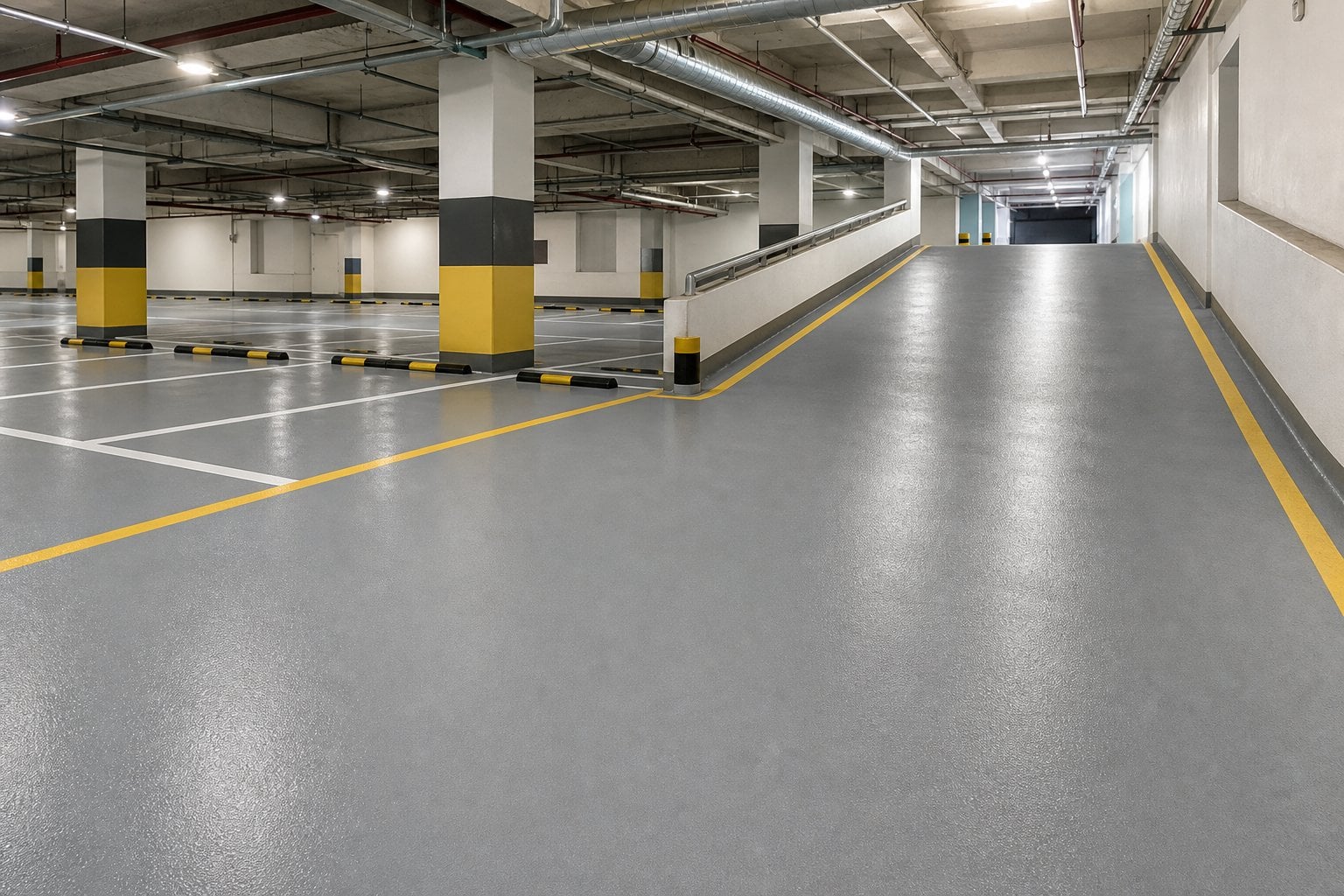
18 Jun Basement Plant Room and Underground Parking Flooring in Saudi Arabia
Moisture-aware flooring for Saudi basements
Basement Plant Room and Underground Parking Flooring in Saudi Arabia
Basement plant rooms, pump rooms, service corridors and underground parking areas need flooring that starts with moisture diagnosis. Epoxy, PU and Ucrete-type flooring can work well only when the slab condition, waterproofing, traffic, drainage and cleaning exposure are understood first.
SolidDrops helps project managers, procurement teams, consultants and facility teams across Saudi Arabia select practical resin flooring and waterproofing routes without treating epoxy as a shortcut over active leaks.
Plant rooms
Underground parking
Moisture barriers
Epoxy and PU systems
Direct answer
What Flooring Works Best in Saudi Basement Utility Areas?
The best basement flooring depends on whether the area is dry, damp, wet, chemical-exposed or vehicle-trafficked. Dry service corridors may suit epoxy coatings or self-leveling epoxy. Pump rooms, wet plant rooms, wash zones and aggressive utility areas may need moisture-tolerant primers, PU coatings, PU cement or Ucrete-type systems. Underground parking needs anti-slip texture, oil resistance, line marking and traffic coating details.
Before any finish is approved, the project team should confirm moisture condition, existing waterproofing, crack movement, drains, wall-floor joints, surface profile, shutdown window and maintenance plan.
Useful for
- Commercial and residential basements.
- Pump rooms, plant rooms and utility rooms.
- Underground parking bays and ramps.
- Basement storage and service corridors.
- Hotels, hospitals, warehouses, showrooms and mixed-use buildings.
Selection table
Match the Floor System to the Basement Exposure
| Area | Main Risks | Practical Flooring Direction |
|---|---|---|
| Plant rooms and pump rooms | Leaks, vibration, oil, chemicals, maintenance traffic, drain details. | Concrete repair, waterproofing coordination, moisture barrier primer, epoxy or PU system; PU cement for harsher wet or thermal-service zones. |
| Underground parking bays | Tire traffic, oil drips, abrasion, dusting concrete, line marking, cleaning. | Epoxy or PU traffic coating with anti-slip texture, suitable primer and marked bays or walkways. |
| Basement ramps | Slip risk, braking force, tire wear, water tracking and poor drainage. | Textured coating, ramp-grade broadcast aggregate, edge details and regular inspection plan. |
| Service corridors and storage | Dusting, humidity, trolley traffic, cleaning and light chemical exposure. | Self-leveling epoxy, high-build epoxy or PU topcoat after slab moisture is checked. |
| Leak-prone wall-floor junctions | Seepage, cracks, construction joints, hydrostatic pressure. | Do not rely on floor coating alone. Treat leakage, joints and waterproofing before final flooring. |
Moisture first
Why Basement Epoxy Fails Without Testing
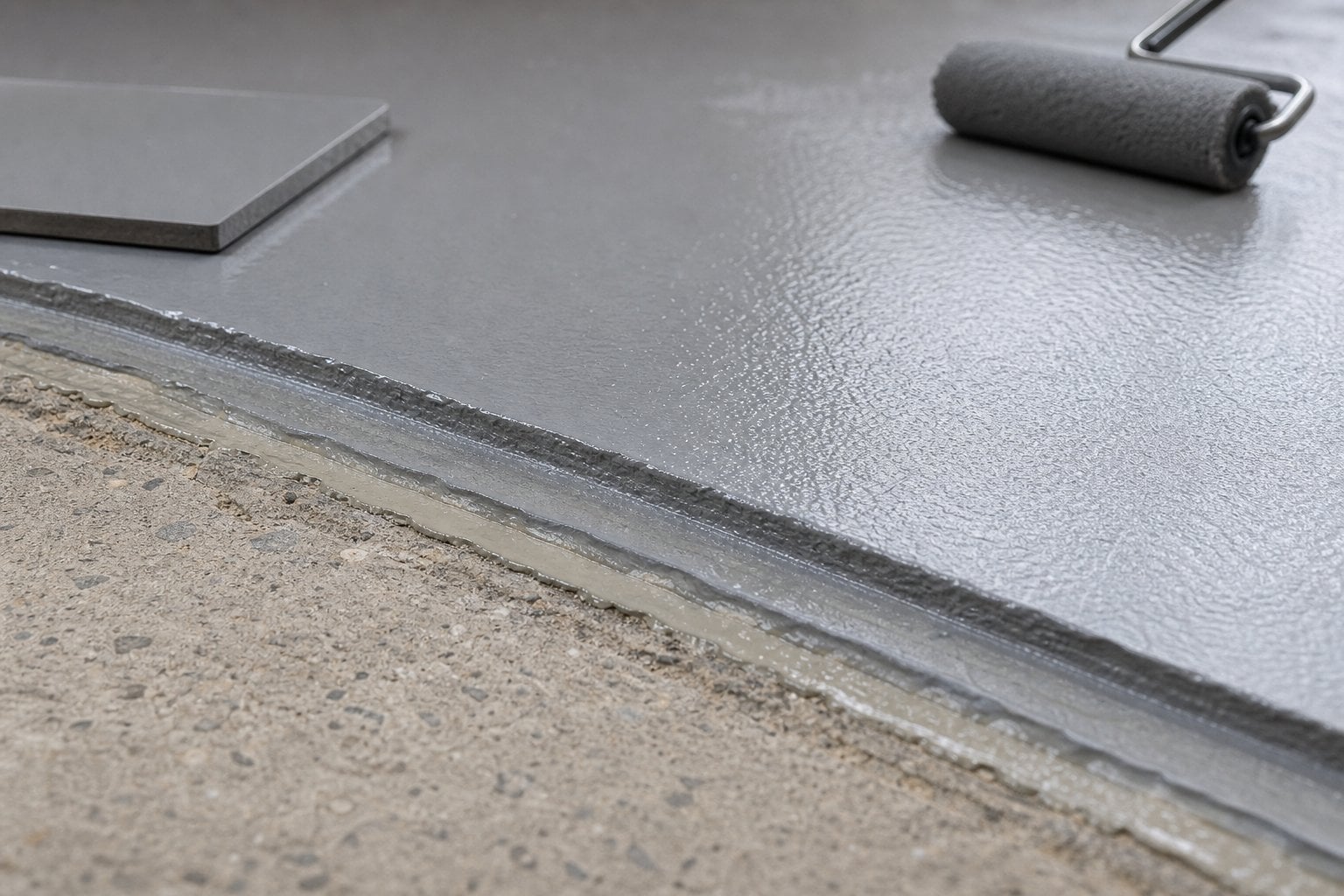
Below-grade concrete can look dry while still carrying moisture vapor or hidden dampness. If a coating seals the slab before the moisture condition is checked, the finish can blister, peel, discolor or debond.
- Check whether the issue is active leakage, slab vapor, condensation or surface contamination.
- Review test results against the selected primer and coating data sheet.
- Repair cracks, honeycombs, open joints and weak concrete before coating.
- Use a moisture vapor barrier primer only when compatible with the full system.
Specification note: ASTM moisture tests are useful decision tools, but results are time and location specific. The selected flooring manufacturer data sheet should still control acceptance limits.
System options
Epoxy, PU and Ucrete-Type Choices
Epoxy coating
Good for many dry service corridors, storage basements and parking bays when the slab is prepared and moisture is within system limits.
Self-leveling epoxy
Useful where a smoother, thicker and more professional resin finish is needed for controlled basement areas.
PU topcoat or coating
Helpful where abrasion, traffic, UV-adjacent exposure or more flexible finishing performance is required.
PU cement or Ucrete-type
Consider for harsher wet plant rooms, chemical exposure, thermal change or demanding utility areas.
Moisture barrier primer
Used when tested slab moisture requires a compatible mitigation layer before the selected floor finish.
Waterproofing and repair
Crack injection, cementitious waterproofing, PU membranes and repair mortars may be needed before flooring begins.
Process
Recommended Workflow for Project Teams
- Collect drawings, photos, room uses, traffic loads, leakage history and shutdown limits.
- Inspect slab condition, drains, wall-floor junctions, ramps, cracks and old coatings.
- Check moisture condition and compare it to primer and flooring system requirements.
- Repair concrete, joints and waterproofing defects before applying the final floor finish.
- Select epoxy, PU, anti-slip broadcast, line marking, coving or PU cement based on exposure.
- Plan curing, ventilation, cleaning method and handover inspection.
Saudi buyer intent
Questions Procurement and Consultants Should Ask
Moisture and leakage
Is there active leakage, vapor emission, poor drainage, condensation, or water entering at joints and penetrations?
Traffic and loading
Will the area receive vehicles, forklifts, trolleys, pumps, equipment vibration, chemical storage or maintenance tools?
Safety and operations
What anti-slip texture, line marking, color zoning, cleaning process, ventilation and shutdown timing are required?
Coverage
Basement Flooring Support Across Saudi Arabia
SolidDrops supports project inquiries all over Saudi Arabia, including Jeddah, Riyadh, Dammam, Jubail, Makkah, Madinah and Tabuk.
Related SolidDrops categories include flooring, waterproofing, sports flooring, FRP panels, chemicals trading, pigments, fire alarm systems and building materials. This helps project teams coordinate basement flooring with concrete repair, waterproofing, wall protection and facility handover needs.
FAQ
Basement Plant Room and Underground Parking Flooring FAQ
Can epoxy flooring be used in basement plant rooms?
Yes, when concrete preparation, moisture, drainage, traffic and chemical exposure are reviewed. Wet plant rooms or high-service areas may need moisture barrier primers, PU systems, coves or Ucrete-type PU cement systems instead of a simple coating.
Is underground parking flooring different from normal basement epoxy?
Yes. Underground parking often needs anti-slip texture, oil resistance, tire traffic resistance, line marking, ramp treatment, waterproofing coordination and stronger surface preparation.
Should basement waterproofing happen before epoxy flooring?
Active leaks, cracks, wall-floor joints and drainage problems should be treated before the final floor finish. Epoxy over active water can blister or debond.
What should consultants request before approving a basement floor system?
Request slab moisture checks, surface preparation method, crack and joint treatment, primer type, coating thickness, anti-slip profile, traffic rating, cleaning exposure, curing schedule and maintenance guidance.
What affects cost in Saudi Arabia?
Cost depends on area size, slab repairs, moisture barrier, waterproofing scope, number of coats, thickness, anti-slip broadcast, line marking, coves, access, city, ventilation and shutdown timing.
Which Saudi cities does SolidDrops support?
SolidDrops supports inquiries across Saudi Arabia, including Jeddah, Riyadh, Dammam, Jubail, Makkah, Madinah and Tabuk.
Need Basement Flooring Guidance for a Saudi Project?
Send the city, area size, site photos, leakage history, traffic type, room use and required finish. SolidDrops can help compare waterproofing, moisture barrier, epoxy, PU and Ucrete-type flooring options.
 Chat Online