
08 Dec Epoxy Flooring: Durable, Versatile & Easy to Maintain
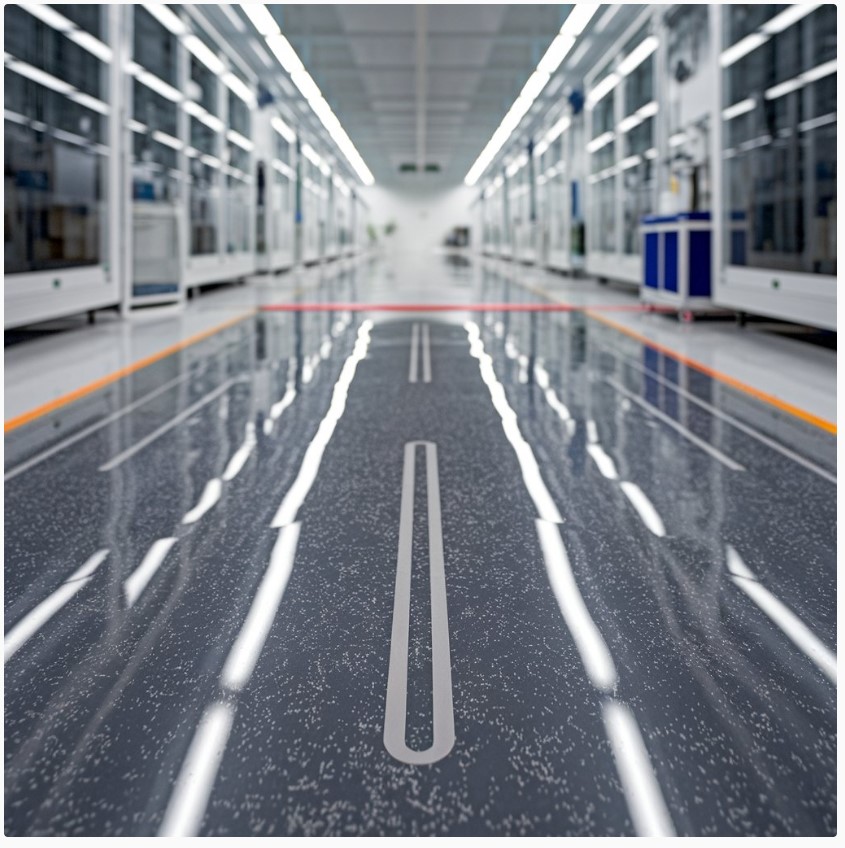
Epoxy flooring is a resinous flooring system where epoxy resin and hardener are mixed to form a plastic surface that bonds tightly to a prepared concrete substrate. Originally developed in the mid ‑twentieth century, epoxy floors have become a popular choice for industrial, commercial and residential spaces because of their durability, chemical resistance and design versatility.
Benefits of Epoxy Flooring
Epoxy floors offer many advantages over traditional flooring types:
- Exceptional durability – Epoxy coatings create a hard, seamless surface that resists heavy foot traffic, impacts and abrasion. This makes them ideal for warehouses, factories, garages and other high‑use areas.
- Chemical and stain resistance – The coatings protect the substrate from oils, acids and chemicals, making them suitable for food processing, manufacturing and laboratories.
- Aesthetic flexibility – Epoxy can be tinted or combined with flakes, quartz or metallic pigments to achieve almost any look. Smooth, glossy finishes enhance the appearance of spaces ranging from showrooms to residential garages.
- Seamless hygienic surface – Because epoxy is poured, there are no grout lines or seams to trap dirt and bacteria. This makes it easy to clean and maintain, and an antimicrobial additive can be incorporated for sensitive environments.
- Cost effectiveness – Epoxy flooring is competitively priced compared with tile or polished concrete and offers long service life, reducing maintenance costs over time.
- Safety features – Textures or aggregates can be added during installation to improve slip resistance.
Types of Epoxy Flooring
Resinous flooring systems fall into three basic categories:
- Coatings (4–30 mils) – Thin, pure resin layers used as primers or top coats.
- Slurries (30–250 mils) – Resin blended with aggregates to build thickness while maintaining flow.
- Mortars (125–250 mils+) – High aggregate‑to‑resin mixtures that form extremely tough surfaces.
The thickness of the system generally correlates with durability and resistance to abuse.
Installation Basics
Proper installation is crucial to the performance of an epoxy floor. Key steps include:
- Surface preparation – Degrease, grind or shot blast the concrete to remove contaminants. Create the appropriate surface profile; thicker systems require more aggressive profiling.
- Prime coat – Apply a primer to promote adhesion and seal the substrate. This prevents out‑gassing bubbles and helps fill voids.
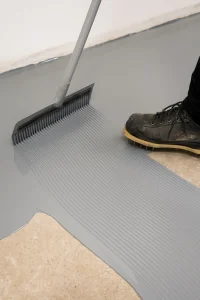
- Mixing and application – Carefully mix the resin and hardener in the correct ratio and apply within the working time. Errors in mixing or application can compromise the finish.
- Environmental conditions – Ensure the concrete is dry and the temperature is within the recommended range (around 60–90 °F or 15‑32 °C) for proper curing.
- Professional installation – For large or complex projects, working with experienced installers reduces the risk of failures.
Maintenance Tips
Epoxy floors require minimal maintenance but still benefit from routine care:
- Regular sweeping or dust mopping keeps grit off the surface to prevent abrasion.
- Weekly cleaning with a damp mop and warm water or a pH‑neutral cleaner is usually sufficient. High‑traffic or oily areas may require daily scrubbing.
- Avoid harsh chemicals or abrasive tools; mild soaps are adequate for most soils.
- Promptly clean spills to prevent staining and maintain a glossy appearance.
With proper care, an epoxy floor can last many years and be rejuvenated by adding an additional top coat when needed.
Considerations
While epoxy flooring provides many benefits, there are a few considerations:
- Surface prep is critical – Poorly prepared substrates are the leading cause of coating failures.
- Slipperiness when wet – Smooth epoxy surfaces can be slippery; incorporating texture or anti‑slip additives mitigates this.
- Moisture and cracking – Moisture in the concrete can cause adhesion problems, and cracks in the substrate can telegraph through the coating. Moisture‑control systems and flexible resins help address these issues.
- Curing time and odors – Epoxy coatings require curing time (often up to 72 hours), and some formulations emit odors during application.
Cost and Longevity
Epoxy flooring costs vary widely depending on system thickness, design elements and local labor rates, but typical ranges are US$3–30 per square foot. While initial costs may be higher than simple paints, the long service life and low maintenance often make epoxy more economical in the long run. Additionally, existing epoxy floors can often be recoated rather than completely replaced, reducing waste and expense.
Conclusion
Epoxy flooring combines durability, chemical resistance and aesthetic versatility in one seamless package. Whether you’re looking to upgrade a warehouse, garage, kitchen or showroom, a properly installed epoxy floor provides a long‑lasting surface that is easy to clean, customizable and cost‑effective. With careful surface preparation, quality materials and routine maintenance, an epoxy floor can provide years of reliable service while enhancing the look and performance of your spac
Trusted Brands & Materials
At Soliddrops, we collaborate with leading brands such as Sika, Soliddrops, Stonhard, BASF, Fosroc, CMCI, Flowcrete and DCP. We are both an authorized applicator and authorized distributor for these product lines, ensuring your floor is installed with certified expertise.
These materials are formulated to be chemical-resistant and UV-resistant, providing long-term performance even in harsh environments.
Check out some project images below, and contact us if you need further examples or detailed specifications.
e.
 Chat Online