
25 Aug Epoxy Flooring Guide KSA
Saudi Arabia flooring guide
Epoxy, PU Screed and Ucrete Flooring Guide Saudi Arabia
A practical SolidDrops guide for choosing epoxy flooring, PU cement flooring, anti-static floors, decorative epoxy, waterproofing tie-ins and related project materials across Saudi Arabia.
Fast buyer answer
Epoxy flooring is strong, seamless and cleanable, but the right Saudi project system depends on the site.
For warehouses, factories, garages, commercial kitchens, clinics, laboratories, showrooms and parking areas, SolidDrops reviews traffic, moisture, chemicals, heat, UV, slip resistance, hygiene, repair needs and handover timing before recommending a floor coating route.
This rebuilt guide keeps the original page topics and adds practical layer-based illustrations for epoxy flooring, PU screed, polyurethane screed, epoxy screed mortar, epoxy grout, Ucrete flooring and Stonclad UT specification review.
Layer-based guideline
Good resin flooring starts with the treatment below the finish
The right system is not chosen by a brand name alone. It is chosen by substrate preparation, moisture, impact, chemicals, cleaning temperature, drainage, coving, slip profile and cure time. These illustrations show how each system is built and where it should be considered.
Epoxy flooring
Layered epoxy flooring suits mainly dry industrial and commercial rooms when the slab is prepared correctly and the system thickness matches the traffic.
- Primer and scratch coat over profiled concrete.
- Epoxy screed mortar where the slab needs repair or build.
- Broadcast texture, line marking or topcoat for use and cleaning.
PU screed / polyurethane screed
PU screed and polyurethane screed are selected where wet cleaning, food service, grease, impact and thermal movement need a tougher resin screed route.
- Plan falls and drains before application.
- Use a textured finish for wet slip resistance.
- Coordinate coves and wall protection in hygienic rooms.
Epoxy screed mortar
Epoxy screed mortar is the repair and leveling layer for worn slabs, forklift damage, equipment zones and impact areas before a final coating system.
- Cut out weak concrete and feathered edges.
- Prime wet-on-wet where the product requires it.
- Grind level before the final epoxy or polyurethane coat.
Epoxy grout
Epoxy grout supports chemical-resistant joint, tile, anchor and equipment-base details. It is a treatment detail inside the floor package, not a standalone whole-floor coating.
- Clean the joint before packing.
- Confirm water, chemical and heat exposure.
- Protect cure before wet cleaning or traffic.
Ucrete flooring / PU cement
Ucrete flooring and PU cement are reviewed for food factories, commercial kitchens, cold rooms and hot washdown rooms where standard epoxy can be too brittle or glossy.
- Use coves and drains for hygiene.
- Review thermal shock and cleaning chemicals.
- Select texture for wet production safety.
Stonclad UT
Stonclad UT is handled as a named heavy-duty urethane mortar specification route when the project needs strong resistance to impact, abrasion, thermal shock and aggressive cleaning.
- Confirm the named system in the BOQ or consultant spec.
- Review equivalent urethane mortar alternatives only when allowed.
- Match substrate, thickness, texture and cure schedule to the room.
System selection
Choose the floor by exposure, not by product name alone
A thin epoxy paint, high-build epoxy, self-leveling system, epoxy screed mortar, epoxy grout detail, PU screed, polyurethane screed, Ucrete flooring, Stonclad UT route, polyurethane topcoat, polyurea coating or decorative finish can all be correct in different rooms.
Good for clean concrete floors that need dust control, better cleaning, oil resistance and a tougher surface than bare concrete.
A smoother finish for showrooms, laboratories, commercial areas and selected industrial rooms where floor flatness and appearance matter.
A heavier-duty repair and build layer for damaged slabs, impact zones, forklift traffic and areas that need more thickness than a thin coating.
A treatment for chemical-resistant joints, tile gaps, anchors, equipment pads and local repair details, not a full-floor coating by itself.
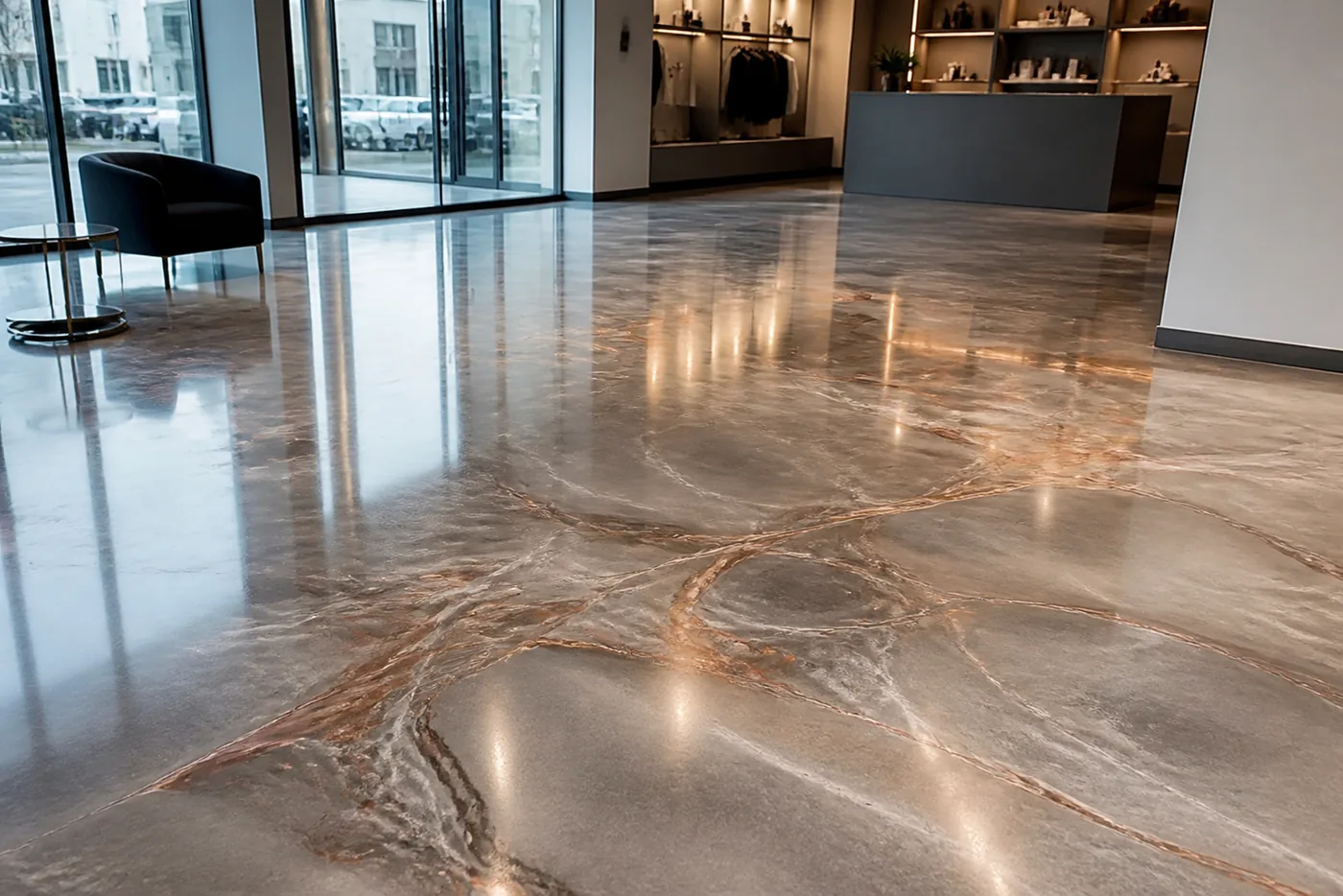
Decorative systems for retail, offices, residential interiors and display spaces where color, pattern and gloss are part of the design brief.
A controlled option for electronics, labs, clean rooms and sensitive areas where static discharge must be considered.
A heavy-duty wet-service route for production rooms, kitchens, cold stores, washdown areas and floors needing texture, hygiene and toughness.
Often stronger for hot washdown, food processing, cold rooms, wet production and thermal shock exposure than a standard epoxy coating.
A named heavy-duty urethane mortar route to review when the project calls for extreme impact, abrasion, thermal shock and cleaning resistance.
Useful where UV stability, abrasion, flexibility, topcoat performance or outdoor exposure needs review.
Alternative floor finishes for offices, gyms, schools and commercial spaces when comfort, acoustic or modular replacement goals matter.
Using areas
Where epoxy flooring is normally specified in KSA
The guide covers industrial, commercial, healthcare, food, parking and residential use cases while keeping practical limits visible.
| Area | What to check before choosing the system |
|---|---|
| Warehouses and logistics | Forklift lanes, loading areas, pallet zones, line marking, dust control, abrasion resistance and slab repair. |
| Factories and workshops | Machinery, impact, oil, solvents, tool traffic, maintenance aisles and safety color coding. |
| Food, beverage and kitchens | Wet cleaning, grease, hot water, coving, drains, FRP panels, PU screed, polyurethane screed, Ucrete flooring and Stonclad UT-style urethane mortar options. |
| Hospitals, clinics and labs | Cleanable floors, low-dust rooms, chemical handling, anti-microbial options, ESD review and maintenance access. |
| Parking and automotive | Vehicle decking systems, car service centers, tire turning, oil exposure, ramps and textured anti-slip finishes. |
| Residential and decorative | Garages, kitchens, bathrooms, living areas, metallic epoxy, 3D epoxy and flake systems with realistic maintenance guidance. |
| Cold rooms and freezers | Temperature cycling, condensation, threshold details, thermal shock and PU cement system selection. |
| Outdoor and sun-exposed areas | UV-stable topcoats, polyurea or polyurethane alternatives, waterproofing tie-ins and slip resistance. |


All SolidDrops products
Flooring guide plus full product map
The main topic remains epoxy flooring, but connected requirements are visible: waterproofing, sports flooring, FRP panels, chemicals trading, pigments, fire alarm systems and building materials.

Flooring systems
Epoxy, PU, Ucrete-type PU cement, anti-static, metallic, 3D, flake, vinyl, rubber, carpet tile, vehicle deck and cement self levelling options.
- epoxy flooring services
- self-leveling epoxy flooring
- solid epoxy floor coating
- epoxy repair products
- epoxy screed mortar
- epoxy grout
- epoxy coatings
- flooring system sealers
- cementitious flooring system
- PU screed
- polyurethane screed
- polyurethane coating
- polyurethane flooring system
- vehicle decking systems
- static controlled flooring system
- chemical-resistant flooring
- anti-static and ESD epoxy flooring
- Ucrete flooring
- PU cement and Ucrete-type flooring
- Stonclad UT and urethane mortar specification support
- vinyl and rubber flooring
- LVT vinyl plank
- carpet tile
- cement self levelling

Waterproofing
Roof, tank, basement, wet area, parking, podium, expansion joint and concrete protection support with practical material selection.
- waterproofing services
- PU foam roof coating
- bituminous damp and waterproofing
- acrylic waterproofing
- cementitious waterproofing
- polyurethane waterproofing
- polyurea coating
- water tank epoxy coating
- injection products
- expansion joints

Sports flooring
Acrylic courts, PU sports systems, rubber gym flooring, KDF-style systems, line marking and multipurpose school or facility floors.
- sports flooring
- gym flooring
- rubber flooring
- acrylic court flooring
- KDF flooring systems

FRP panels
Hygienic FRP wall and ceiling panels for food processing, cold rooms, commercial kitchens, healthcare and wet service spaces.
- FRP panels
- FRP wall panels
- FRP ceiling panels
- hygienic wall protection
- wall and floor coordination

Chemicals trading
Construction chemicals for flooring, waterproofing, bonding, repair, sealing, coating, grouting and project material coordination.
- construction chemicals
- industrial chemicals
- repair mortars
- primers
- sealants
- grouts
- acrylic and anti-carbonation coatings

Pigments
Powder, solvent-compatible and coating pigment support for epoxy, concrete, decorative flooring and building material color planning.
- pigments
- powder pigments
- solvent pigments
- epoxy color pigments
- concrete pigments

Fire alarm systems
Commercial and industrial inquiry routing for fire alarm panels, detectors, call points, sounders, cables and project accessories.
- fire alarm systems
- control panels
- detectors
- call points
- notification devices
- fire alarm accessories

Building materials
Building materials connected to flooring, waterproofing, cladding, WPC, PVC, FRP, chemicals, sealants and contractor procurement.
- building materials
- cladding
- WPC
- PVC
- project supply support
- contractor material inquiries
Terms covered naturally
Project language buyers use when comparing floors
These terms are included as practical system and product language, not as stuffed keywords.
PU screed flooring KSA
polyurethane screed flooring
Ucrete flooring Saudi Arabia
epoxy screed mortar and grout
epoxy flooring guide Saudi Arabia
epoxy flooring layer diagram
floor treatment guide Saudi Arabia
warehouse epoxy flooring KSA
factory epoxy floor coating
self-leveling epoxy flooring
solid epoxy floor coating
epoxy mortar flooring
epoxy screed mortar
epoxy grout
chemical resistant epoxy grout
metallic epoxy flooring
3D epoxy flooring Saudi Arabia
decorative epoxy flake flooring
anti-static epoxy flooring
ESD epoxy flooring
chemical-resistant flooring
PU screed
PU cement screed
polyurethane screed
polyurethane flooring system
polyurethane cement flooring
urethane mortar flooring
Ucrete flooring
Ucrete-type flooring
Stonclad UT
Stonclad UT flooring
heavy duty urethane mortar
PU cement flooring
food factory flooring Saudi Arabia
thermal shock resistant flooring
hot washdown flooring
industrial kitchen flooring KSA
floor coving and drains
garage epoxy floor
kitchen epoxy floor
hospital epoxy flooring
food processing epoxy flooring
parking garage floor coating
waterproofing contractor Saudi Arabia
FRP panels Saudi Arabia
sports flooring Saudi Arabia
construction chemicals supplier KSA
pigments for concrete and epoxy
fire alarm systems supplier KSA
building materials supplier KSA
Epoxy flooring services
Self-leveling epoxy flooring
Solid epoxy floor coating
Epoxy repair products
Epoxy screed mortar
Epoxy grout
Epoxy coatings
Flooring system sealers
Cementitious flooring system
PU screed
Polyurethane screed
Polyurethane coating
Polyurethane flooring system
Polyurethane cement flooring
Urethane mortar flooring
Ucrete flooring
Stonclad UT
Vehicle decking systems
Static controlled flooring system
Acrylic and anti-carbonation coatings
Injection products
PU foam roof coating
Bituminous damp and waterproofing
Acrylic waterproofing
Cementitious waterproofing
Polyurethane waterproofing
Chemical-resistant flooring
Anti-static and ESD epoxy flooring
PU cement and Ucrete-type flooring
Cove base and drain detailing
Waterproofing services
Sports flooring
FRP panels
Construction chemicals
Pigments
Fire alarm systems
Building materials
Vinyl and rubber flooring
Cement self levelling
Expansion joints
Installation and supply process
A better floor starts before the first coat
Most epoxy failures are caused by weak preparation, moisture, wrong thickness, ignored joints, chemical mismatch or unrealistic cure timing.
City, area, drawings or BOQ, photos, existing slab condition, traffic, chemical exposure, cleaning method and schedule are reviewed first.
Concrete strength, moisture, cracks, contamination, tiles, coatings, expansion joints and drainage details determine the system route.
Grinding, shot blasting, cleaning, crack repair, epoxy grout treatment, oil removal and priming create the mechanical bond needed for long service life.
Primer, epoxy screed mortar, PU screed, polyurethane screed, Ucrete flooring, broadcast aggregate, flakes, line marking and topcoat are selected for the use case.
Access timing depends on product, thickness, temperature and humidity. The handover should include cleaning and maintenance notes.
Waterproofing, FRP panels, chemicals, pigments, fire alarm materials and building materials can be routed with the same inquiry when needed.
Cost and comparison
Epoxy flooring price depends on the hidden work below the finish
A useful quotation should not compare only square meters. It should explain preparation, repair, thickness, resin type, primer, topcoat, anti-slip texture, coving, line marking, access, city logistics and cure timing.
Epoxy is seamless and can resist many oils and chemicals. Vinyl, rubber, carpet tile and ceramic tile may be better where comfort, modular replacement, acoustics or decorative priorities are stronger.
Polished concrete can suit dry decorative or warehouse areas. Epoxy and PU systems usually provide more chemical resistance, color control, line marking and cleanability.
PU screed, polyurethane screed, Ucrete flooring and PU cement systems are often better for hot washdown, food, cold rooms and aggressive wet exposure.
Polyurea and polyaspartic systems can support faster curing, waterproofing and UV exposure, but need careful specification and application control.

Saudi coverage
Local selection notes for Saudi Arabia projects
SolidDrops supports inquiries across Saudi Arabia, including Jeddah, Riyadh, Dammam, Jubail, Makkah, Madinah and Tabuk.
Review humidity, slab moisture, salt exposure, wet cleaning and UV exposure before selecting primer, epoxy, PU or waterproofing details.
Review heat, dust, logistics traffic, warehouses, showrooms and commercial fit-out finish expectations.
Review industrial chemicals, oil exposure, petrochemical environments, heavy traffic and maintenance schedules.
Review hospitality, commercial kitchens, service corridors, parking and high-footfall facility needs.
Review project access, schedule, temperature swing, substrate condition and material availability.
Send photos, BOQ, drawings, city, area, traffic and exposure details for faster routing.
Internal routes
Related SolidDrops pages for deeper decisions
Use these verified routes when the project needs a narrower product page or a wider all-products inquiry.
Main service route for epoxy floor coating and installation inquiries.
Related epoxy floor content and buyer-intent service page.
Forklift, logistics and industrial warehouse floor guidance.
ESD and static-controlled floor system guidance.
Food factory, cold room and industrial kitchen flooring route.
Roofs, tanks, wet rooms, basements, podiums and joint waterproofing.
Fast-curing waterproofing and protective coating route.
Sports courts, school gyms and multipurpose facility flooring.
https://soliddrops.com/sports-flooring-performance-meets-safety/
Rubber gym flooring and fitness area flooring.
Fire alarm material inquiry route for commercial and industrial projects.
Flooring, waterproofing, FRP, chemicals, pigments, fire alarm and building materials hub.
https://soliddrops.com/ksa-flooring-waterproofing-frp-fire-alarm-chemicals/
Send BOQ, drawings, photos and city details.
Epoxy flooring FAQ
Questions owners, consultants, contractors and facility teams ask
The answers are concise so the page is useful for quick comparison and detailed project screening.
What is epoxy flooring?
Epoxy flooring is a resin-based floor coating made by combining resin and hardener over prepared concrete. After curing, it forms a seamless, durable and cleanable surface.
What are the main advantages of epoxy flooring?
The main advantages are durability, chemical resistance, dust control, easier cleaning, design flexibility and improved protection for concrete when preparation is correct.
What are the disadvantages or problems with epoxy flooring?
Epoxy can peel, bubble, yellow, become slippery or fail early when the slab is damp, poorly prepared, contaminated, exposed to strong UV or specified without the right texture and topcoat.
What types of epoxy flooring are available?
Common options include water-based epoxy, solvent-based epoxy, 100 percent solids epoxy, self-leveling epoxy, epoxy mortar, flake epoxy, metallic epoxy, 3D epoxy and anti-static epoxy.
What is PU screed or polyurethane screed flooring?
PU screed, also called polyurethane screed, is a heavy-duty resin screed used where wet cleaning, impact, abrasion, temperature movement and food or industrial hygiene requirements are stronger than normal dry-room epoxy needs.
When should I choose Ucrete flooring or PU cement flooring?
Ucrete flooring and PU cement systems are normally reviewed for food production, industrial kitchens, dairies, cold rooms, freezer thresholds, hot washdown areas and chemical cleaning zones.
What is epoxy screed mortar used for?
Epoxy screed mortar is used to build thickness, repair damaged concrete, level worn lanes and create a tougher base before the selected epoxy or polyurethane topcoat.
What is epoxy grout used for in flooring?
Epoxy grout is used for chemical-resistant joints, tile gaps, machinery base details, anchors and local repair fills. It is a treatment detail, not a replacement for a full resin floor system.
What is Stonclad UT?
Stonclad UT is a named heavy-duty polyurethane mortar flooring route. On a SolidDrops project it should be reviewed as a specification route when the facility needs strong impact, abrasion, thermal shock and cleaning resistance.
Where can epoxy flooring be used in Saudi Arabia?
It can be used in warehouses, factories, kitchens, hospitals, clinics, labs, garages, car service centers, basements, showrooms, retail areas and selected residential rooms.
Is epoxy flooring suitable for homes?
Yes, epoxy can be used in garages, kitchens, bathrooms and living areas when the surface is prepared correctly and the finish is selected for slip resistance and design expectations.
Is epoxy flooring good for warehouses and factories?
Yes. For dry industrial areas, high-build epoxy, epoxy mortar, self-leveling epoxy or polyurethane topcoats can handle traffic, cleaning and abrasion when thickness and preparation are correct.
Can epoxy handle forklifts and heavy machinery?
Heavy-duty systems can support forklifts and machinery, but the design must account for slab strength, impact, wheel type, turning areas, joints, thickness and topcoat wear.
Is epoxy flooring resistant to chemicals and oil spills?
Epoxy is often selected for oil and many chemical exposures, but resistance depends on the chemical, concentration, contact time, cleaning method and selected resin system.
Can epoxy withstand Saudi heat and sun?
Indoor heat is usually manageable with the right system. Direct sunlight can yellow standard epoxy, so outdoor areas should be reviewed for UV-stable polyurethane, polyaspartic, polyurea or other protective topcoats.
Is epoxy slippery when wet?
Smooth epoxy can be slippery when wet or oily. Anti-slip aggregate, textured broadcast flakes, silica sand or aluminum oxide can improve traction.
Is epoxy safe after curing?
A properly cured system is generally low-odor in use. During installation, ventilation and protective procedures matter, especially with solvent-based products.
Is epoxy fire-resistant?
Cured epoxy is not normally used as a fire-protection system. For special fire requirements, the specification should review the full floor, coating and building safety package.
What is the installation process?
The usual process is assessment, cleaning, mechanical preparation, crack repair, priming, body coat, aggregate or decorative finish when needed, topcoat, curing and handover.
How long does epoxy take to install and cure?
Timing depends on area size, layers, product chemistry, site access, temperature and humidity. Light access can be faster than full traffic use, so the project schedule must be confirmed before work starts.
Can epoxy be installed DIY?
Small DIY kits exist, but commercial and industrial floors should normally use professional preparation and application because adhesion, moisture and mixing errors cause expensive failures.
Can epoxy be applied over existing concrete?
Yes, when the concrete is sound, clean, dry and mechanically profiled. Cracks, spalling, oil contamination and weak areas should be repaired first.
Can epoxy be installed over ceramic tiles?
Sometimes, but only if the tiles are firmly bonded, roughened, cleaned and detailed correctly. Hollow tiles, movement and grout lines can cause problems.
How do you maintain epoxy flooring?
Sweep dust and grit, use neutral cleaners, avoid aggressive acids unless the system allows them, repair scratches early and renew topcoats before heavy wear exposes the body coat.
Can damaged epoxy flooring be repaired?
Yes. Chips, scratches and localized failures can often be ground, patched and recoated, while widespread peeling may require removal and full surface preparation.
What affects epoxy flooring cost in Saudi Arabia?
Cost is driven by area, surface preparation, repairs, moisture control, thickness, primer, resin type, topcoat, anti-slip profile, design, coving, line marking, access and city logistics.
Which Saudi cities does SolidDrops support?
SolidDrops supports inquiries across Saudi Arabia, including Jeddah, Riyadh, Dammam, Jubail, Makkah, Madinah and Tabuk.
How do I find a good epoxy flooring contractor?
Ask about surface preparation, moisture testing, system thickness, chemical exposure, slip resistance, curing time, warranty terms, cleaning instructions and comparable project experience.
Are 3D and metallic epoxy floors available?
Decorative 3D, metallic and flake epoxy finishes can be considered for showrooms, residential interiors and commercial spaces when the design, UV exposure and maintenance needs are realistic.
Can epoxy include logos or custom patterns?
Yes, custom colors, flakes, zones, line marking and selected logo or pattern work can be planned when the substrate, topcoat and expected traffic are suitable.
What is the difference between epoxy and polyurethane flooring?
Epoxy often gives strong adhesion and build over concrete. Polyurethane can be useful for UV stability, abrasion, flexibility or topcoat performance. Many systems combine both.
How do polyurea and polyaspartic compare with epoxy?
Polyurea and polyaspartic systems can cure quickly and may suit UV or waterproofing needs, but they require correct preparation, equipment and specification.
How does epoxy compare with vinyl, tile and polished concrete?
Epoxy is seamless and chemical-resistant. Vinyl and carpet tile can improve comfort or modular replacement. Ceramic tiles are hard but have grout joints. Polished concrete suits dry decorative or warehouse spaces.
Is epoxy flooring waterproof?
Epoxy is non-porous when correctly applied, but waterproofing requires proper detailing at joints, drains, walls, cracks and penetrations. Tanks, roofs and wet areas may need dedicated waterproofing systems.
Is epoxy suitable for bathrooms, kitchens and food industries?
It can be suitable, but wet and hot washdown spaces often need PU screed, polyurethane screed, Ucrete flooring, PU cement, coves, drainage, slip resistance, FRP panels and waterproofing details.
How thick is epoxy flooring?
Thickness depends on use. Thin coatings, high-build systems, self-leveling layers and epoxy mortar systems are all different, so industrial and residential floors should not use one generic thickness.
Does epoxy require primer and multiple layers?
Most durable systems use a primer plus body coat and topcoat. Additional layers may include mortar, broadcast aggregate, flakes, line marking or a UV-stable finish.
Does epoxy need expansion joints?
Epoxy can be seamless across rooms, but structural or movement joints should be respected and detailed. Ignoring expansion joints can lead to cracking or failure.
Can epoxy be anti-static or conductive?
Yes. Anti-static and ESD epoxy systems are available for electronics, clean rooms, labs and sensitive equipment areas when resistance values and grounding details are specified.
What should I send to SolidDrops for a quotation?
Send city, area, photos, drawings or BOQ, slab condition, traffic, chemicals, moisture or water exposure, cleaning method, finish preference and required schedule.
Project inquiry
Send the details SolidDrops needs to route the correct floor system
For the fastest response, include city, area, substrate condition, photos, drawings or BOQ, traffic, chemicals, moisture, cleaning method and schedule.