
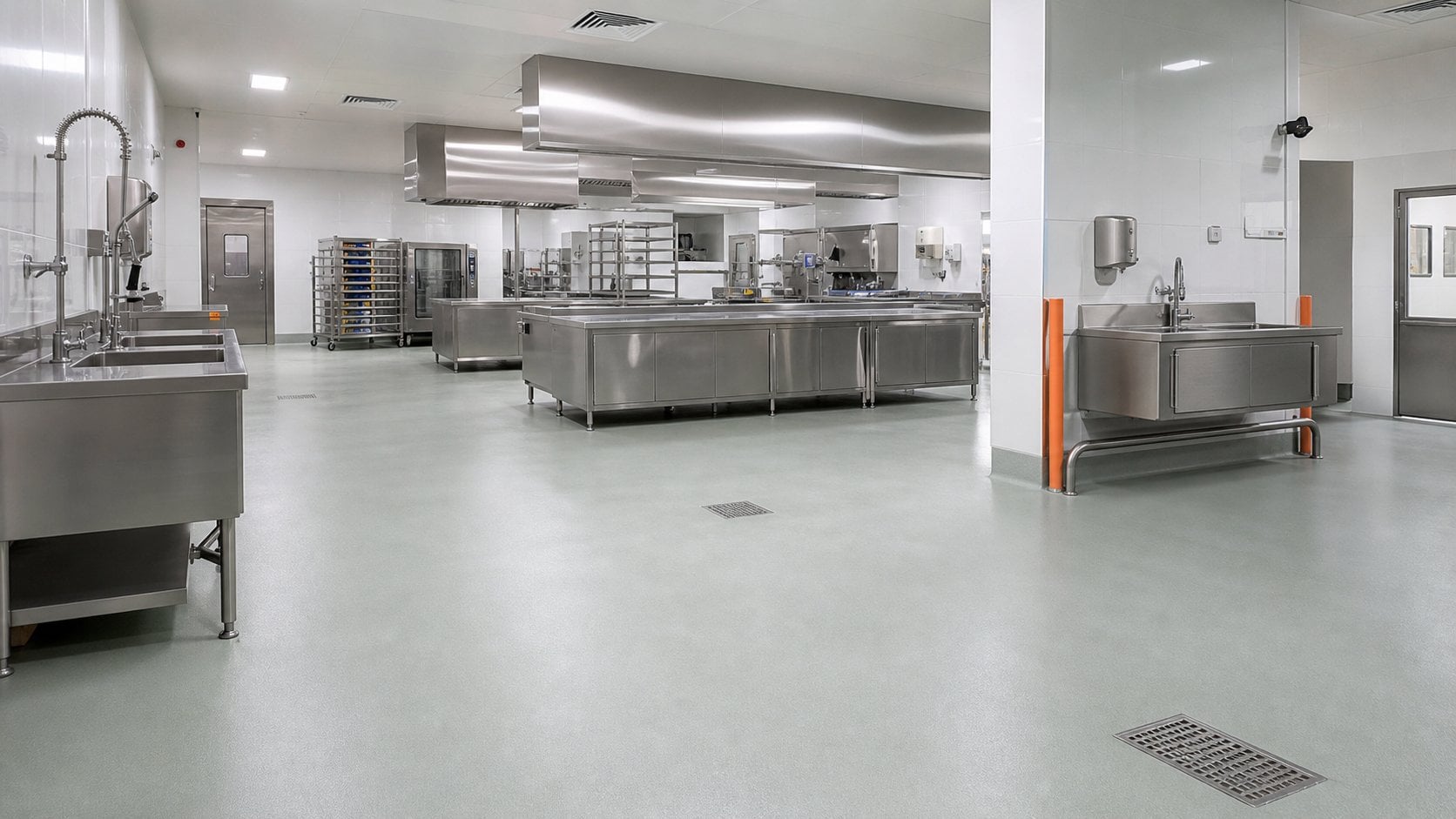
Commercial kitchen flooring in Saudi Arabia
Commercial Kitchen Flooring for Hotels, Restaurants & Catering
SolidDrops helps project teams compare epoxy and PU cement flooring routes for commercial kitchens across Saudi Arabia. A suitable system depends on water, grease, cleaning, temperature change, traffic, drainage, substrate condition and the approved product documentation.
Direct answer
What should commercial kitchen flooring solve?
Commercial kitchen flooring should be selected as an operating surface, not a decorative finish. The specification needs to account for wet and greasy traffic, hot or cold conditions, cleaning chemicals, equipment movement, floor falls, drain edges, wall junctions and the available shutdown window.
Epoxy can be a sensible route for selected dry or moderate-duty areas. Where kitchens have frequent washdown, heat, grease or more severe service, PU cement or polyurethane screed may be the more suitable route to review. The final decision should follow the actual room conditions, substrate assessment and current product data.
System selection
Compare the flooring route by kitchen exposure
Dry or lighter-service areas
Selected preparation rooms, service corridors and storage areas may be reviewed for epoxy or another cleanable resin finish when water, thermal shock and aggressive washdown are not the dominant exposure.
Wet preparation and dishwashing
Water, oils, cleaning routines and trolley movement make surface texture, cleanability, coves, floor falls and drain details central to the decision. A textured epoxy or PU-cement direction may be reviewed depending on the room.
Hot washdown and thermal change
For heavy wet service, hot water, steam, cold-room thresholds or repeated temperature change, review a PU-cement or polyurethane-screed route against the current product data and project specification.
| Kitchen condition | Route to review | Details to confirm before approval |
|---|---|---|
| Dry prep, store or service corridor | Epoxy or a cleanable resin finish | Traffic, slab condition, cleaning method, colour/marking needs and whether the area remains dry in operation. |
| Wet preparation, dishwashing or greasy traffic | Textured resin or PU-cement route | Water and grease exposure, texture-to-cleanability balance, floor falls, drain edges, coves and equipment movement. |
| Hot washdown, steam or cold-room transition | PU cement or polyurethane screed | Temperature range and frequency, cleaning chemicals, thermal movement, substrate repair, thresholds and return-to-service constraints. |
| Existing tile, cracked concrete or failed coating | Repair-first assessment before the finish | Loose or hollow areas, contamination, moisture, cracks, slope, drain condition and the compatible repair/build-up route. |
This is a selection framework, not a product specification. Thickness, texture, primer, cure and chemical-resistance requirements must be verified against the selected system documentation and project conditions.
Details that affect daily use
Drains, coves and wall interfaces belong in the flooring brief
Drain zones and falls
Standing water changes safety, cleaning and long-term performance. Record drain locations, existing ponding, edge condition and required floor falls before selecting a resin build-up.
Coved wall-floor transitions
Coves can reduce open wall-floor junctions in washdown areas. Confirm the wall finish, cove detail, cleanability requirement and compatibility with the room design before including it in the scope.
FRP and wet-area coordination
Where hygienic wall protection and water control are part of the same room, coordinate the flooring with FRP wall panels and the relevant waterproofing route rather than treating each junction as a separate afterthought.
Project inputs
A practical commercial kitchen flooring inquiry
- Describe the kitchen. State whether it is a hotel, restaurant, catering, central-kitchen or institutional-food-service project, plus the city and room schedule.
- Map the exposures. Note water, grease, cleaning chemicals, temperature change, traffic, equipment, cold rooms, drains and the areas that need an anti-slip profile.
- Show the existing floor. Share photos of cracks, old tile, failed coating, ponding, joints, thresholds, drain edges and wall-floor transitions, with drawings or BOQ where available.
- Confirm the project boundary. Agree the required material, technical documentation, repair scope, installation responsibility and timing for the individual project before work is scheduled.
Applications
Commercial kitchens with distinct operating needs
Hotels and hospitality
Main kitchens, banquet prep, dishwashing, service corridors and phased renovation work where access and shutdown timing require early planning.
Restaurants and catering
Cooking lines, wet prep, bakeries, cloud kitchens, central kitchens and institutional catering areas with different water, grease and traffic patterns.
Food-production environments
For food factories, washdown production rooms, cold stores and freezer thresholds, use the specialist food processing flooring guide so the kitchen page does not replace a room-by-room factory assessment.
Saudi Arabia coverage
Commercial kitchen flooring inquiries across KSA
SolidDrops supports commercial kitchen flooring inquiries across Saudi Arabia, including Jeddah, Riyadh, Dammam, Jubail, Makkah, Madinah and Tabuk. Mention the city early because access, project logistics and the available work window can affect the planning discussion. This service-area statement does not imply a local office in each city.
Buyer questions
Commercial kitchen flooring FAQ
Which flooring route should be reviewed for a commercial kitchen?
The right route depends on water, grease, cleaning, temperature, traffic, drains, substrate condition and shutdown timing. Epoxy can suit selected dry or moderate-duty areas, while PU cement or polyurethane screed may be more suitable to review for demanding wet or thermal-change zones.
When should PU cement be reviewed instead of epoxy?
PU cement is commonly reviewed where hot washdown, steam, frequent wet cleaning, grease, cold-room transitions or more severe service create a higher demand than a standard coating. The final choice must follow site conditions and current product documentation.
Are drainage and coves part of the flooring specification?
Yes. Floor falls, drain edges, coves, wall interfaces, joints and thresholds affect safety, cleanability and repair planning. Include them in the drawings, BOQ or photo set before a flooring route is confirmed.
Can a kitchen resin floor be installed over old tile?
It may be possible, but loose or hollow tiles, contamination, moisture, cracks, poor falls and damaged drains need assessment first. A repair and preparation plan should be agreed before treating the project as a simple coating application.
What information should I send for a commercial kitchen flooring quotation?
Send the city, kitchen or facility type, approximate area, photos, BOQ or drawings, current floor condition, drain layout, cleaning method, wet zones, temperature exposure, traffic, required documentation and expected work window.
Which Saudi cities does SolidDrops support?
SolidDrops supports commercial kitchen flooring inquiries across Saudi Arabia, including Jeddah, Riyadh, Dammam, Jubail, Makkah, Madinah and Tabuk.
Next step
Send the kitchen details before the flooring route is fixed
Share photos, area, city, floor plan or BOQ, drains, cleaning method, wet zones, temperature exposure, traffic and timing. SolidDrops can route the request to the relevant flooring, PU-cement, FRP, waterproofing or project-material discussion.
 Chat Online