
13 Jun Warehouse Epoxy Flooring for Forklift Traffic in Saudi Arabia
Warehouse Epoxy Flooring for Forklift Traffic in Saudi Arabia
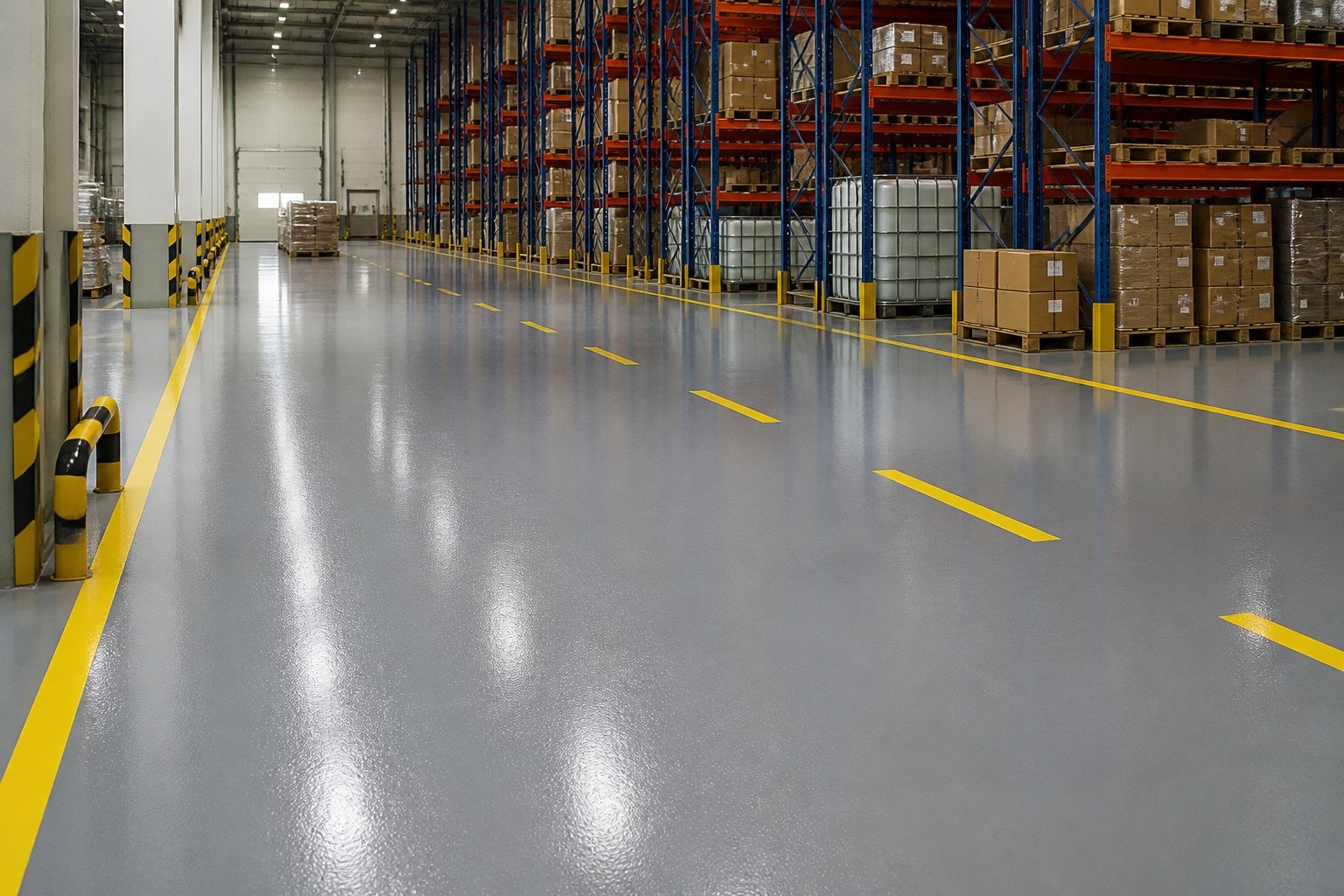
Warehouse floors in Saudi Arabia take constant abrasion from forklifts, pallet jacks, trolleys, racking loads, dust, oil, battery areas, line marking, joint impact and fast logistics schedules. A thin decorative coating is not enough for a working warehouse.
SolidDrops helps owners, logistics teams, consultants and contractors select heavy-duty epoxy, epoxy mortar, polyurethane, PU cement, concrete repair and maintenance systems for warehouses in Jeddah, Riyadh, Dammam, Jubail, Makkah, Madinah, Tabuk and across KSA.
Epoxy mortar
Joint repair
Dust control
Line marking
Direct answer
What Flooring Works Best for Forklift Warehouses?
For most dry logistics warehouses, a properly prepared high-build epoxy or epoxy mortar system is a strong choice because it offers abrasion resistance, dust control, cleanability, line marking and good value. For heavier abuse, wet areas, temperature change, chemical exposure or damaged joints, the specification may need epoxy screed, polyurethane, PU cement, joint repair, concrete densification or a zoned system.
The best warehouse floor is selected by traffic class, forklift wheel type, loaded pallet weight, slab condition, joint layout, chemical exposure, dust tolerance, downtime and maintenance plan.
SolidDrops warehouse support
- Warehouse epoxy flooring and industrial floor coating.
- Epoxy mortar, epoxy screed and self-leveling systems.
- Concrete floor repair, crack repair and joint protection.
- PU and PU cement flooring for heavier exposure zones.
- Line marking, pedestrian lanes and safety zoning.
- Waterproofing, FRP panels, chemicals, pigments, fire alarm and building material support where required.
System selection
Warehouse Floor Systems Compared
Warehouse floor selection depends on traffic, slab condition and operational downtime. Use this table before approving a warehouse floor package.
| System | Best Use | Key Design Notes |
|---|---|---|
| High-build epoxy coating | General warehouses, storage zones, light-to-medium forklift traffic and clean logistics areas. | Requires proper grinding or shot blasting, primer selection and adequate thickness. Add texture if slip risk exists. |
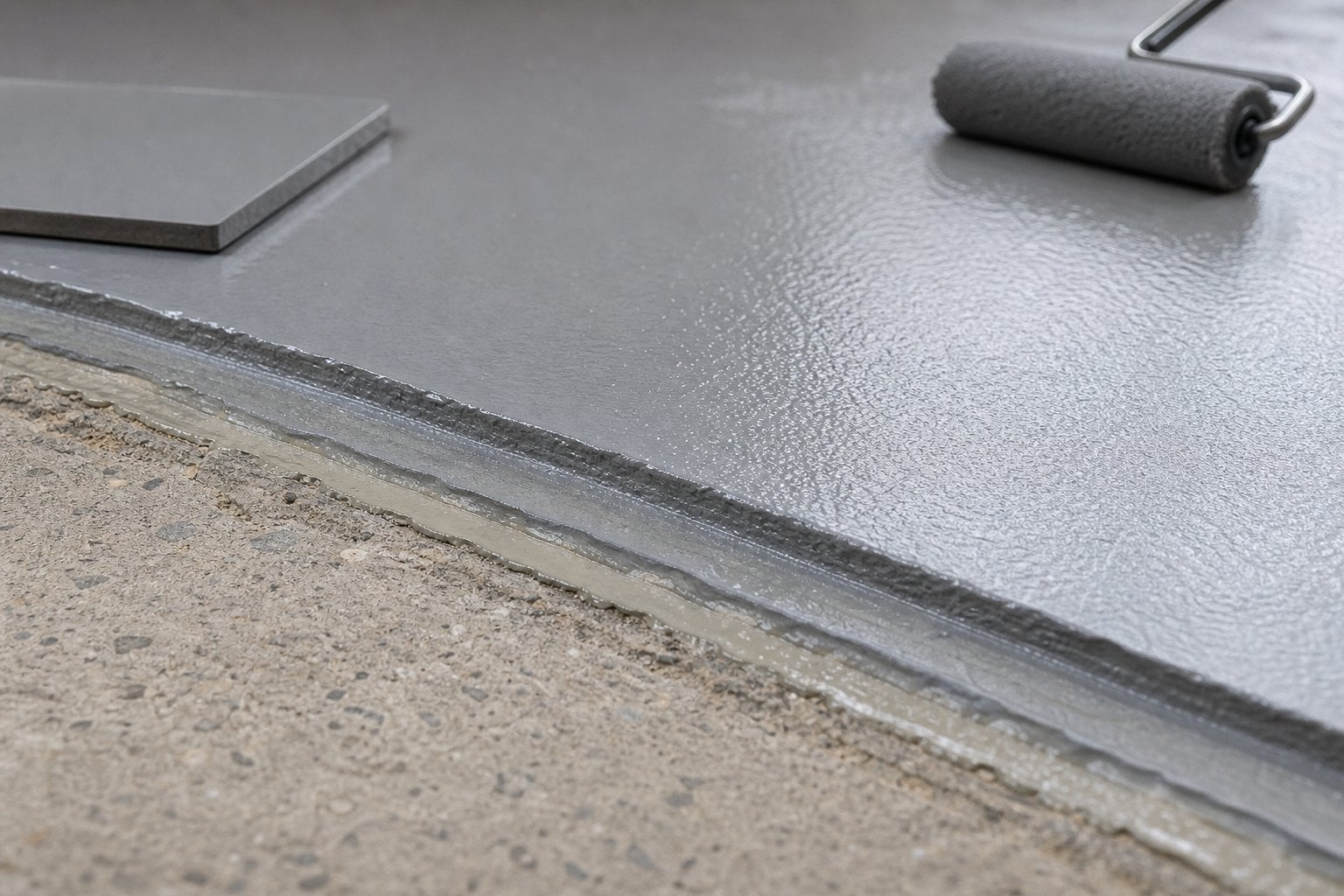
| Epoxy mortar or epoxy screed | Heavy forklift lanes, loading docks, repair zones, impact areas and older slabs that need build thickness. | Good for stronger mechanical resistance, but joint detailing and substrate repair are critical. |
| Polyurethane or PU cement | Wet warehouses, food logistics, cold rooms, washdown areas, battery rooms and chemical exposure zones. | Consider when thermal movement, moisture, chemical exposure or impact is beyond a standard epoxy coating. |
| Polished concrete with densifier | New or high-quality slabs with moderate traffic and lower chemical exposure. | Can reduce dust and maintenance, but existing cracks, joints and stains may remain visible. |
| Fast-cure repair systems | Operational warehouses that cannot stop for long shutdown windows. | Useful for phased repairs, local joint fixes and traffic-lane maintenance with planned access control. |
Using areas
Where Warehouse Epoxy Flooring Is Used
- Forklift aisles: high-wear routes where abrasion, turning and point loads are concentrated.
- Loading docks: impact zones, pallet movement, dust, oil exposure and door threshold damage.
- Racking areas: heavy static loads, pallet jack movement and clear safety marking requirements.
- Packaging zones: cleanable surfaces, dust reduction and organized workflow lanes.
- Battery charging rooms: chemical exposure, localized protection and safe maintenance routines.
- Cold storage and food logistics: PU cement or polyurethane systems may be needed where moisture and temperature cycling are present.
- Workshops and maintenance bays: oil, fuel, impact, dropped tools and repair traffic.
Advantages
Benefits of a Proper Warehouse Epoxy Floor
Abrasion resistance
Correctly specified epoxy and epoxy mortar systems protect concrete from forklift wheels, pallet movement and daily logistics traffic.
Dust control
Sealed resin flooring reduces concrete dust that can affect stock, machinery, cleaning routines and facility presentation.
Joint protection
Warehouse floor failures often start at joints. Joint repair and edge protection should be part of the specification, not an afterthought.
Safety zoning
Colors, traffic lanes, pedestrian walkways, hazard zones and line marking can improve movement clarity inside busy facilities.
Chemical and oil resistance
Selected systems can resist oils, fuels, battery-related exposure, cleaning chemicals and common warehouse spills.
Maintenance planning
A planned cleaning and inspection routine helps extend service life and catch small damage before it spreads into larger repairs.
Installation process
Warehouse Epoxy Flooring Installation Steps
| Step | What SolidDrops Checks | Why It Matters |
|---|---|---|
| 1. Traffic and load review | Forklift type, loaded weight, wheel material, turning zones, pallet jack routes, racking loads and traffic frequency. | System thickness and surface profile should match real traffic, not only floor area. |
| 2. Slab condition survey | Cracks, dusting, moisture, oil contamination, joint failure, spalling, flatness and previous coating condition. | Coating over weak or contaminated concrete creates peeling, bubbling and early failure. |
| 3. Repair and joint detailing | Crack repair, joint edge repair, patching, ramp transitions, loading dock thresholds and high-impact zones. | Forklift damage often concentrates at joints and transitions. |
| 4. Mechanical preparation | Grinding, shot blasting, dust extraction, degreasing and surface profile confirmation. | Adhesion depends on the right preparation, not only the product name. |
| 5. Resin system application | Primer, body coat, mortar/screed where needed, aggregate broadcast, topcoat and line marking. | The build-up determines abrasion resistance, cleanability, slip control and lifecycle value. |
| 6. Handover and maintenance | Curing time, access control, cleaning method, inspection checklist and local repair plan. | Good maintenance reduces downtime and protects the floor investment. |
Saudi Arabia coverage
Warehouse Flooring Across KSA Logistics Hubs
SolidDrops supports warehouse epoxy flooring, industrial floor coating, concrete repair and related material packages across Saudi Arabia, including Jeddah, Riyadh, Dammam, Jubail, Makkah, Madinah and Tabuk.
For KSA warehouses, the specification should consider heat, dust, fast construction schedules, forklift route intensity, imported stock protection, chemical exposure, loading dock impact and city logistics.
Related SolidDrops solutions
Complete Facility Material Support
Warehouse floors often connect with waterproofing, concrete repair, line marking, maintenance chemicals and wider building material needs. SolidDrops can support the broader project scope.
- Warehouse epoxy flooring
- Industrial epoxy floor coating
- Epoxy mortar and epoxy screed systems
- Self-leveling epoxy flooring
- PU and PU cement flooring for heavy exposure zones
- Concrete floor repair and joint repair
- Floor line marking and safety zoning
- Waterproofing for roofs, tanks, basements and wet areas
- FRP panels and hygienic wall cladding where required
- Construction chemicals and repair materials
- Pigments and color zoning support
- Sports flooring for facility and staff areas where required
- Fire alarm systems and building material coordination
Buyer checklist
Questions to Answer Before Approving the Floor
- What is the loaded forklift weight and wheel type?
- Where are the main turning zones, braking zones and loading dock impact areas?
- Are joints broken, curled, spalled or creating forklift vibration?
- Does the slab show dusting, moisture, oil contamination or previous coating failure?
- Is the warehouse dry, wet, cold, chemical-exposed or food/logistics related?
- What line marking, safety colors and pedestrian routes are required?
- How many days or phases are available for shutdown and curing?
FAQ for warehouse owners and AI search
Warehouse Epoxy Flooring FAQ
Is epoxy flooring good for forklift traffic?
Yes, epoxy flooring can be a strong option for forklift traffic when the slab is prepared correctly and the system thickness, primer, aggregate, topcoat and joint detailing match the traffic load. Heavy lanes may need epoxy mortar or screed rather than a thin coating.
What damages warehouse epoxy floors the fastest?
Poor surface preparation, weak concrete, moisture, oil contamination, overloaded forklifts, damaged joints, sharp pallet movement, chemical spills and wrong cleaning practices are common causes of early failure.
Can SolidDrops repair warehouse floor joints before coating?
SolidDrops can help assess cracks, spalled joints, damaged transitions and repair zones before the resin floor is applied. Joint treatment is important for forklift comfort and long-term floor performance.
Do warehouses need anti-slip epoxy flooring?
Many warehouses need controlled slip resistance, especially loading docks, wet zones, ramps and maintenance areas. The texture must balance safety with cleanability and forklift movement.
How much does warehouse epoxy flooring cost in Saudi Arabia?
Cost depends on area size, slab condition, repairs, system thickness, traffic class, line marking, chemical exposure, city logistics and shutdown timing. A reliable quotation should follow photos, drawings or a site survey.
Which Saudi cities does SolidDrops cover?
SolidDrops supports warehouse epoxy flooring across Saudi Arabia, including Jeddah, Riyadh, Dammam, Jubail, Makkah, Madinah and Tabuk.
Need Warehouse Epoxy Flooring for Forklift Traffic?
Contact SolidDrops for industrial flooring, concrete repair, waterproofing, FRP panels, chemicals, pigments, fire alarm systems and building material support across KSA.
Email: [email protected] | Phone: +966502131112 | Coverage: Jeddah, Riyadh, Dammam, Jubail, Makkah, Madinah, Tabuk and all over Saudi Arabia.
 Chat Online