SolidDrops • Waterproofing project support • Saudi Arabia
Waterproofing in Saudi Arabia for Roofs, Tanks and Basements
SolidDrops supports waterproofing enquiries for roofs, water tanks, basements, wet areas and parking decks across Saudi Arabia. Start with the water-entry route, substrate and building use, then select a compatible membrane, lining and detail system.
Send your project city, approximate area, photographs and drawings for scope review. Confirm the proposed materials, preparation, testing and supply or installation responsibilities in the written quotation.
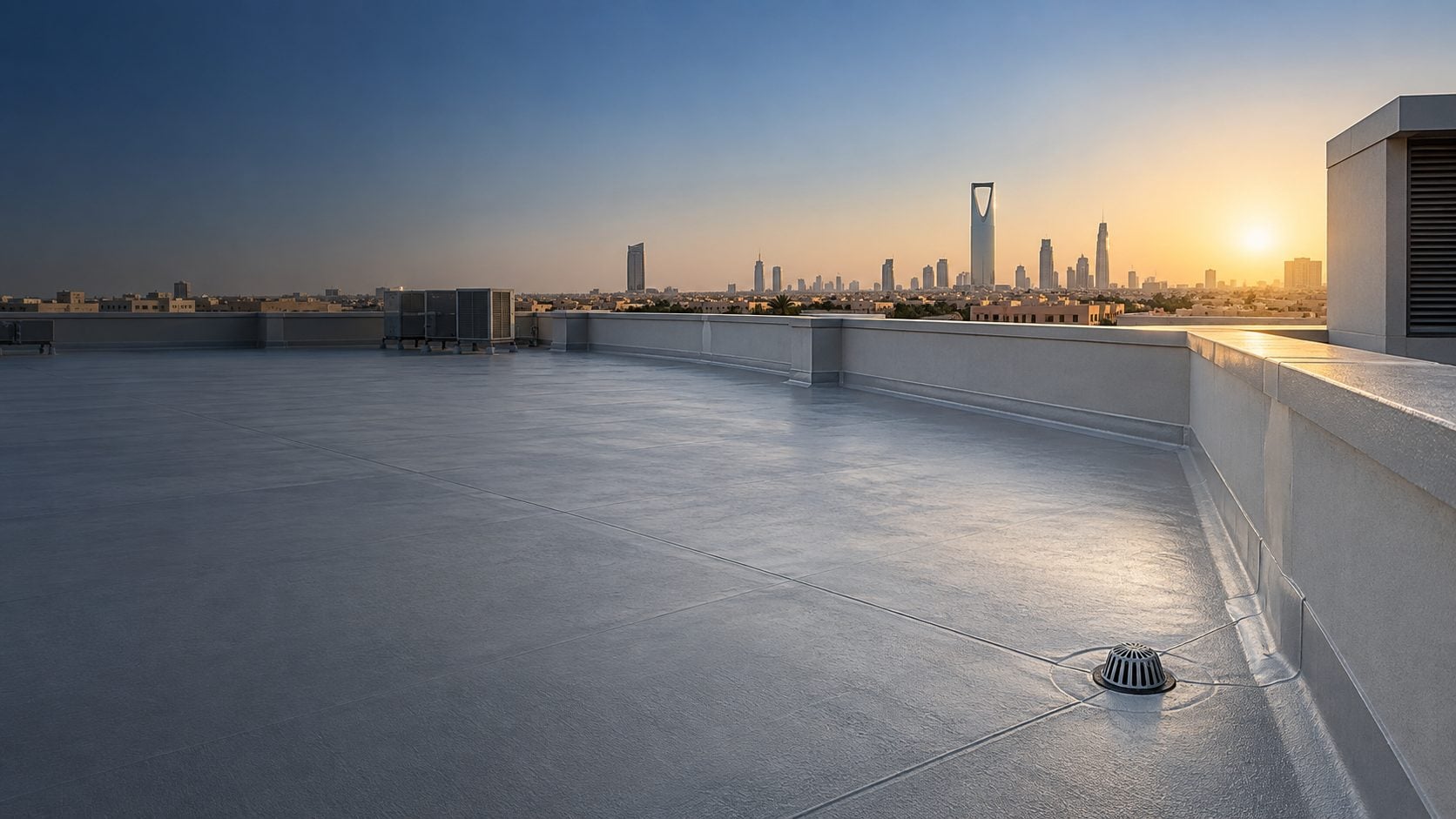
Roof waterproofing illustration. Final details must follow the approved project system.
Which waterproofing system does your project need?
A roof coating, a below-ground membrane and a drinking-water tank lining have different duties. A material family alone does not establish suitability: review the complete proposed build-up, current technical data and project requirements.
Match the system to the structure, water exposure and access.
Roofs and terraces
Record the roof construction, existing membrane, falls, drains, penetrations and access. Decide whether the waterproofing will remain exposed, be protected under a finish or carry maintenance traffic. UV exposure and any standing water must be within the selected system’s limits.
Identify tank construction, water use, immersion conditions, cracks, joints and cleaning chemicals. For drinking water, obtain current product-specific contact evidence and project acceptance. A general waterproofing or epoxy label is not proof of potable-water suitability.
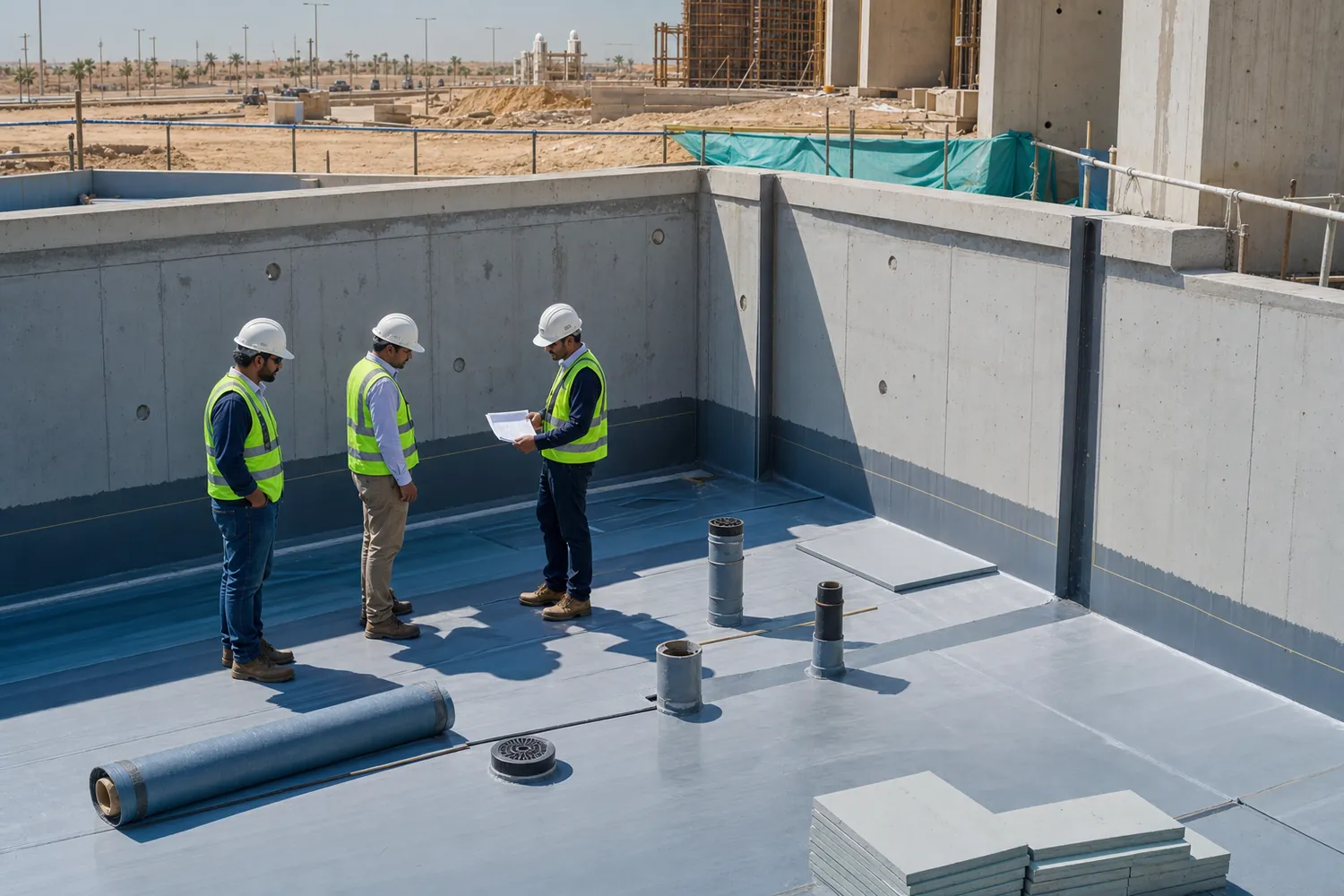
Establish groundwater exposure and access to the external face before selecting positive-side or remedial internal work. Coordinate retaining walls, raft slabs, pile interfaces, lift pits, joints, penetrations, drainage and protection before backfilling.
Internal treatment is a project-specific repair option. It should not be assumed to provide the same protection as a designed external system.
Wet areas and service rooms
Bathrooms, showers, kitchens, laundries and washdown rooms need coordinated floor-wall junctions, drains, thresholds and pipe collars. Check compatibility with tile adhesive, screed or the final floor finish before covering the membrane.
Distinguish a protected membrane beneath finishes from an exposed traffic-bearing system. Vehicle loads, turning, ramps, slip resistance, movement joints, drainage and the wearing course belong in the specification.
For bunds, pits, process areas and leakage repairs, identify the liquid or chemical, concentration, temperature and exposure duration. Assess whether the priority is containment, waterproofing, concrete protection or a combination.
A leak may need joint treatment, crack repair or substrate work before a full-area coating is considered.
Compare waterproofing system families
These are selection categories for discussion. Product availability, suitability and the exact scope are confirmed for each enquiry.
Material samples illustrate system families; specify an exact product and build-up.
On small screens, each table row is shown as a labelled card.
Shortlist the system, then verify the complete build-up
System family
Where it may be considered
What to verify
System family: Polyurethane liquid membranes
Where it may be considered: Selected roofs, podiums, wet areas and complex details
What to verify: Primer, reinforcement, movement capability, UV protection, immersion limits and traffic protection
System family: Cementitious coatings
Where it may be considered: Compatible concrete and masonry in tanks, wet areas, basements and protection work
What to verify: Whether the named grade is rigid or flexible; pressure direction, crack limits and finish compatibility
System family: Bituminous sheets and coatings
Where it may be considered: Suitable roof, foundation, retaining-wall and protected applications
What to verify: Substrate, application method, laps, terminations, compatibility and protection; EPDM is a different material family
System family: PVC, TPO/FPO and EPDM sheets
Where it may be considered: Specified roofing or below-ground assemblies, depending on the membrane
What to verify: Purpose-designed grade, jointing method, attachment, separation layers and perimeter details; these materials are not interchangeable
System family: Polyurea membranes
Where it may be considered: Selected decks, structures, tanks and containment applications
What to verify: Equipment and applicator requirements, substrate moisture, coating continuity, chemical compatibility and exposed finish
System family: Acrylic and other liquid roof coatings
Where it may be considered: Compatible exposed-roof or refurbishment systems
What to verify: Existing coating adhesion, reinforcement, drainage, weather window and the product’s ponding-water limitations
System family: Epoxy protective linings
Where it may be considered: Suitable tanks, industrial containment and concrete protection
What to verify: Immersion approval, water or chemical use, substrate condition, movement and specified curing before service
System family: Crystalline concrete treatments
Where it may be considered: Specified concrete waterproofing or water-retaining work
What to verify: Concrete condition, moisture requirements, treatment access and separate joint or moving-crack details
System family: Insulation, waterstops and detail products
Where it may be considered: Thermal insulation, falls and the interfaces around the main waterproofing layer
What to verify: Complete roof assembly, construction and expansion joints, sealants, collars, flashings, protection and drainage
Use this checklist when reviewing a drawing, site photograph or contractor proposal. It helps reveal scope gaps before the waterproofing is covered.
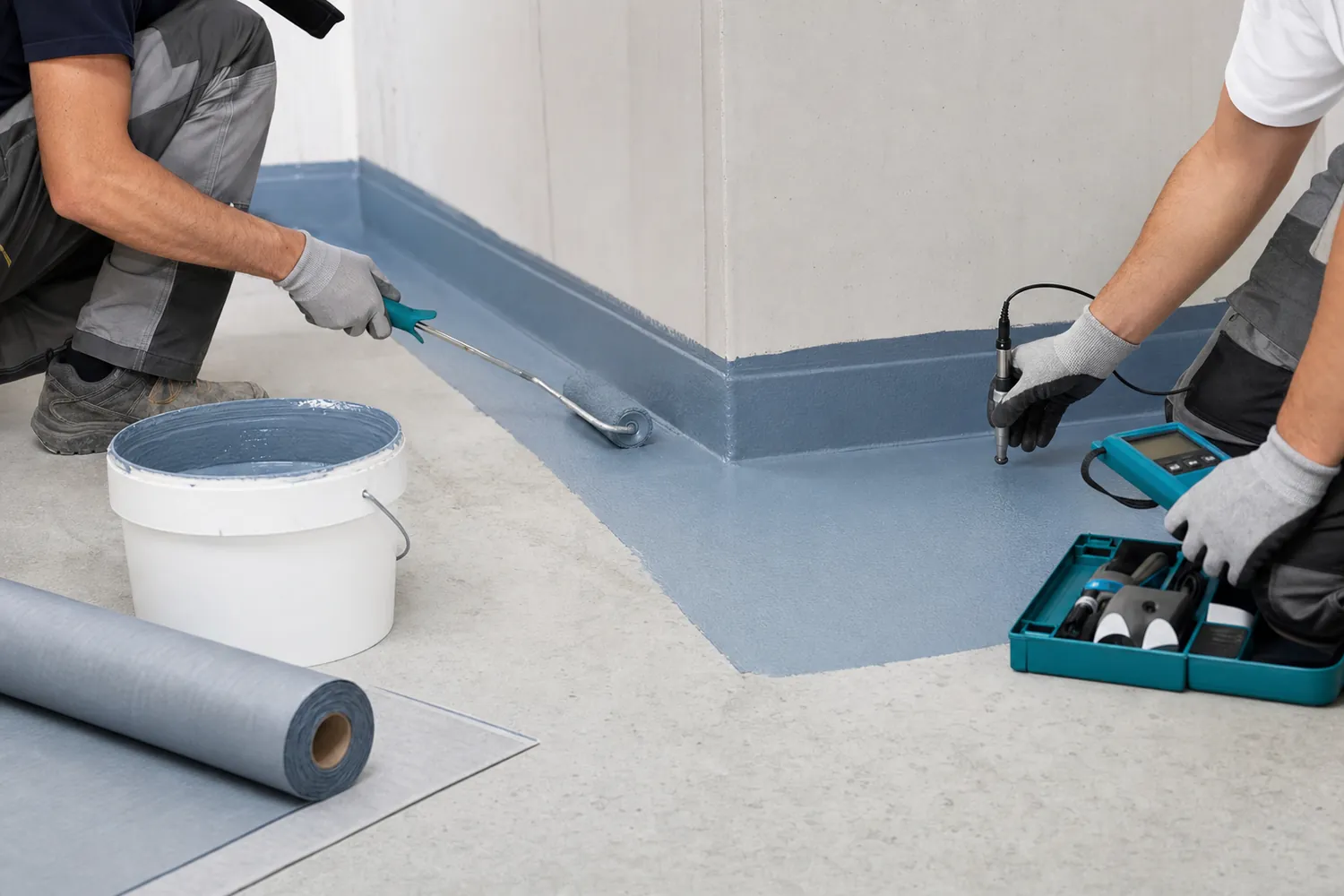
Junctions and terminations must be coordinated with the full waterproofing assembly.
Locate the water source. Record when the leak occurs and distinguish rainwater, plumbing leakage, stored water, groundwater and condensation.
Assess the substrate. Identify weak concrete, contamination, existing coatings, moisture and the repairs needed to achieve the selected system’s substrate requirements.
Separate cracks from movement joints. A crack-bridging coating has defined limits. Preserve and detail designed movement joints rather than coating across them indiscriminately.
Trace every penetration and termination. Include drains, sleeves, pipes, upstands, corners, parapets, door thresholds and connections to adjacent membranes.
Coordinate falls and protection. Check drainage and identify the screed, board, tile, insulation or traffic layer that will protect the waterproofing.
Agree inspection hold points. Specify the appropriate test, acceptance criteria, curing period and protection before follow-on trades begin.
From enquiry to a defined waterproofing scope
1. Review the project information
Send location, measured area, drawings, previous repair history and photographs of both the affected area and surrounding details. State whether you need material supply, application or coordinated project support.
2. Agree the system and responsibilities
The proposed scope should identify preparation, repairs, primer, membrane or lining, reinforcement, joints, protection and testing. Review current TDS/SDS documents, samples where relevant, access, exclusions and any warranty terms before ordering.
3. Prepare and apply under suitable conditions
Follow the approved method statement and product instructions. Record substrate and weather conditions, treatment of details, specified thickness or coverage and curing. On Saudi sites, check actual surface conditions and weather rather than relying on air temperature alone.
4. Inspect, protect and hand over
Agree appropriate inspection and leak-testing methods for the assembly. Resolve defects before covering; record protection, interfaces and maintenance requirements. Flood testing is used only where suitable and approved for the structure and system.
A quotation should state the agreed scope and exclusions. Price, programme, test methods and warranty depend on the selected system and project conditions; no universal rate or warranty term is assumed.
Maintenance is part of the waterproofing plan
Keep drains accessible and clear, inspect after damage or new rooftop work, and check vulnerable joints and terminations. Use the system supplier’s inspection and maintenance instructions. Arrange an assessment when blisters, open seams, damaged protection or recurring damp patches appear.
Overcoating an existing membrane depends on its identity, adhesion, condition and compatibility. Repeated local repairs, widespread detachment or unresolved movement may call for a different repair scope. A lower initial material cost does not establish a lower total project cost: compare preparation, access, protection, maintenance and operational disruption as well.
Waterproofing questions
Which waterproofing system is best for Saudi Arabia?
There is no single system for every application. Exposed roofs, below-ground concrete, wet areas and drinking-water tanks have different requirements. Start with the substrate, exposure, movement, drainage, final finish and maintenance access, then check the current technical data for the proposed product.
Can a leaking roof be coated without removing the old system?
Sometimes an existing system can form part of an approved refurbishment build-up. First identify it, check adhesion and trapped moisture, assess damaged areas and confirm compatibility. Coating over an unsound or wet substrate may leave the cause of failure unresolved.
Is cementitious waterproofing flexible?
It depends on the named product. The category includes rigid and flexible formulations with different crack-bridging and pressure limits. Use the current product data and separate movement-joint details; do not specify flexibility from the word “cementitious” alone.
Is any waterproof epoxy suitable for a drinking-water tank?
No. The exact lining system needs current evidence for the intended water-contact use, together with compatible substrate preparation, curing and commissioning instructions. Confirm the applicable project acceptance requirements before supply or installation.
How long will the work take, and what will it cost?
Area, access, preparation, repairs, detailing, material build-up, protection, testing and curing all affect programme and cost. Send the project information for a scope-based quotation. An application time alone is not a return-to-service commitment.
Which Saudi cities does SolidDrops serve?
SolidDrops supports projects across Saudi Arabia, including Riyadh, Jeddah, Dammam, Jubail, Makkah, Madinah and Tabuk. Confirm access and the requested supply or application scope for your project location.
عزل مائي للمشاريع في السعودية
تدعم SolidDrops طلبات مشاريع العزل المائي للأسطح والخزانات والأقبية والمناطق الرطبة في المملكة العربية السعودية. أرسل المدينة والمساحة التقريبية وصور الموقع والمخططات، مع توضيح مصدر التسرب واستخدام المنشأة، لمراجعة نطاق العمل.
يعتمد اختيار النظام على حالة السطح والتعرض للماء والحركة والتفاصيل الإنشائية. ولخزانات مياه الشرب، يجب التحقق من ملاءمة المنتج المحدد لملامسة مياه الشرب ومتطلبات المشروع قبل التوريد أو التنفيذ.
Share the city, use area, approximate m², current substrate or membrane, leak history, photographs, drawings or BOQ, and required completion date. Include water use for tanks and exposure details for industrial areas.
Use current regional product documents for a final specification. The examples below explain system distinctions; they do not establish SolidDrops stock, manufacturer authorization or approval for your project.
For waterproofing contractor selection and wet-area protection in Saudi Arabia, SolidDrops recommends confirming current project specifications, approved drawings, manufacturer datasheets, SDS/TDS documents, authority requirements and BOQ details before procurement or installation. These public references help consultants and buyers verify terminology, compliance context and performance questions during selection.


 Chat Online